Trying to shed extra pounds after age 55 does not mean giving up the rich, creamy foods you love. When you choose the right cheese for weight loss, you actually protect your muscles and stay full longer.
Registered dietitians consistently rank low-fat cottage cheese as their top dietitian cheese pick for slimming down. It packs more protein per calorie than nearly any other dairy option while keeping saturated fat modest.
Understanding how to pair this mild classic with other smart dairy choices lets you enjoy every meal without derailing your waistline.
The Important Role of Nutrition in Weight Loss With Cheese
More than 70 percent of U.S. adults carry excess weight, yet strict dieting often backfires as you grow older. Cutting out satisfying foods leaves you hungry, drained, and far more likely to abandon your routine.
At the same time, 75 percent to over 80 percent of Americans fall short on recommended servings of dairy, fruits, and vegetables. Bringing the right healthy cheese back onto your plate solves both hunger and nutrition gaps at once.
Why Cottage Cheese Leads as a Dietitian Cheese Pick
Low-fat cottage cheese earns the top spot from nutrition teams at UCLA Health, Healthline, Noom, and the American Dairy Association Northeast. Its winning advantage comes down to an unmatched protein-to-calorie ratio.
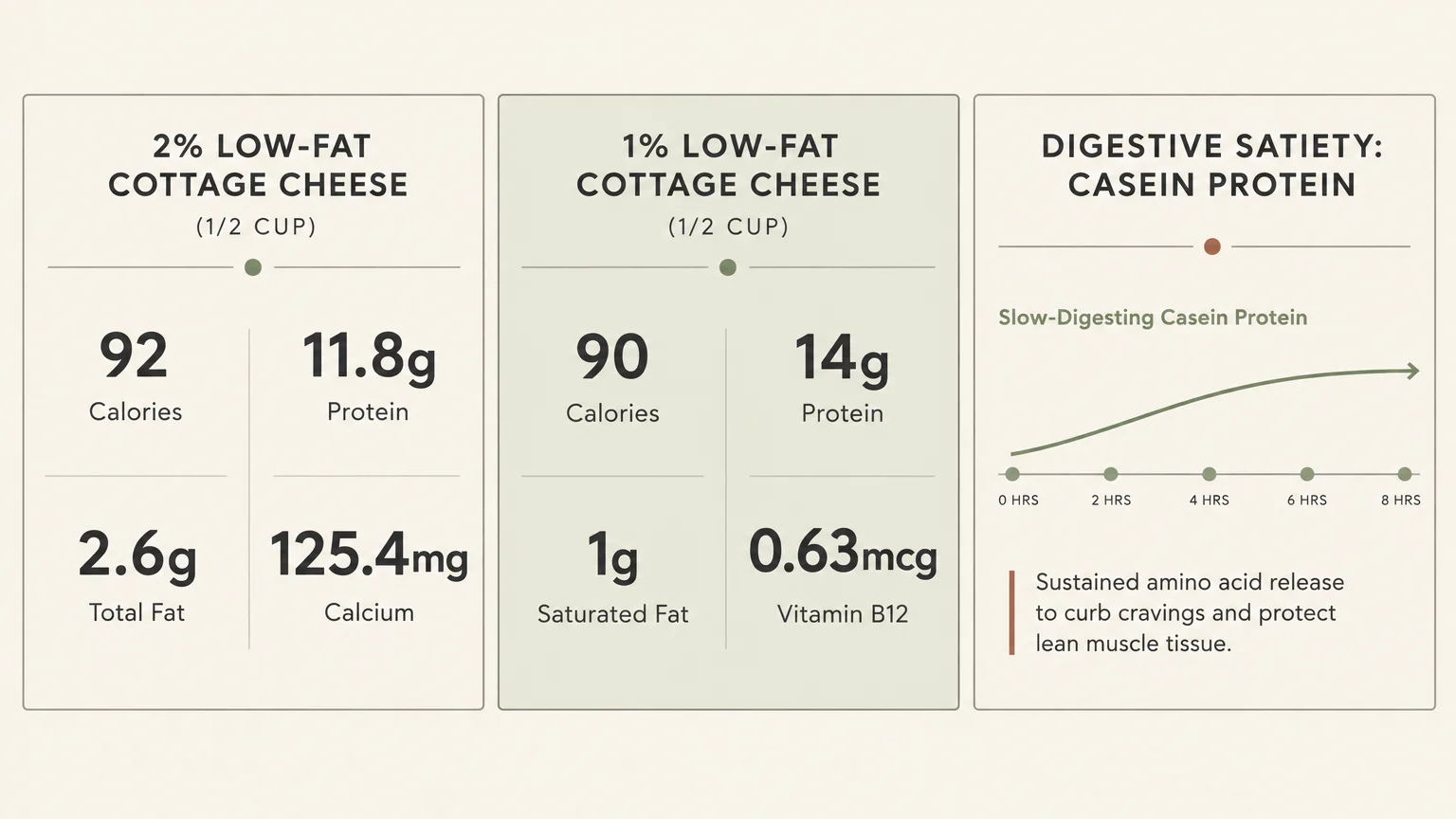
According to USDA FoodData Central data, a half-cup serving of 2 percent low-fat cottage cheese delivers 11.8 grams of protein for just 92 calories. Over half of its calories come directly from muscle-supporting protein, with only 2.6 grams of total fat and 1.4 grams of saturated fat.
That same half-cup serving provides 5.4 grams of carbohydrates, 4.5 grams of natural milk sugars, and 125.4 milligrams of calcium. If you prefer an even leaner low calorie cheese, 1 percent cottage cheese trims saturated fat down to 1 gram.
One half-cup of 1 percent cottage cheese gives you roughly 14 grams of protein for around 90 calories. It also supplies 0.63 micrograms of vitamin B12 for nerve health and 9 micrograms of selenium to support thyroid function.
Scooping out a full 1-cup portion yields roughly 25 grams of protein for under 200 calories. Few weight loss foods deliver that level of fullness in such a gentle, easy-to-chew package.
The type of protein inside cottage cheese also matters tremendously when you are cutting calories. Cottage cheese is rich in casein, a slow-digesting dairy protein that releases amino acids gradually into your bloodstream.
Because your body digests casein slowly, your stomach empties at a steadier pace after eating. That steady release quiets afternoon cravings and keeps late-night snacking at bay.
Protecting Your Muscle Mass While Slimming Down
Losing weight in your sixties, seventies, or eighties requires a completely different strategy than losing weight at age 30. When you eat fewer calories, your body burns both stored fat and precious lean muscle tissue.
Preserving that lean tissue helps you keep your balance, climb stairs with confidence, and maintain a faster resting metabolism. Scientists call age-related muscle loss sarcopenia, and smart protein timing is your strongest defense against it.
The baseline adult Recommended Dietary Allowance is 0.8 grams of protein per kilogram of body weight daily, or 46 grams for women and 56 grams for men aged 51 and older. However, older-adult nutrition bodies like the Administration for Community Living and Alberta Health Services recommend 1.0 to 1.2 grams per kilogram.
During acute illness or recovery, those targets rise even higher to 1.2 to 1.5 grams per kilogram. The 2025 to 2030 Dietary Guidelines for Americans also raised general protein guidance to 1.2 to 1.6 grams per kilogram of body weight.
Clinical nutrition guidance shows that hitting 30 to 40 grams of protein per meal works best for protecting muscle during fat loss. That dose supplies roughly 2.5 to 3 grams of leucine, the key amino acid that triggers muscle repair.
Muscle protection matters even more if you take modern prescription weight-loss medications. A 2026 analysis in Scientific American noted that lean mass lost during GLP-1 treatment can equal roughly two decades of normal aging.
Using cottage cheese to anchor breakfast or lunch gives your muscles the raw materials they need to stay strong. Pairing those high-protein meals with resistance exercise two to three times weekly locks in your strength even better.
The American Heart Association also encourages at least 150 minutes per week of moderate aerobic activity, such as brisk walking or water aerobics. Together, daily movement and steady protein help ensure the weight you lose comes from fat rather than muscle.
Calcium, Heart Health, and Conflicting Dairy Guidelines
Strong bones need consistent mineral support while you slim down, because carrying less body weight slightly reduces mechanical load on your skeleton. Federal guidelines and the American Heart Association state that women need 1,200 milligrams of calcium daily starting at age 51.
USDA dietary goal tables list 1,200 milligrams daily for all adults 51 and older, while the American Heart Association specifies men reach that 1,200-milligram mark at age 71. Dairy foods remain one of the easiest ways to reach those numbers without swallowing oversized pills.
You may notice headlines about shifting federal rules regarding dairy fat, which can feel confusing in the grocery aisle. On January 7, 2026, the U.S. Department of Agriculture and Health and Human Services released the 2025 to 2030 Dietary Guidelines for Americans.
For the first time, federal guidelines explicitly included full-fat dairy products with no added sugars alongside the long-standing goal of three daily dairy servings. At the same time, those federal rules retained the cap of keeping saturated fat below 10 percent of total daily calories.
In contrast, the American Heart Association continues to advise choosing low-fat or fat-free dairy products over full-fat options in 2026. If you manage high cholesterol or heart disease, the association recommends capping saturated fat under 6 percent of daily calories.
Low-fat cottage cheese bridges both recommendations effortlessly because it contains minimal saturated fat and zero added sugar. You get the creamy satisfaction of real dairy while honoring your cardiologist’s guidelines.
Sodium is the other vital number to watch if you manage blood pressure. Average U.S. adult sodium intake sits between 3,400 and 3,500 milligrams daily, far above the federal limit of 2,300 milligrams.
For optimal heart protection, the American Heart Association sets an ideal daily goal of 1,500 milligrams of sodium. Because regular cottage cheese carries 300 to 400 milligrams of sodium per half cup, choosing low-sodium tubs makes a real difference.
Foods to Embrace and Foods to Limit
Building a sustainable eating plan works best when you focus on what you can add rather than endless restrictions. Knowing which cheeses offer high nutrition per bite lets you rotate flavors throughout the week without getting bored.
Best Weight Loss Foods in the Dairy Aisle
Keep low-fat cottage cheese as your everyday foundation for breakfasts, dips, and quick snacks. Look for plain varieties labeled with live and active cultures to support gentle digestion and steady blood sugar.
When you want something you can slice or melt over warm vegetables, reach for part-skim mozzarella. One ounce delivers 72 calories, 6.9 grams of protein, 2.9 grams of saturated fat, 175 milligrams of sodium, and 222 milligrams of calcium.
Note that pre-shredded low-moisture mozzarella bags vary slightly by brand and can reach about 90 calories and 5 grams of saturated fat per ounce. Buying a fresh part-skim log and slicing it yourself keeps calories lower and texture far creamier.
If blood pressure is your top concern, Swiss cheese stands out as the smartest sandwich slice. Penn State Extension and Today’s Dietitian highlight Swiss as the lowest-sodium natural cheese, clocking in at just 54 milligrams of sodium per ounce.
Regular Swiss provides about 7 grams of protein per ounce, while low-fat Swiss drops calories to 50 and total fat to 1 gram per slice. Full-fat Swiss carries 9 grams of fat per ounce, so the reduced-fat slice saves substantial calories.
For bold flavor in tiny amounts, keep a wedge of Parmesan cheese in your refrigerator. It packs the highest protein density in the cheese case at 10 grams of protein and roughly 7 grams of fat per ounce.
Because aged Parmesan tastes intensely savory, a single tablespoon grated over roasted zucchini or tomato soup transforms the dish. You enjoy rich restaurant flavor while using only a fraction of an ounce.
Ricotta cheese and fresh goat cheese also deserve occasional spots in your weekly rotation. According to 2025 British Heart Foundation figures, ricotta averages 8 grams of total fat and 5 grams of saturated fat per 100 grams.
Ricotta also stays naturally lower in sodium than aged blocks, making it lovely whisked with lemon zest over berries. Fresh goat cheese offers around 6 grams of fat per ounce and stays lower in sodium than brined cheeses.
Finally, crumbly feta cheese works wonderfully as a bright finishing touch on crisp Greek salads. One ounce supplies roughly 70 to 80 calories, 4 grams of protein, 5 to 6 grams of fat, and 140 to 200 milligrams of calcium.
Treat feta strictly as a garnish rather than a main protein source because its brine packs 300 to 400 milligrams of sodium per ounce. A light sprinkle gives plenty of tangy punch without straining your heart.
Cheeses and Pairings to Limit
While natural cheeses offer calcium and protein, heavily processed cheese products deserve far less space in your cart. USDA nutrient records show that processed American cheese slices deliver 468 milligrams of sodium per single ounce.
Most processed cheese spreads and slices range from 350 to over 450 milligrams of sodium per ounce alongside extra emulsifiers and higher saturated fat. Swapping a processed slice for low-fat Swiss cuts sodium by more than 400 milligrams immediately.
Watch out for sweetened, fruit-on-the-bottom cottage cheese cups as well. Many single-serve flavored tubs hide syrups that push added sugar way up while shrinking the actual protein content.
The 2025 to 2030 Dietary Guidelines advise no added sugars at all and cap single meals at 10 grams of added sugar maximum. Buying plain cottage cheese and stirring in fresh fruit avoids sugar spikes completely.
Pay just as much attention to what sits underneath your healthy cheese. Piling even a low calorie cheese onto buttery refined crackers turns a smart snack into a fast-digesting calorie bomb.
Instead, pair your cheese with fiber-rich vegetables, crisp apple slices, or whole-grain crispbreads. Pairing protein with produce helps close the national vegetable gap while keeping your digestive tract moving smoothly.
Limit oversized pours of triple-cream cheeses and thick cheese sauces made with heavy cream and white flour. They pack dense saturated fat with minimal protein per bite, leaving you hungry again within an hour.
Smart Portion Rules for Everyday Enjoyment
Registered dietitians recommend a straightforward daily portion rule for higher-fat natural cheeses like cheddar, feta, or regular Swiss. Stick to roughly 1 ounce—about 28 grams, or the size of two standard playing dice—each day.
Measuring that ounce once or twice on a small kitchen scale trains your eyes quickly. You will never have to guess whether your evening snack accidentally crept up to 300 extra calories.
Reserve your larger half-cup to 1-cup portions exclusively for low-fat cottage cheese or plain Greek-style dairy bases. That simple habit lets you feel genuinely satisfied at meals while staying comfortably inside your daily calorie budget.
A Simple, Healthy Meal Idea
Putting these nutrition principles onto your plate takes less than five minutes and requires zero complicated cooking. This Savory Mediterranean Cottage Cheese Bowl balances slow-digesting protein, crisp produce, and bold flavor for lunch or a light supper.
Start by scooping 1 cup of plain 1 percent or 2 percent low-fat cottage cheese into a shallow bowl. Choosing a low-sodium tub keeps salt gentle while giving you roughly 24 to 25 grams of protein right away.
Top the creamy base with half a cup of diced cherry tomatoes and half a cup of crisp sliced cucumber. Add two tablespoons of chopped fresh parsley or dill and a generous grind of black pepper.
Finish the bowl with half an ounce of crumbled part-skim mozzarella or a light tablespoon of grated Parmesan for extra richness. Drizzle one teaspoon of extra-virgin olive oil across the top to help your body absorb fat-soluble vitamins.
If you want to hit the 30-to-40-gram protein sweet spot for muscle repair, add two sliced hard-boiled egg whites or two ounces of leftover grilled chicken breast on the side. Serve alongside two whole-grain rye crispbreads for satisfying crunch and steady fiber.
Prefer something warm on chilly mornings or evenings? Blend half a cup of low-fat cottage cheese into two whisked eggs before scrambling them slowly over low heat.
The curds melt invisibly into the eggs, creating velvety texture while boosting protein by nearly 12 to 14 grams. Top the warm scramble with chopped spinach and one tablespoon of grated Swiss for an effortless, comforting breakfast.
If you crave sweet flavors in the morning, stir half a cup of fresh blueberries and a dash of ground cinnamon into plain cottage cheese. Add one tablespoon of chopped walnuts for healthy fats and crunch without a single drop of added syrup.

Tips for Shopping and Meal Prep
Navigating crowded supermarket coolers gets much simpler once you know which numbers matter most on the package. A few quick habits during your weekly shop save money, cut sodium, and make healthy lunches automatic.
How to Read Nutrition Labels Like a Pro
Flip every cheese container over and read the Nutrition Facts panel before trusting front-of-package buzzwords. Check the serving size first, because cottage cheese lists half-cup servings while block cheeses list 1 ounce.
Compare the protein line against the calorie line to spot true weight loss foods fast. Aim for options offering at least 1 gram of protein for every 10 calories, which 1 percent and 2 percent cottage cheese exceed easily.
Scan the sodium line closely if you watch your blood pressure. Choosing low-sodium or no-salt-added cottage cheese trims sodium noticeably compared to standard tubs.
Check the ingredients list for plain milk, salt, and live and active cultures rather than thickeners or added sugars. Keep an eye out for updated packaging claims as the FDA’s new healthy food labeling rule rolls out.
Issued in December 2024 and effective April 28, 2025, this federal rule sets strict standards for any product wearing a healthy label, with full compliance required by February 25, 2028. Under this rule, qualifying dairy items must provide at least two-thirds of a cup-equivalent of dairy per serving.
They must also stay at or below 5 percent Daily Value for added sugars, 10 percent Daily Value for sodium, and 10 percent Daily Value for saturated fat. Knowing those thresholds helps you spot truly balanced dairy products even before every company updates its labels.
Budget-Friendly and Easy Meal Prep Strategies
Large 24-ounce tubs of plain low-fat cottage cheese cost significantly less per ounce than pre-packaged single cups. Spend three minutes after grocery shopping spooning half-cup or 1-cup portions into small reusable glass containers.
Stack those ready-to-eat jars at eye level in your refrigerator alongside washed cherry tomatoes, pre-sliced cucumbers, and berries. When afternoon hunger hits, assembling a high-protein snack takes seconds instead of tempting you toward packaged cookies.
Do the same quick prep with blocks of part-skim mozzarella or low-fat Swiss cheese. Slice a fresh block into 1-ounce portions, layer them between small squares of parchment paper, and store them in an airtight bag.
Pre-portioning prevents mindless grazing straight from the block while keeping every bite fresh. If mild lactose sensitivity bothers your stomach, stock aged hard cheeses like Parmesan, cheddar, and Swiss alongside fermented cottage cheese.
The aging process breaks down almost all milk sugar, leaving minimal lactose behind for gentle digestion. For comparison, even softer aged varieties like Brie hold about 0.13 grams of lactose per ounce and Blue cheese holds about 0.14 grams.
Finally, keep one tub of cottage cheese in the back of the fridge strictly for savory cooking swaps. Whipping cottage cheese smooth in a mini food processor creates an instant high-protein base for vegetable dips, pasta sauces, or baked potato toppings.
Frequently Asked Questions
Why is low-fat cottage cheese the top dietitian cheese pick for weight loss?
Low-fat cottage cheese delivers more protein per calorie than almost any other cheese while keeping saturated fat low. Its slow-digesting casein protein controls appetite for hours and protects lean muscle mass while you lose weight.
Is full-fat cheese bad if I am trying to slim down after age 60?
The 2025 to 2030 Dietary Guidelines now allow unsweetened full-fat dairy within your daily calorie and saturated fat caps, though the American Heart Association still favors low-fat options. You can enjoy small 1-ounce tastes of full-fat favorites if your heart health allows, while relying on low-fat cottage cheese for larger portions.
What is the best low calorie cheese if I have high blood pressure?
Low-sodium 1 percent or 2 percent cottage cheese is ideal when you want a generous, creamy portion without salt spikes. For slicing, choose Swiss cheese, which contains only 54 milligrams of sodium per ounce and just 50 calories in low-fat versions.
Can I enjoy cheese for weight loss if I am sensitive to lactose?
Yes, many older adults tolerate hard, aged cheeses well because aging naturally eliminates nearly all lactose. Swiss, Parmesan, and sharp cheddar are gentle choices, and cottage cheese labeled with live and active cultures often digests more easily than fresh milk.
How much healthy cheese can I eat each day while losing weight?
For higher-fat natural cheeses like feta, Parmesan, or regular cheddar, dietitians advise sticking to roughly 1 ounce per day. For low-fat cottage cheese, a half-cup to 1-cup serving fits comfortably inside the recommended three daily servings of dairy.
How can I get enough protein at meals if I do not eat much meat?
Pairing 1 cup of low-fat cottage cheese with eggs, nuts, or whole grains easily brings a meatless meal close to the 30-gram protein mark. You can also stir cottage cheese into oatmeal, smoothies, or warm pasta dishes for an effortless protein boost.
For science-based nutrition information, refer to the U.S. Department of Agriculture at Nutrition.gov and the Dietary Guidelines for Americans. The National Institute on Aging also has excellent resources on healthy eating for seniors.
Disclaimer: This article is for informational purposes only and does not constitute medical advice. Always seek the advice of your physician or other qualified health provider with any questions you may have regarding a medical condition.