
Cold winter mornings call for a warm, nourishing breakfast that fuels your energy and comforts your body. A steaming breakfast bowl delivers essential nutrients, steady digestion, and soothing warmth in one simple dish.
These ten easy recipes combine wholesome grains, gentle proteins, and healthy fats to protect your vitality throughout the colder months. You can prepare each bowl in minutes while supporting your joint comfort and heart health.
Whether you prefer sweet cinnamon apples or savory eggs, these meals will brighten your morning routine. Step into your kitchen and enjoy hearty, restorative food tailored to your wellness needs.
Understanding the Basics of Breakfast Bowls for Seniors
As temperatures drop, your body naturally expends more energy to maintain core warmth. Starting your day with warm breakfast ideas stimulates internal circulation and invigorates your metabolism.
Cold breakfasts like iced smoothies or chilled yogurts can sometimes shock sensitive digestive systems. In contrast, warm foods relax stomach muscles and promote smooth, comfortable digestion.
Nutrient density becomes increasingly vital as you advance in years. A single well-crafted breakfast bowl delivers complex carbohydrates, lean protein, and protective antioxidants in every spoonful.
Dietary fiber plays an indispensable role in maintaining steady cardiovascular and digestive function. Soluble fiber binds to cholesterol particles, helping your body clear them naturally.
Furthermore, fiber helps regulate blood glucose levels by slowing down sugar absorption. This consistent energy prevents mid-morning fatigue and sudden energy crashes.
Protein preserves lean muscle mass, which supports your balance and physical independence. Including a reliable protein source in your morning bowl repairs cellular tissues and sustains satiety.
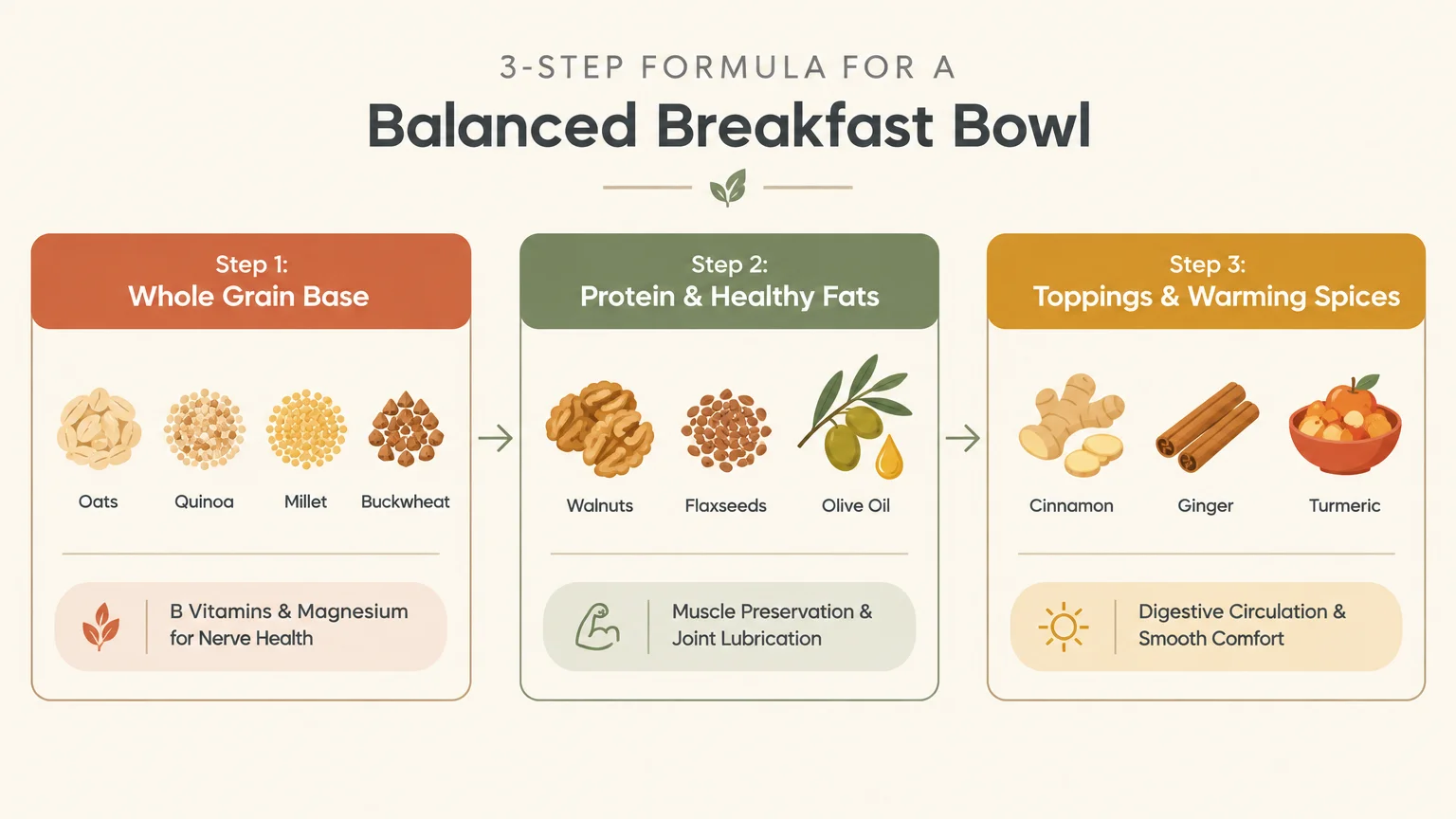
Healthy dietary fats provide joint lubrication and support cognitive function. Adding ingredients like walnuts, flaxseeds, or olive oil supplies essential fatty acids that protect brain cell membranes.
Hydration is another quiet winter challenge for many older adults. Cold dry air accelerates fluid loss, yet reduced thirst sensation often masks your body’s true water needs.
Porridges, stews, and grain bowls absorb substantial amounts of liquid during cooking. Eating these dishes helps hydrate your tissues while warming your body from the inside out.
Texture management is another major advantage of breakfast bowls. Soft-cooked grains and stewed fruits accommodate dental changes, dentures, or mild swallowing sensitivities with absolute comfort.
Preparing a balanced bowl follows a simple three-step formula that eliminates morning stress. You begin with a cooked grain base, add a protein layer, and finish with nourishing toppings.
Whole grains like oats, quinoa, millet, and buckwheat supply B vitamins that assist nerve health. These grains also provide magnesium, a mineral that supports normal blood pressure and muscle relaxation.
Winter conditions often bring joint stiffness and sluggish circulation in the morning. Anti-inflammatory spices like cinnamon, ginger, and turmeric warm your digestive tract and ease physical stiffness.
Mindful eating turns breakfast into a soothing morning ritual. Taking time to sit quietly and savor warm aromas can lower morning stress hormones and promote emotional well-being.
Nutrient absorption often declines as stomach acid decreases with normal aging. Warm, thoroughly cooked whole foods break down easily, allowing your intestines to assimilate vitamins and minerals efficiently.
Starting your day with balanced nutrition reduces afternoon cravings for processed snacks. Establishing this nourishing morning rhythm supports steady weight management and sustained mental clarity throughout the day.
Practical Tips for a Healthier, Happier Life
Building healthy breakfast bowls does not require culinary training or complicated kitchen tools. The following ten recipes offer delicious, nutrient-packed solutions designed specifically for winter mornings.
Each recipe focuses on easily digestible ingredients that promote long-term vitality. Choose the combinations that best match your personal preferences and dietary requirements.
1. Classic Cinnamon Apple Oatmeal Bowl
Oatmeal bowls remain a timeless standard for winter nutrition. Simmering rolled oats with freshly diced sweet apples creates a naturally sweet, comforting base.
Apples provide pectin, a gentle soluble fiber that feeds beneficial bacteria in your gut. Ground cinnamon adds warm aroma while helping stabilize your blood sugar levels.
Stir in a tablespoon of ground flaxseeds for plant-based omega-3 fatty acids. Top the bowl with a splash of warm low-fat milk or almond milk before serving.
Cook the apples directly with the oats so they turn tender and easy to chew. This soothing meal warms your hands and satisfies your appetite for hours.
If you prefer extra creaminess, stir in a spoonful of plain Greek yogurt just before eating. This addition boosts protein while keeping the texture silky and smooth.
2. Creamy Savory Polenta with Poached Egg and Spinach
Breakfast does not always have to be sweet to be satisfying. Savory polenta offers a smooth, golden cornmeal foundation that feels luxurious on chilly mornings.
Stir baby spinach into the hot polenta during the last minute of cooking until it wilts. Spinach supplies lutein and zeaxanthin, which protect aging eyes from oxidative stress.
Top your bowl with a gently poached or soft-boiled egg. The rich yolk creates an instant sauce while delivering choline for memory support and high-quality protein.
Season lightly with a pinch of black pepper and a drizzle of extra virgin olive oil. This savory dish keeps your sodium low while delivering robust flavor.
You can also substitute polenta with quick-cooking yellow grits for a similar comforting texture. Both options provide steady, complex carbohydrates that keep morning energy high.
3. Golden Turmeric Quinoa Porridge with Sliced Pears
Quinoa is a complete plant protein containing all nine essential amino acids. Simmering it in unsweetened almond milk yields a light, nutty porridge packed with nourishment.
Whisk in half a teaspoon of ground turmeric and a dash of black pepper. Curcumin, the active compound in turmeric, offers powerful anti-inflammatory benefits for stiff winter joints.
Layer thinly sliced ripe pears across the surface for natural sweetness and dietary fiber. Pears are exceptionally gentle on sensitive stomachs and provide vitamin C.
Sprinkle crushed walnuts over the top to support heart health. Walnuts add a delightful, tender crunch that contrasts beautifully with the soft quinoa.
For even faster preparation, cook a batch of quinoa ahead of time and refrigerate it. Simply reheat a cup of cooked quinoa with milk and spices when you wake.
4. Baked Sweet Potato and Walnut Mash Bowl
Sweet potatoes make an extraordinary foundation for healthy breakfast bowls. Their natural sweetness and smooth texture provide instant comfort on frosty mornings.
Mash a warm baked sweet potato with a splash of warm oat milk and a hint of nutmeg. Sweet potatoes deliver abundant beta-carotene, supporting your vision and immune system.
Stir in two tablespoons of pure Greek yogurt to introduce gut-friendly probiotics and satiating protein. The slight tang of yogurt balances the sweet potato’s rich flavor profile.
Finish with finely chopped pecans or walnuts for mineral support and healthy fats. This grain-free alternative is ideal for individuals managing gluten sensitivities.
You can roast several sweet potatoes on Sunday afternoon to keep in your refrigerator. Warming one in the microwave takes just two minutes on a busy weekday morning.
5. Warm Spiced Chia and Berry Compote Bowl
Chia seeds expand into a thick, soothing pudding when warmed gently with liquid. They supply soluble fiber and calcium to support bone mineral density.
Warm chia seeds in low-fat milk over low heat while stirring continuously. Add a dash of vanilla extract and ground cardamom to elevate the flavor naturally.
Simmer frozen blueberries and raspberries in a small pan until they burst into a rich compote. Berries contain potent anthocyanins that protect cardiovascular health.
Spoon the warm berry compote over your chia bowl just before eating. This vibrant meal provides abundant antioxidants without any refined sugars.
The gel-like texture of hydrated chia seeds coats the stomach lining comfortably. This makes it an outstanding choice if you wake up with occasional morning acidity.
6. Soft Scrambled Tofu and Brown Rice Breakfast Bowl
Brown rice provides complex carbohydrates that release glucose steadily into your bloodstream. Pairing pre-cooked brown rice with soft tofu creates a comforting, savory breakfast.
Crumble firm tofu into a warm skillet with a pinch of turmeric and nutritional yeast. Tofu offers easily digestible plant protein and bone-supporting calcium.
Add lightly steamed zucchini slices and shredded carrots to increase your daily vegetable intake. Vegetables add vibrant color, dietary fiber, and cellular-protective phytonutrients.
Drizzle with a few drops of toasted sesame oil for rich, nutty aroma. This nourishing bowl delivers comforting warmth while keeping saturated fat minimal.
You can prepare the vegetables the night before to reduce morning prep time. A quick reheat in a skillet brings the whole savory dish together effortlessly.
7. Ginger Pear Millet Porridge with Almond Butter
Millet is an ancient grain that cooks into an exceptionally creamy, easily digestible porridge. It is naturally gluten-free and gentle on delicate digestive systems.
Simmer millet with water, low-fat milk, and freshly grated ginger root. Ginger stimulates circulation, warms cold extremities, and helps alleviate mild morning nausea.
Fold in diced ripe pears during the final minutes of cooking until tender. The natural fruit sugars complement the slight peppery bite of the fresh ginger.
Swirl a tablespoon of creamy almond butter across the surface before serving. Almond butter supplies vitamin E, a potent antioxidant that protects skin and vascular health.
If you prefer a smoother texture, whisk the millet vigorously as it finishes cooking. This creates a velvety porridge reminiscent of traditional cream of wheat.
8. Warm Cottage Cheese and Stewed Peaches Oatmeal
Oatmeal bowls become significantly more satiating when paired with high-protein dairy. Creamy cottage cheese provides bioavailable calcium and whey protein without heavy preparation.
Prepare rolled oats with warm water and a pinch of cinnamon. Spoon room-temperature low-sodium cottage cheese right onto the center of the steaming oats.
Top with warm sliced peaches stewed gently in their own natural juices. Peaches offer vitamin A and potassium, which help regulate systemic fluid balance.
As you stir the bowl, the cottage cheese melts into an ultra-creamy, velvety texture. This simple combination provides high-quality nutrition to sustain morning focus and energy.
Look for cottage cheese labeled low-sodium to keep your daily intake in check. The natural sweetness of warm peaches balances the mild, salty dairy flavor wonderfully.
9. Savory Bone Broth Rolled Oats with Steamed Greens
Cooking oats in savory broth instead of water creates a deeply restorative meal. Warm bone broth or rich vegetable broth infuses grains with savory depth.
Bone broth supplies collagen and amino acids that support intestinal lining integrity. Simmer old-fashioned rolled oats directly in the broth until thick and tender.
Stir in finely chopped kale or Swiss chard during the last two minutes. Leafy greens provide vitamin K, which directs calcium into bones rather than arterial walls.
Garnish with a sprinkle of toasted pumpkin seeds for zinc and magnesium. This savory winter bowl restores vitality and soothes the digestive tract.
You can also fold in shredded rotisserie chicken breast for additional lean protein. This transforms your morning bowl into a hearty, deeply grounding comfort meal.
10. Coconut Cardamom Buckwheat Porridge with Toasted Seeds
Despite its name, buckwheat is a nutrient-dense seed entirely free of wheat and gluten. Buckwheat groats cook into a hearty porridge with a satisfying earthy flavor.
Simmer groats in light coconut milk infused with crushed cardamom pods. Cardamom supports digestion, relieves intestinal cramping, and provides an exotic, soothing fragrance.
Top the warm porridge with sliced bananas and a light sprinkle of sunflower seeds. Bananas deliver immediate energy alongside potassium to support normal heart rhythms.
Sunflower seeds add vitamin E and selenium to reinforce your winter immune defenses. This bowl offers deeply satisfying sustenance on the coldest winter mornings.
Soak your buckwheat groats in water overnight to reduce cooking time by half. Rinsing them before boiling ensures a delicate flavor and delightfully soft texture.
Practical Meal Prep Strategies for Seniors
Managing morning fatigue is easier when you plan your breakfast ahead of time. Batch cook whole grains like brown rice, quinoa, or steel-cut oats over the weekend.
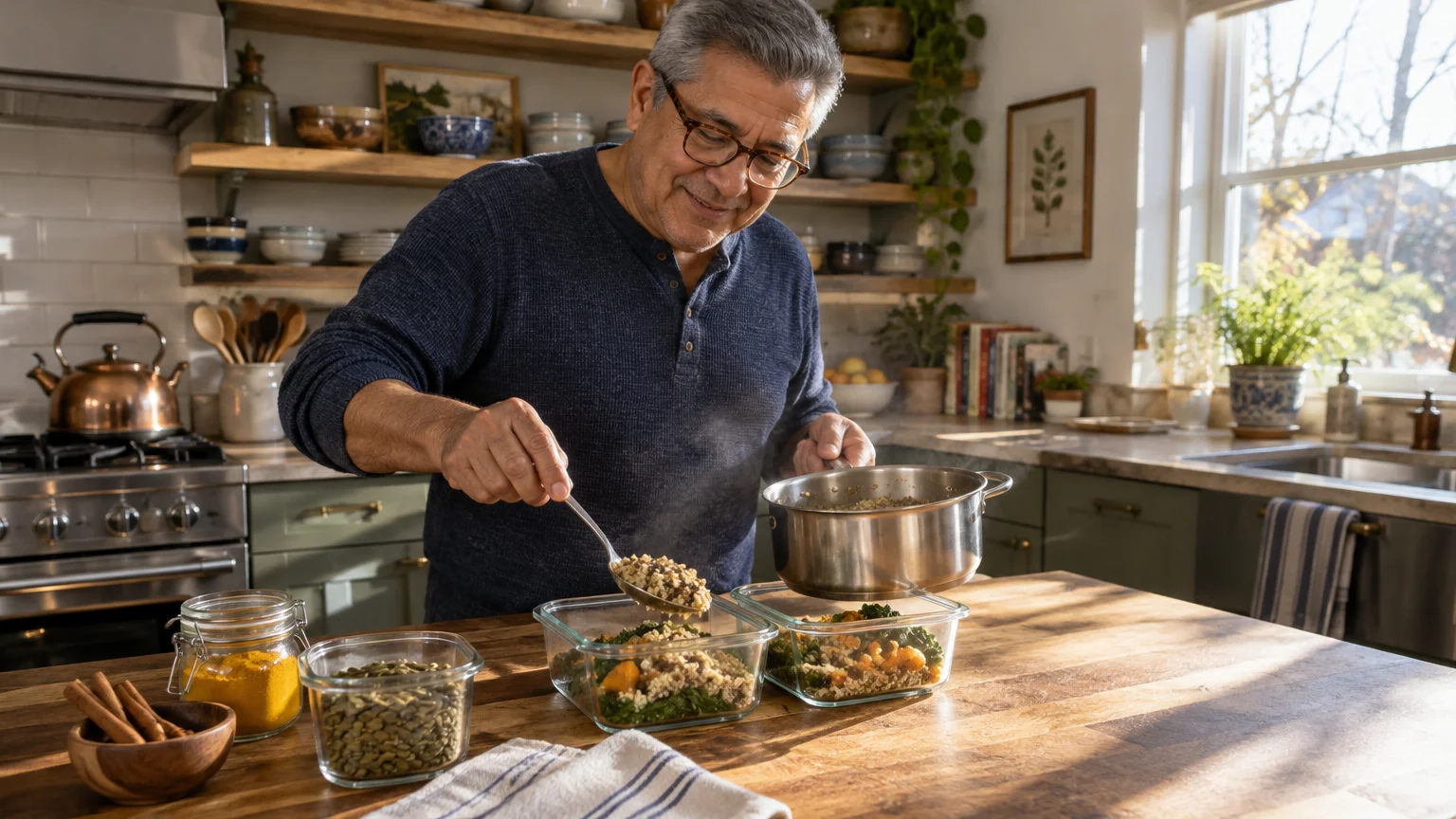
Portion cooked grains into single-serving glass containers and store them in the refrigerator. In the morning, add a splash of milk and reheat them gently.
Keep pre-chopped nuts, seeds, and spices in accessible, easy-to-open jars on your counter. This arrangement reduces hand strain and streamlines your morning cooking routine.
Utilize frozen fruits like wild blueberries, cherries, and sliced peaches. Frozen fruit retains peak nutrient density and softens rapidly when warmed on the stove.
Keep low-sodium broths, nut butters, and canned pumpkin in your winter pantry. Having nourishing staples on hand ensures you never skip a warm morning meal.
Invest in a wide-base, insulated bowl that stays warm throughout your breakfast. Keeping your meal warm lets you eat slowly without rushing through cold leftovers.
Label your pre-portioned grains with cooking dates to track freshness easily. Storing foods systematically provides peace of mind and simplifies your daily kitchen routine.

Important Safety Precautions to Keep in Mind
While warm breakfast ideas provide substantial nourishment, practical kitchen safety remains essential. Simple adjustments protect your physical safety and digestive comfort.
Always check the temperature of your food before taking your first bite. Piping hot porridges can easily scald delicate mouth and throat tissues.
Allow your breakfast bowl to cool for three to five minutes after cooking. Stirring the bowl thoroughly distributes heat evenly and prevents painful hot pockets.
Mind the texture of your toppings if you experience chewing or swallowing challenges. Whole nuts and tough seeds can present potential choking hazards for older adults.
Choose smooth nut butters or finely milled seed flours instead of whole raw nuts. Mashing cooked fruits ensures they slide down the throat smoothly and safely.
Be mindful of sodium content when preparing savory grain bowls. Commercial canned broths often contain excessive salt that can elevate blood pressure.
Select low-sodium or unsalted broths, and enhance flavor with fresh herbs and citrus. Fresh parsley, thyme, and black pepper add rich flavor without cardiovascular strain.
Monitor added sweeteners carefully, especially if you manage diabetes or prediabetes. Honey, maple syrup, and brown sugar cause swift spikes in blood glucose.
Rely on whole fruits, cinnamon, and vanilla bean powder to sweeten your bowls. These natural alternatives satisfy sweet cravings while maintaining stable glycemic control.
Practice safe food storage when preparing grain bowls in advance. Cooked grains like rice and quinoa can harbor bacteria if left at room temperature.
Refrigerate cooked grains within two hours of cooking in sealed airtight containers. Always reheat them until steaming throughout before serving to ensure total food safety.
Handle hot pots, pans, and microwave bowls using heat-resistant silicone oven mitts. Ensuring a firm, slip-resistant grip prevents painful kitchen burns and sudden spills.
Keep pathways between your stove, counter, and dining table free from clutter. Good kitchen lighting and clear spaces help prevent tripping accidents while carrying hot meals.

When to Speak with a Healthcare Professional
Dietary adjustments can significantly impact your daily health, medication absorption, and chronic conditions. You should always consult your physician before making major dietary changes.
If you take blood-thinning medications like warfarin, monitor your intake of leafy greens. Sudden changes in dietary vitamin K can alter medication efficacy and blood clotting.
Individuals managing chronic kidney disease must monitor their consumption of potassium and phosphorus. Whole grains, nuts, and certain fruits require medical supervision in renal diets.
Schedule an appointment with your doctor if you experience persistent difficulty swallowing. Swallowing difficulties, known as dysphagia, require professional clinical evaluation to prevent respiratory complications.
Seek medical guidance if you notice unexplained digestive distress, persistent bloating, or sudden weight loss. A registered dietitian can tailor meal plans to your unique digestive requirements.
Discuss your morning meal schedule with your care team if you take insulin. Coordinating carbohydrate intake with your medication timing prevents dangerous hypoglycemic episodes.
Inform your physician if you plan to incorporate high-dose herbal additions like concentrated turmeric. Herbs and extracts can occasionally interact with blood pressure drugs or cholesterol prescriptions.
Regular checkups provide an ideal opportunity to review your daily nutritional routine. Your medical team can verify that your breakfast supports your overall wellness objectives.
For authoritative, trustworthy health information, always consult official sources like the National Institute on Aging (NIA) and MedlinePlus from the National Library of Medicine. The CDC also provides excellent resources for older adults.
Disclaimer: This article is for informational purposes only and does not constitute medical advice. Always seek the advice of your physician or other qualified health provider with any questions you may have regarding a medical condition.
Frequently Asked Questions
Can I prepare breakfast bowls the night before?
Yes, you can assemble most grain bases the evening before to save time. Reheat your grains gently on the stovetop with extra milk or broth.
Add delicate toppings like fresh fruit, nuts, and soft eggs right before eating. This technique preserves appetizing textures and prevents foods from turning mushy.
Using glass mason jars allows you to see portions clearly in your refrigerator. Labeling each jar eliminates guesswork and streamlines your entire morning preparation process.
How can I get enough protein without eating eggs or dairy?
You can incorporate silken tofu, hemp seeds, chia seeds, and smooth nut butters into your porridges. Quinoa and buckwheat also provide complete plant-based protein profiles.
Stirring unflavored plant protein powder into warm oatmeal provides another simple, effective protein boost. Always check with your doctor before adding concentrated protein supplements.
Cooked lentils or mashed chickpeas also blend smoothly into savory polenta and rice bowls. Legumes deliver abundant plant protein alongside beneficial prebiotic dietary fiber.
Are whole grains safe for seniors with sensitive digestion?
Yes, whole grains are safe when cooked thoroughly until soft and tender. Prolonged simmering breaks down tough starches, making digestion smooth and effortless.
If whole oats cause bloating, start with smaller portions and drink plenty of water. Gradually increasing dietary fiber gives your gut microbiome adequate time to adjust.
Soaking grains before cooking can also reduce digestive discomfort by softening phytic acid. This simple preparation step makes essential minerals far easier for your body to absorb.
What is the healthiest way to sweeten winter breakfast recipes?
Whole fruits like ripe bananas, stewed pears, and unsweetened applesauce offer the best sweetening options. They deliver dietary fiber, water, and micronutrients alongside natural sweetness.
Warm spices like cinnamon, cardamom, and pure vanilla extract trick your palate into perceiving sweetness. These spices enhance overall flavor without adding calories or elevating blood sugar.
If you need additional sweetness, try a few drops of pure liquid stevia extract. Stevia provides zero glycemic impact, making it safe for individuals monitoring their blood glucose.
How do warm breakfast bowls help with joint stiffness in winter?
Warm foods promote general blood flow and internal circulation during cold winter mornings. Better circulation helps deliver oxygen and vital nutrients to stiff joints and tight muscles.
Incorporating anti-inflammatory ingredients like turmeric, ginger, and omega-3 rich walnuts eases joint discomfort. These wholesome ingredients work synergistically to reduce systemic inflammation throughout your body.
Staying hydrated through warm broths and liquid-cooked grains also keeps cartilage well-lubricated. Consistent morning hydration supports mobility and comfort as you move through your day.