Waking up feeling refreshed only to hit an exhausting wall at 10:30 AM can ruin your morning plans. That sudden slump is often a classic blood sugar crash triggered by what sat on your breakfast plate.
Simple breakfast swaps replace fast-burning refined carbs with steady energy foods rich in protein and fiber. You do not need complicated recipes or expensive supplements to stay sharp until lunch.
Adjusting a few familiar morning habits helps older adults prevent mid-morning fatigue and protect lean muscle mass. Small shifts in protein and fiber turn shaky mornings into calm, productive hours.
The Important Role of Nutrition in Morning Energy and Blood Sugar
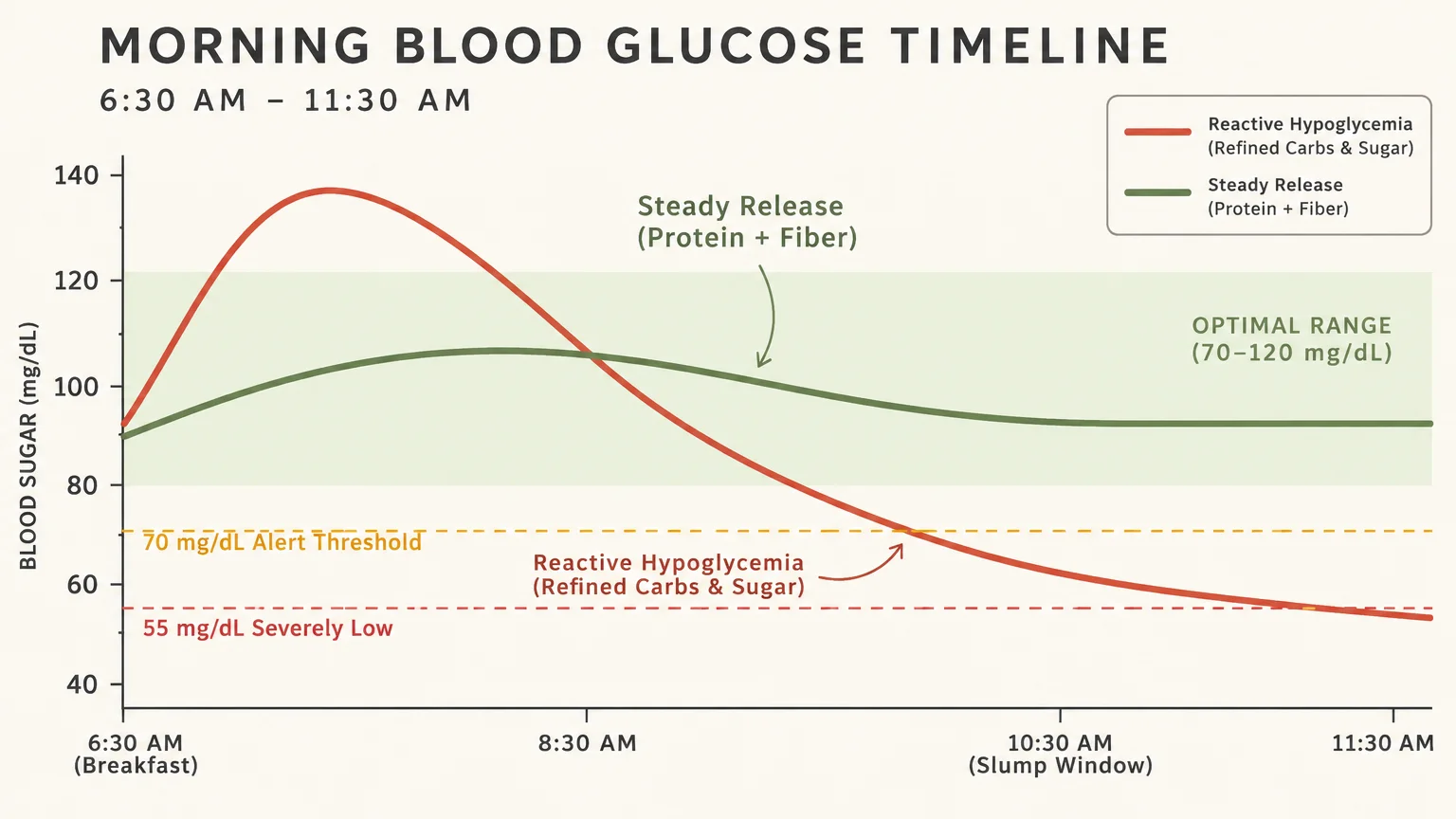
If you eat breakfast between 6:30 and 8:30 AM, a slump around 10:30 AM follows a predictable biological clock. According to the Mayo Clinic and Cleveland Clinic, reactive hypoglycemia—a drop in blood sugar after eating—typically strikes two to four hours after a meal.
When your morning meal leans heavily on refined flour or sugar, your bloodstream absorbs glucose rapidly. Your pancreas responds by releasing a surge of insulin to clear that sugar from your blood.
Sometimes that insulin surge overshoots the mark and drives your glucose down too far. The Mayo Clinic notes that blood sugar at or below 70 mg/dL marks the general alert threshold, while levels under 55 mg/dL are severely low.
You do not even need a glucose meter to recognize that dip. Common signs include sudden weakness, shakiness, gnawing hunger, irritability, headaches, dizziness, sweating, and trouble concentrating on simple tasks.
Why Traditional Breakfast Habits Backfire
Most mornings set this roller coaster in motion before you even leave the kitchen. A USDA Agricultural Research Service analysis of national survey data published in April 2024 found that 85 percent of American adults eat breakfast on a given day.
Adults age 60 and older actually eat breakfast at the highest rate of any age group. That morning meal supplies 21 percent of daily calories, 51 percent of daily caffeine, and 42 percent of daily vitamin D.
Yet the top breakfast food category across the country consists of grain products such as bread and sweet cereals, paired most often with coffee. Eating refined grains or sugary items on an empty stomach practically invites a mid-morning energy drop.
The Hidden Protein Gap After Age 60
Balancing morning blood sugar becomes even trickier as your body ages. Older adults experience age-related anabolic resistance, meaning muscles respond 16 to 30 percent less efficiently to a given dose of protein than younger adults do.
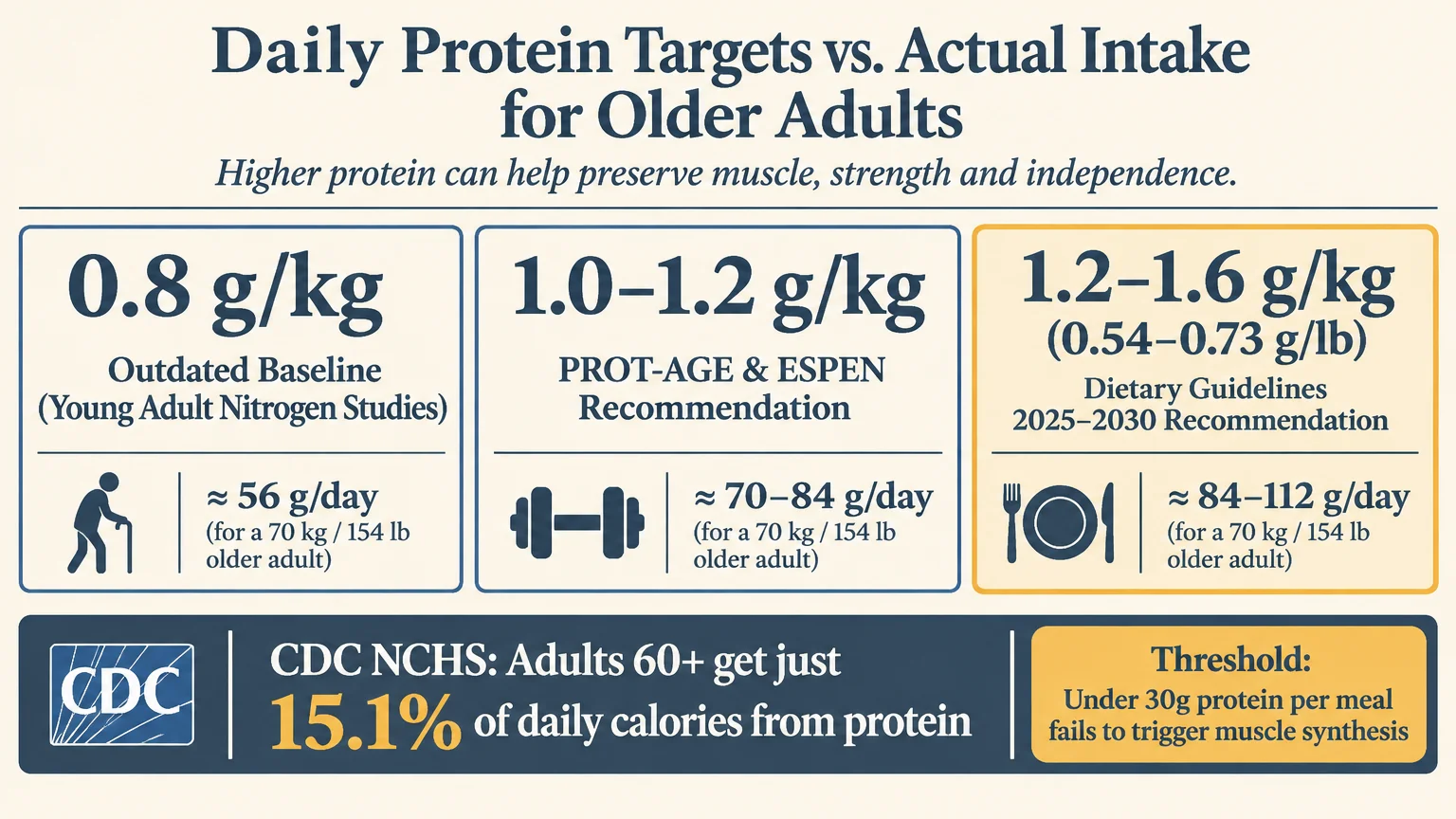
For decades, the standard adult protein target sat at 0.8 grams per kilogram of body weight per day. Researchers originally built that baseline using nitrogen-balance studies in young adults, which overlooks age-related muscle loss.
Today, both the PROT-AGE Study Group and the European Society for Clinical Nutrition and Metabolism recommend 1.0 to 1.2 grams of protein per kilogram daily for healthy older adults. Those managing acute or chronic illness often need 1.2 to 1.5 grams per kilogram.
The Dietary Guidelines for Americans, 2025–2030—released on January 7, 2026—go even further by recommending 1.2 to 1.6 grams of protein per kilogram daily, or 0.54 to 0.73 grams per pound. Those guidelines also urge older adults to prioritize protein at every meal alongside vitamin B12, vitamin D, and calcium.
Unfortunately, real-world eating habits fall short of those targets. A CDC National Center for Health Statistics data brief published in October 2026 reported that adults 60 and older get just 15.1 percent of their calories from protein, significantly less than younger adults.
Most Americans pack roughly 60 percent of their daily protein into a single evening dinner. Multi-country dietary analyses show that eating under 30 grams of protein at breakfast and lunch is the norm after age 60.
In fact, 30 percent of men and 50 percent of women over age 71 miss even the older baseline protein minimum. Around 40 percent of adults over 70 fall short of 1.0 gram per kilogram daily.
What Clinical Trials Reveal About High-Protein Mornings
Shifting some of your daily protein to the morning hours changes how your body handles carbohydrates all day. Expert consensus from PROT-AGE and the European Society for Clinical Nutrition and Metabolism highlights 25 to 30 grams of high-quality protein per meal as the sweet spot for older adults.
In a University of Missouri crossover trial published in The Journal of Nutrition, participants ate equal-calorie breakfasts containing either 35 percent protein or 15 percent protein. The higher-protein meal significantly flattened the four-hour post-breakfast blood sugar curve and even improved glucose control after lunch.
A randomized crossover trial using continuous glucose monitors found similar benefits. Eating a high-protein breakfast lowered blood sugar spikes during the three-hour morning window and kept glucose steadier across a 16-hour day.
Mental clarity improves alongside physical stamina. In a randomized crossover trial by Dalgaard and colleagues, a dairy-based high-protein breakfast of protein-rich yogurt and oats delivered stronger morning fullness and better concentration than whole-wheat bread, jam, and juice.
Protein slows down stomach emptying and dampens sharp rises in blood sugar. Pairing that protein with natural dietary fiber creates a steady release of fuel that carries you comfortably from sunrise to noon.
Foods to Embrace and Foods to Limit
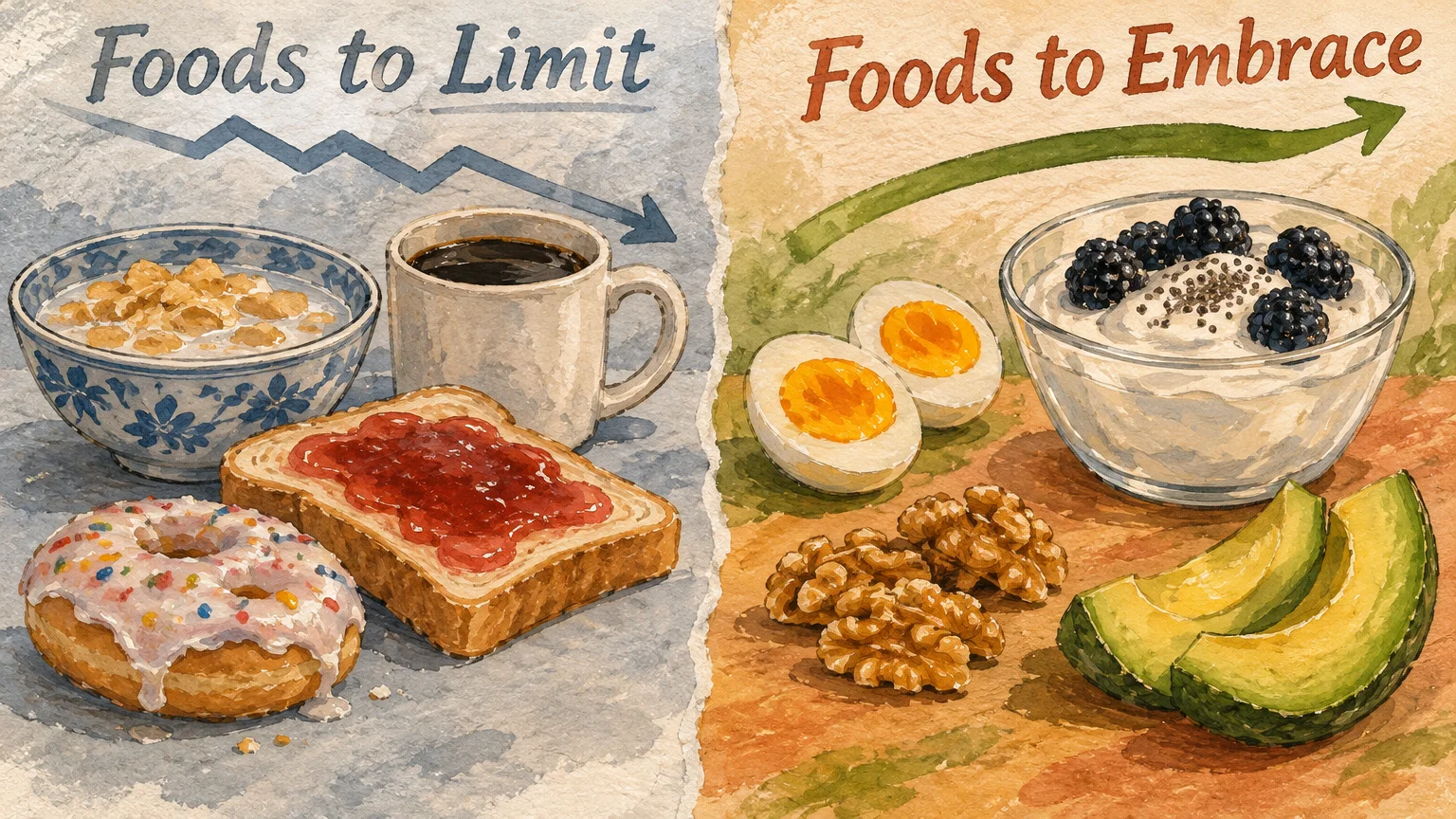
You can fix a sluggish morning without giving up foods you genuinely enjoy. Knowing which items trigger rapid glucose swings—and which affordable staples anchor steady energy—makes daily choices effortless.
Foods to Limit: Fast-Digesting Carbs and Added Sugars
Refined bakery goods and sweetened breakfast foods digest quickly because processing strips away their natural fiber. Without fiber or adequate protein to slow digestion, starch hits your bloodstream almost like pure sugar.
Consider a plain medium bagel weighing 100 grams, a staple in many morning routines. According to USDA FoodData Central, it packs about 250 calories, 48.9 grams of carbohydrates, and 439 milligrams of sodium, with only 10.2 grams of protein and 4.1 grams of fiber.
A medium butter croissant offers even less staying power. USDA nutrient figures show one 67-gram croissant delivers roughly 272 calories and 31.2 grams of carbohydrates alongside 14.1 grams of fat and just 5.5 grams of protein.
Plain white toast creates a similar mismatch when eaten lightly topped. One 28-gram slice of white bread carries 13.7 grams of carbohydrates and only 2.5 grams of protein, leaving very little buffer against a mid-morning crash.
Added sugars multiply the problem when poured into coffee, swirled into yogurt, or baked into muffins. The 2025–2030 Dietary Guidelines for Americans advise keeping added sugars to no more than 10 grams per meal and avoiding non-nutritive sweeteners.
Currently, Americans consume an average of roughly 17 teaspoons—about 77 grams—of added sugar every day. That far exceeds the American Heart Association cap of 25 grams daily for women and 36 grams daily for men.
The World Health Organization likewise advises keeping free sugars below 10 percent of daily calories, with an ideal target near 25 grams. Watching packaged cereals, flavored oatmeal packets, pastries, and sweetened coffee creamers helps you stay well under those limits.
Fruit juices also deserve a second look at breakfast. Even pure juice removes the chewing fiber of whole fruit, sending natural sugars straight into your bloodstream and accelerating the crash two hours later.
Foods to Embrace: High-Protein Morning Anchors
Building a high protein breakfast starts by choosing one primary protein anchor before adding anything else to your plate. Aiming for 25 to 30 grams of protein gives your muscles and brain reliable morning support.
Plain Greek yogurt stands out as one of the easiest no-cook anchors available. A standard 170-gram, six-ounce container provides 17.3 grams of protein according to USDA FoodData Central, leaving plenty of room to add crunchy nuts or seeds.
Cottage cheese offers another versatile option that pairs nicely with either savory vegetables or fresh berries. A four-ounce half-cup serving delivers 11.8 grams of protein and blends smoothly into scrambles or onto toast.
Whole eggs remain a classic, budget-friendly staple for good reason. Each large egg supplies 6.2 to 6.3 grams of high-quality protein for roughly 74 calories, so two or three eggs easily anchor a satisfying savory plate.
If you prefer plant-based proteins or want a dairy-free morning, firm tofu absorbs savory spices effortlessly. Half a cup of firm tofu provides an impressive 21.8 grams of protein plus 2.9 grams of fiber.
Milk, soy milk, lean turkey sausage, smoked salmon, or leftover roasted chicken from dinner can also round out your plate. Mixing two protein sources—such as eggs with cottage cheese or yogurt with almonds—helps you cross the 25-gram mark comfortably.
Foods to Embrace: Fiber-Rich Grains, Seeds, Nuts, and Produce
Protein works best when teamed with soluble and insoluble fiber. A November 2026 clinical review noted that Americans average only 15 to 16 grams of fiber per day, well short of the 25 to 38 grams recommended for adults.
Produce intake shows a similar gap in older age groups. Only 12.5 percent of adults age 51 and older eat the recommended five or more servings of fruits and vegetables each day.
Swapping refined white flour for intact whole grains adds natural texture and slows sugar absorption. The 2025–2030 Dietary Guidelines recommend two to four servings of fiber-rich whole grains daily, where one slice of whole-wheat bread or half a cup of cooked oats counts as one serving.
One 32-gram slice of whole-wheat bread delivers 4.0 grams of protein and 1.9 grams of fiber. A third-cup dry serving of rolled oats adds 3.6 grams of protein and 2.7 grams of fiber.
Seeds and nuts transform ordinary bowls into steady energy foods with minimal effort. One ounce of chia seeds supplies a remarkable 9.8 grams of fiber alongside 4.7 grams of protein.
One ounce of almonds—about 23 kernels—adds 6.0 grams of protein and 3.5 grams of fiber. Two tablespoons of peanut butter contribute 7.1 grams of protein and 1.6 grams of fiber, turning simple toast into lasting fuel.
Finish your breakfast with colorful produce for vitamins, antioxidants, and extra bulk. One cup of raspberries brings 8.0 grams of fiber and 1.5 grams of protein, while a 50-gram serving of creamy avocado adds 3.4 grams of fiber.

A Simple, Healthy Meal Idea
You do not need culinary training to hit 25 grams of protein and 8 grams of fiber before 8:00 AM. Overnight protein oats come together in five minutes the night before and wait chilled in your refrigerator.
Stir together half a cup of rolled oats, half a cup of one-percent milk, half a cup of plain nonfat Greek yogurt, and one tablespoon of chia seeds in a glass jar. Based on USDA calculations, that base delivers roughly 332 calories, 24 grams of protein, and 8 grams of fiber.
In the morning, top your jar with half a cup of fresh raspberries and a small handful of sliced almonds. That simple garnish pushes your meal cleanly over 27 grams of protein and 12 grams of fiber with zero added sugar.
If you enjoy gentle sweetness, sprinkle cinnamon and vanilla extract into the oats before chilling. Those warm spices brighten the flavor naturally while keeping you far below the 10-gram per-meal added sugar ceiling.
Three Everyday Breakfast Swaps You Can Start Tomorrow
If overnight oats do not match your mood, swap your usual morning favorites using ingredients already on grocery shelves. Each adjustment preserves familiar flavors while quietly rebalancing protein, fiber, and carbohydrates.
Swap the plain bagel and butter for whole-wheat egg toast. Toast one slice of hearty whole-wheat bread, spread 50 grams of mashed avocado on top, and add two scrambled or poached eggs.
Adding a quarter cup of cottage cheese right into your scrambled eggs makes them extra fluffy and boosts total protein past 22 grams. Pair the plate with half a cup of raspberries for bright freshness and 4 extra grams of fiber.
Swap the butter croissant and sweet coffee for a Greek yogurt parfait. Spoon a six-ounce cup of plain Greek yogurt into a bowl, then scatter one cup of raspberries and an ounce of toasted almonds across the top.
You still get rich creaminess and satisfying crunch alongside your morning cup of coffee. Better yet, you trade a 5.5-gram protein pastry for roughly 25 grams of protein and more than 11 grams of fiber.
Swap sweet toast and jam for a savory tofu and vegetable scramble. Crumble half a cup of firm tofu into a lightly oiled skillet with chopped spinach, bell peppers, and a pinch of turmeric.
Serving that warm scramble with one slice of whole-wheat toast delivers roughly 26 grams of protein and nearly 5 grams of fiber before adding vegetables. You avoid added jam sugars completely while staying full well past midday.
Mind the Three-Hour Rhythm
Even with balanced breakfast swaps, pay attention to when you eat your next meal. The Mayo Clinic advises spacing meals and snacks roughly three hours apart to prevent blood sugar from dipping too low.
If you eat breakfast at 7:00 AM and lunch waits until 1:00 PM, plan a small mid-morning bridge around 10:00 AM. A handful of almonds with a small apple or a spoonful of peanut butter on celery keeps energy smooth without spoiling your lunch appetite.

Tips for Shopping and Meal Prep
Healthy mornings happen in the grocery aisle long before you turn on the stove. A few straightforward shopping and prep habits make steady energy the easiest choice on busy weekdays.
Read Labels With Two Numbers in Mind
Turn packaged foods around and check the Nutrition Facts label before placing items in your cart. First, scan the Added Sugars line to ensure one serving stays well below 10 grams—and ideally closer to zero.
Remember that the FDA Daily Value sits at 50 grams of added sugar across a full 2,000-calorie day. Saving your sugar allowance for an occasional treat rather than spending it on breakfast cereal protects morning focus.
Next, compare total carbohydrates against protein and dietary fiber. When buying bread, crackers, or oatmeal, look for intact whole grains listed as the very first ingredient and at least 3 to 4 grams of protein per slice or serving.
Prep Components Once for Three Easy Mornings
Cooking a fresh breakfast from scratch every single day drains willpower when you feel groggy. Instead, batch-prep building blocks twice a week so morning assembly takes less than three minutes.
Line up three small jars on Sunday evening and measure rolled oats and chia seeds into each one. Adding milk and Greek yogurt takes seconds, giving you grab-and-go breakfasts through Wednesday.
For savory mornings, boil half a dozen eggs at once and store them unpeeled in the refrigerator. Pairing two pre-cooked eggs with whole-wheat toast and sliced avocado puts a balanced, high-protein plate on the table faster than waiting in a bakery line.
Pre-portion nuts and seeds into small reusable containers as well. Having measured ounces of almonds or walnuts ready prevents mindless pouring and makes topping yogurt bowls automatic.
Stock a Senior-Friendly Steady Energy Pantry
Keeping reliable staples on hand saves extra trips to the store when weather turns bad or energy runs low. Keep a loaf of whole-wheat bread in your freezer so single slices toast crisp without ever going stale on the counter.
Buy frozen berries alongside fresh produce. Frozen raspberries and blueberries hold their nutrients, cost less out of season, and thaw quickly when stirred into warm oats or chilled yogurt.
Stock single-serve six-ounce containers of plain Greek yogurt, a tub of low-sodium cottage cheese, and a jar of unsalted peanut butter with only peanuts on the ingredient list. With those basics stocked, you always have steady energy foods within arm’s reach.
For science-based nutrition information, refer to the U.S. Department of Agriculture at Nutrition.gov and the Dietary Guidelines for Americans. The National Institute on Aging also has excellent resources on healthy eating for seniors.
Frequently Asked Questions
What counts as a true blood sugar crash versus normal hunger?
Normal hunger builds gradually and leaves you ready for a meal without unpleasant physical symptoms. According to the Mayo Clinic, a reactive drop occurs two to four hours after eating and brings shakiness, dizziness, sweating, irritability, or sudden exhaustion alongside hunger.
Clinically, blood glucose at or below 70 mg/dL marks the alert threshold for low blood sugar. If you experience frequent dizzy spells, sweating, or near-fainting after meals, ask your doctor to check your glucose response.
How much protein do I really need at breakfast after age 60?
Research from the PROT-AGE Study Group and the European Society for Clinical Nutrition and Metabolism points to 25 to 30 grams of high-quality protein per meal for older adults. That amount overcomes age-related muscle resistance and slows carbohydrate absorption.
Over a full day, healthy seniors generally benefit from 1.0 to 1.2 grams of protein per kilogram of body weight, while the 2025–2030 Dietary Guidelines suggest 1.2 to 1.6 grams per kilogram. Spreading protein evenly across breakfast, lunch, and dinner works far better than loading it all into supper.
Can I still drink coffee with my morning meal?
Yes—coffee fits easily into a steady morning routine when paired with real food. National nutrition data show breakfast already provides 51 percent of daily caffeine for American adults, and coffee itself does not cause a blood sugar crash.
Trouble starts when coffee replaces breakfast or arrives loaded with flavored syrups alongside a white-flour pastry. Drink your coffee beside eggs, Greek yogurt, or overnight oats, and skip sugary creamers to keep added sugars near zero.
What if I do not feel hungry enough for a big breakfast early in the morning?
Many older adults wake up with a light appetite, which makes a heavy plate of eggs and toast feel unappealing. Choose compact, protein-dense options that go down easily, such as a six-ounce cup of plain Greek yogurt topped with chia seeds and berries.
You can also split your morning intake into two smaller mini-meals spaced about three hours apart. Try cottage cheese with raspberries around 7:30 AM, then enjoy whole-wheat toast with two tablespoons of peanut butter at 10:30 AM.
What are the best breakfast swaps if I avoid dairy or eggs?
Plant-based anchors easily hit your morning protein and fiber goals without eggs or dairy. Half a cup of firm tofu provides 21.8 grams of protein and 2.9 grams of fiber, making a spiced tofu and spinach scramble an ideal savory swap.
For sweeter mornings, cook rolled oats in unsweetened soy milk and stir in two tablespoons of peanut butter plus one ounce of chia seeds. That combination supplies generous plant protein and over 12 grams of fiber to carry your energy straight through lunch.
Disclaimer: This article is for informational purposes only and does not constitute medical advice. Always seek the advice of your physician or other qualified health provider with any questions you may have regarding a medical condition.