Keeping dependable healthy frozen meals in your freezer takes the stress out of cooking on tired evenings. Modern options can deliver steady protein, fiber, and real flavor without straining your blood pressure.
Still, freezer aisles hold plenty of salt bombs disguised as comforting dinners. Knowing which frozen food brands earn trust from dietitians helps you shop with confidence.
Here are seven standout picks backed by verified nutrition numbers, plus simple label habits that protect your heart. You can enjoy quick healthy dinners without spending hours at the stove.
The Important Role of Nutrition in Healthy Frozen Meals
If you rely on your freezer for an occasional dinner, you have plenty of company. According to U.S. Census Bureau figures cited in Food Technology in January 2026, 124.4 million Americans are 50 or older, including 63 million adults 65 and up.
Data from FMI shows older adults still cook at home 5.5 nights per week, yet the American Frozen Food Institute identifies seniors as the group most likely to buy frozen entrées. Convenience matters, especially when you are cooking for one or two.
Fresh research confirms how common freezer meals have become across American kitchens. A February 2026 report from the American Frozen Food Institute and FMI found that 40% of shoppers use frozen foods daily or every few days, up from 35% in 2019.
Meanwhile, 77% of shoppers buy frozen items for a planned meal, compared with 71% in 2023. National Frozen and Refrigerated Foods Association data cited by Grand View Research in March 2026 notes that 34% of U.S. consumers eat frozen meals weekly.
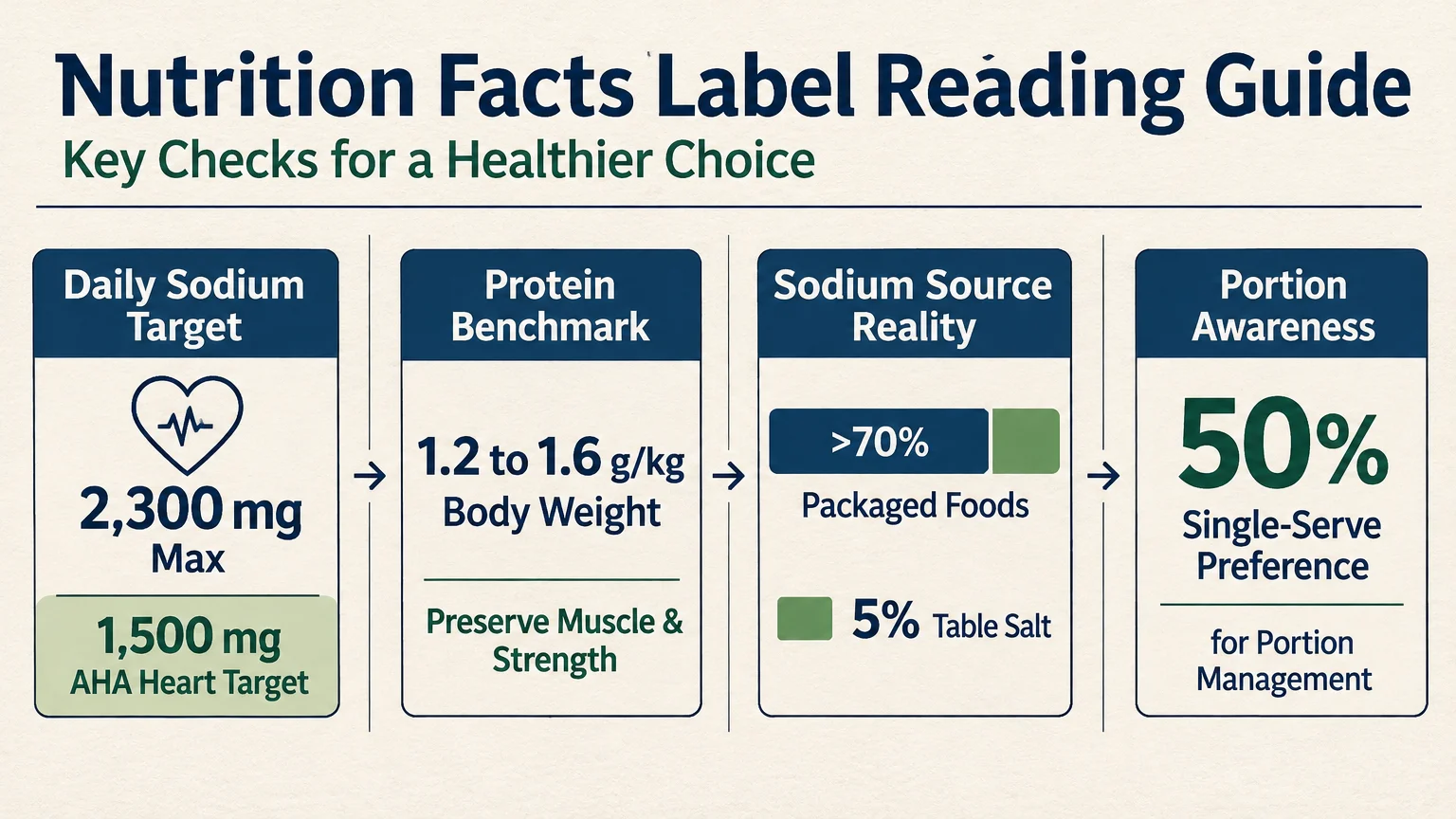
Portion control also drives people toward the freezer aisle. A Georgetown University survey cited by the American Frozen Food Institute found that 50% of shoppers choose single-serve frozen meals specifically to manage portions.
Even better, Conagra noted in January 2026 that high-protein options now represent about 14% of frozen aisle dollar sales, while roughly one in four shoppers actively avoid preservatives. Better choices exist, provided you know what your body needs after age 60.
Blood Pressure and Sodium Demands Closer Attention
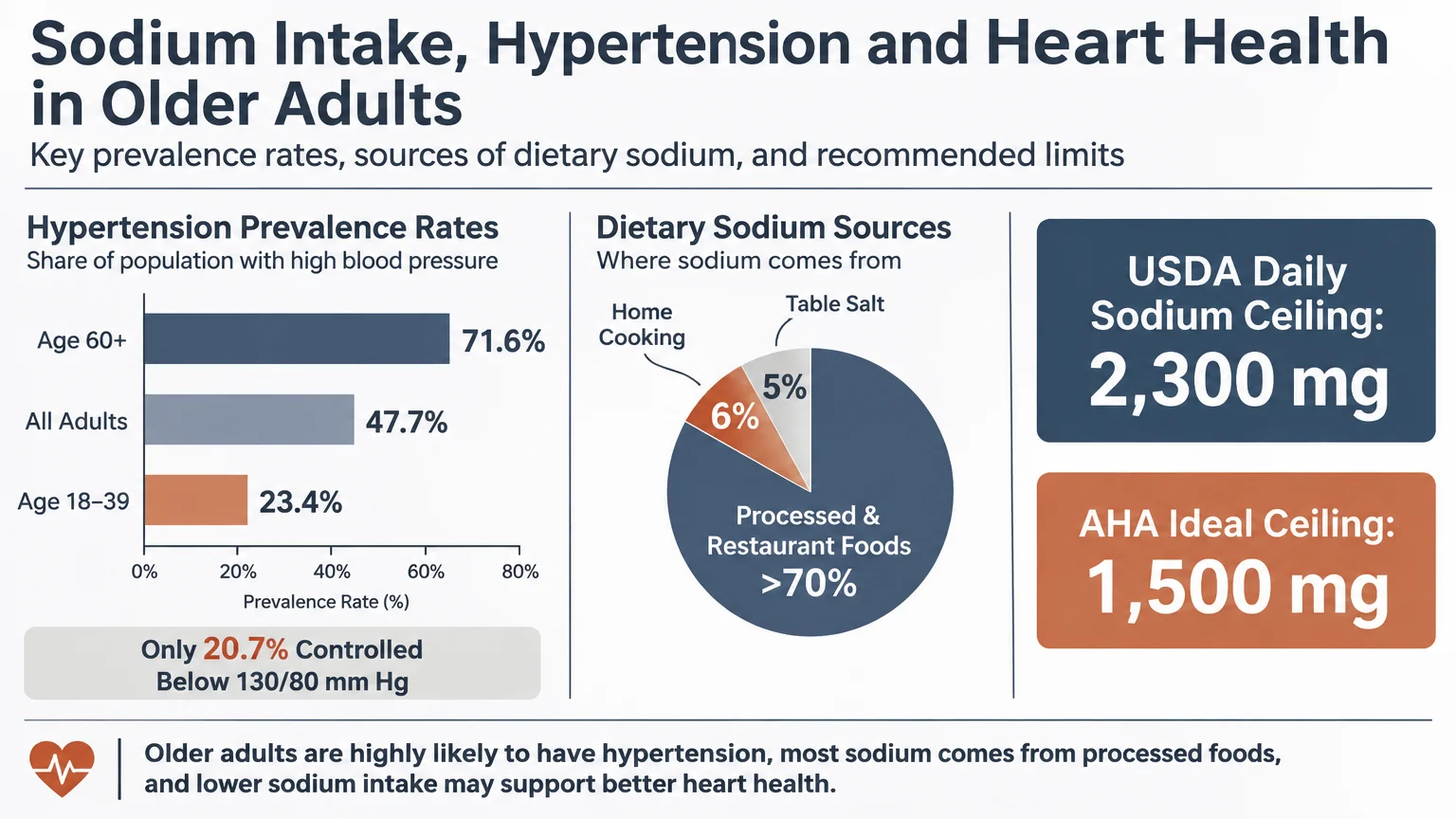
Managing sodium becomes critical as you get older. According to an October 2024 report from the CDC National Center for Health Statistics, 71.6% of U.S. adults aged 60 and older have hypertension.
That compares with 47.7% of all adults and 23.4% of adults aged 18 to 39. Even more concerning, CDC and American Heart Association figures show that only 20.7% of adults with high blood pressure have it controlled below 130/80 mm Hg.
Excess sodium drives much of that risk, and packaged food is the primary source. Both the FDA and the American Heart Association report that Americans average 3,400 mg of sodium daily.
More than 70% of that sodium comes from processed, prepackaged, and restaurant foods. Only about 5% comes from table salt, and 6% comes from home cooking.
Current federal advice sets clear boundaries to help protect your heart. The 2025–2030 Dietary Guidelines for Americans, released January 7, 2026 by the USDA and HHS, advise adults to keep sodium below 2,300 mg per day.
The American Heart Association goes further for heart protection, setting an ideal ceiling of 1,500 mg per day for most adults, especially anyone over 50 or managing high blood pressure. Choosing low sodium frozen meals makes hitting that daily budget realistic.
Protein, Whole Grains, and Realistic Benchmarks
Sodium is only part of the picture when you evaluate quick healthy dinners. The 2025–2030 Dietary Guidelines for Americans recommend 1.2 to 1.6 grams of protein per kilogram of body weight daily to help preserve strength as you age.
If you live with or face risk for chronic kidney disease, clinical guidance notes you should set personal protein targets with your doctor. Everyone else benefits from steady protein distributed across meals.
Those same federal guidelines advise limiting saturated fat to under 10% of total calories, eating 2 to 4 servings of whole grains daily, and cutting back on highly processed dinners. For adults 60 and older, daily energy needs run roughly 1,600 to 2,200 calories for women and 2,000 to 2,600 for men.
To bridge the gap between real life and ideal targets, registered dietitians commonly advise choosing frozen entrées with under 600 mg of sodium per serving. Healthline noted in June 2026 that these dietitian recommended frozen meals generally cost between $2 and $11 per serving.
Federal labeling rules are tightening in the same direction. Finalized December 19, 2024 and effective April 28, 2025, the FDA updated its healthy claim for the first time since 1994, with mandatory industry compliance by February 25, 2028.
Under that rule, meals labeled healthy must include recommended food groups while capping saturated fat, added sugars, and sodium at 690 mg or less per serving. A peer-reviewed database check found only 14% of 3,062 products met those updated standards, mostly failing on excess salt and saturated fat.
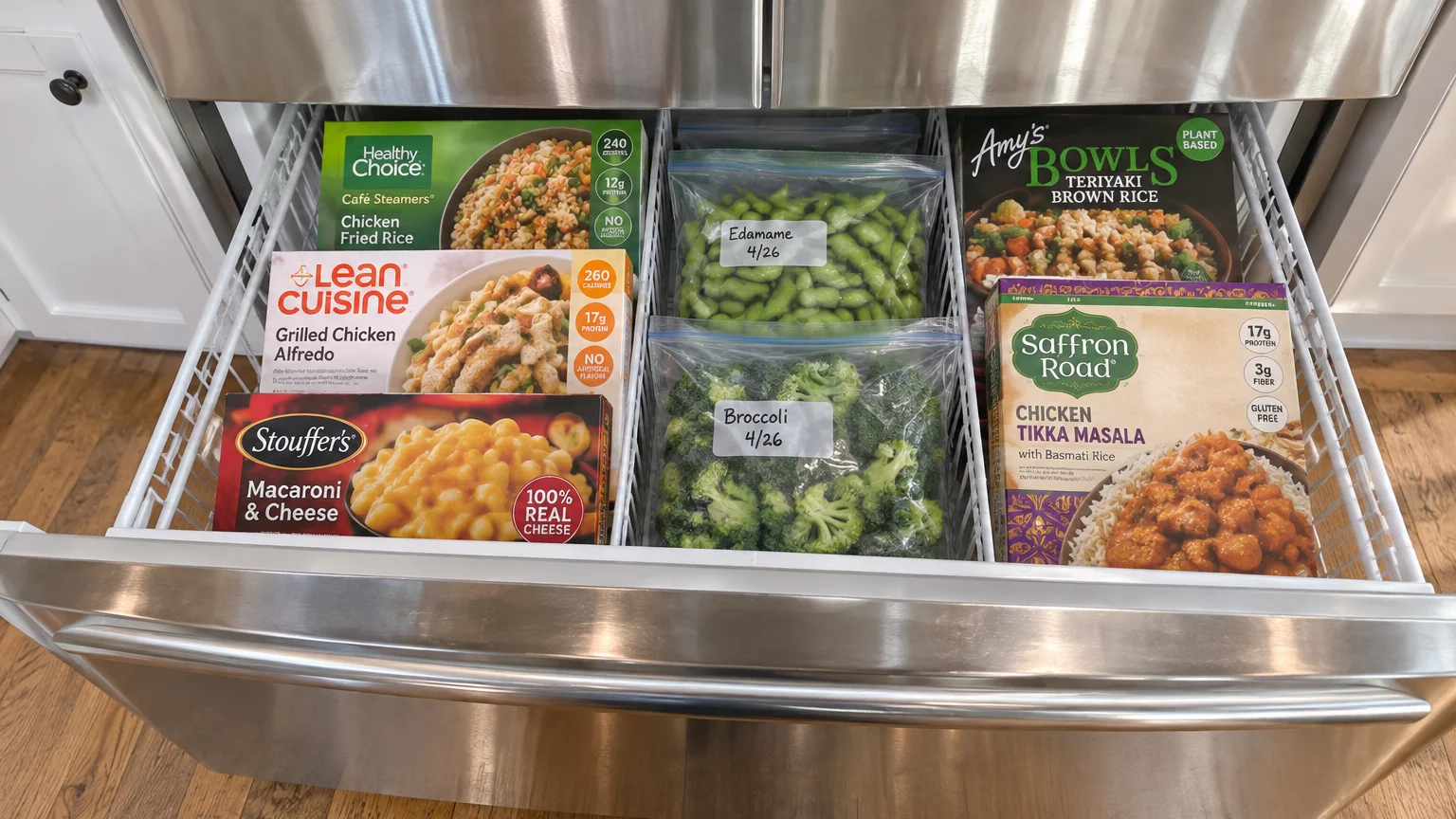
7 Dietitian Recommended Frozen Meals Worth Keeping on Hand
With thousands of boxes crowding the freezer case, having a short shopping list saves time and guesswork. Each of the seven meals below meets strict dietitian standards for sodium, protein, and whole-food ingredients.
Remember that formulas and flavors vary even inside trusted frozen food brands. Always verify the specific meal name on the front of the box before dropping it in your basket.
1. Amy’s Kitchen Light in Sodium Mexican Casserole Bowl
This comforting meatless bowl pairs black beans, corn, and tomatoes over organic brown rice and tortillas without overloading your plate with salt. Dietitians highlighted it in both Health Loft in September 2025 and the MyFitnessPal Blog in March 2026.
Each serving delivers 370 calories, 370 mg of sodium, 13 grams of protein, 6 grams of fiber, and 5 grams of saturated fat. At well under 400 mg of sodium, it leaves plenty of room in your daily budget.
Because the protein sits at 13 grams, pairing this bowl with an ounce of shredded chicken or plain Greek yogurt makes it even more filling. You get rich Mexican spices and hearty whole grains in minutes.
2. Healthy Choice Power Bowls Adobo Chicken
Registered dietitian Joanna Gregg recommended this balanced bowl on the MyFitnessPal Blog in March 2026 for good reason. It combines roasted chicken with leafy greens, vegetables, and whole grains in a savory adobo sauce.
Every bowl provides 22 grams of protein, 7 grams of fiber, 2.5 grams of saturated fat, just 1 gram of added sugar, and 600 mg of sodium. That protein-to-saturated-fat ratio is hard to beat in the freezer aisle.
Because sodium lands right at the 600 mg dietitian ceiling, balance the rest of your day with fresh fruit, unsalted vegetables, and home-cooked snacks. You will feel satisfied for hours without sluggishness.
3. Healthy Choice Simply Steamers Grilled Chicken Marsala
Steaming trays keep sauces separate until heating, which preserves crisp vegetables and tender chicken without relying on heavy salt. An April 2025 low-sodium dietitian guide singled out several Simply Steamers varieties under 550 mg of sodium.
Grilled Chicken Marsala tops the list at just 460 mg of sodium and 17 grams of protein per bowl. The wine-and-mushroom sauce feels like a classic restaurant entrée with a fraction of the salt.
If you like variety from the same line, try the Southwest Style Chicken Burrito Bowl at 460 mg of sodium and 20 grams of protein. Grilled Basil Chicken offers 470 mg of sodium and 19 grams of protein, while Beef and Broccoli comes in at 520 mg and 16 grams.
4. Lean Cuisine Apple Cranberry Chicken
Shoppers often overlook Lean Cuisine when searching for wholesome dinners, yet select boxes carry the American Heart Association Heart-Check certification. That seal gives you a quick shortcut when scanning crowded shelves.
An April 2025 renal and low-sodium dietitian guide highlighted Apple Cranberry Chicken, which delivers 500 mg of sodium and 14 grams of protein. Tender chicken, tart cranberries, and whole grains create a sweet-savory plate that feels cozy in cooler months.
From the same Heart-Check lineup, Garlic Sesame Asian Style Noodles with Beef provides 510 mg of sodium and 16 grams of protein. Both options keep portion sizes tidy while respecting blood pressure targets.
5. Kevin’s Natural Foods Thai-Style Coconut Chicken
If you want high protein in a smaller calorie footprint, Kevin’s Natural Foods makes a strong contender. According to its H-E-B nutrition label, the 9.5-ounce single-serve Thai-Style Coconut Chicken bowl packs 24 grams of protein into just 230 calories.
It also provides 4 grams of fiber and 450 mg of sodium, keeping salt firmly under control. The mild coconut and herb seasoning tastes bright rather than heavy.
Keep an eye on saturated fat, which sits at 8 grams per bowl due to the coconut milk. Adding steamed green beans on the side turns this compact bowl into a generous plate while keeping overall saturated fat balanced across your day.
6. Deep Indian Kitchen Butter Chicken
Restaurant Indian curries often pack massive amounts of salt and cream, yet this nine-ounce frozen tray offers surprising restraint. According to its Stop and Shop nutrition label, Deep Indian Kitchen Butter Chicken contains 400 calories, 23 grams of protein, and 4 grams of fiber.
It also stays within dietitian guidelines at 590 mg of sodium and only 2 grams of added sugar, alongside 8 grams of saturated fat. Warm spices like tomato, garlic, and ginger make every bite feel special.
Notice how crucial flavor-by-flavor checking is with this brand. Deep Indian Kitchen’s Mild Coconut Chicken Curry drops saturated fat to 4 grams and calories to 330 with 24 grams of protein and 4 grams of fiber, yet its sodium jumps to 860 mg.
7. Saffron Road Chicken Enchiladas al Chipotle
Saffron Road focuses on antibiotic-free meats and certified gluten-free recipes, making it a staple among dietitian recommended frozen meals. Both an April 2025 dietitian guide and Health Loft in September 2025 praised top picks from this line.
Chicken Enchiladas al Chipotle brings smoky flavor with 570 mg of sodium and 18 grams of protein. If you want a plant-based option, Saffron Road Chickpea Masala drops sodium to 470 mg with 9 grams of protein.
Vegetable Pad Thai offers another solid meatless dinner at 420 calories, 15 grams of protein, and 600 mg of sodium. Still, skip the Korean Inspired BBQ Chicken if sodium is your priority; Emily Sullivan, RD, noted on the MyFitnessPal Blog in March 2026 that it hits 710 mg despite having 22 grams of protein, 3 grams of fiber, and 2.5 grams of saturated fat.
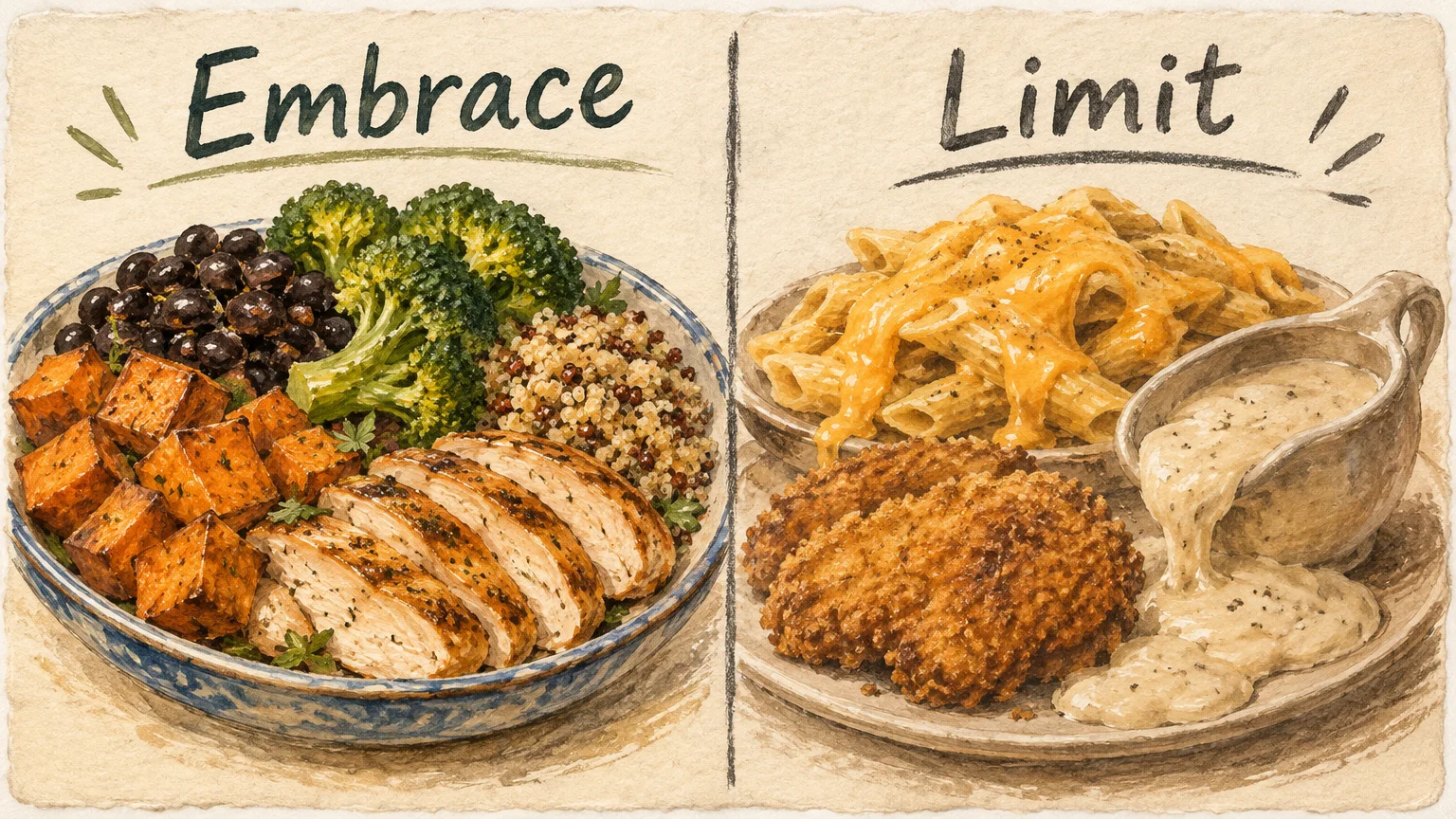
Foods to Embrace and Foods to Limit
Choosing healthy frozen meals gets much easier once you spot patterns on ingredient lists and nutrition panels. A quick scan tells you whether a dish nourishes your body or quietly undermines your goals.
Ingredients and Claims to Embrace
Look first for meals built around recognizable whole foods such as chicken breast, beans, lentils, brown rice, quinoa, and colorful vegetables. Dishes offering 14 to 24 grams of protein and 4 to 7 grams of fiber help keep blood sugar steady and hunger quiet.
When you want lighter vegetarian comfort food, options like Amy’s Pesto Tortellini Bowl show how pasta can fit carefully into your week. Highlighted in a March 2025 Men’s Fitness dietitian roundup, it packs 530 calories, 20 grams of protein, 4 grams of fiber, zero added sugar, and 590 mg of sodium, though 9 grams of saturated fat means keeping other meals light.
Knowing official FDA sodium labels helps you decode front-of-box claims accurately. For meal products and main dishes, low sodium legally means 140 mg or less per 100 grams of food, while very low sodium means 35 mg or less per 100 grams.
A sodium-free or salt-free food contains less than 5 mg per serving. Meanwhile, reduced sodium means at least 25% less sodium than the regular version, and light in sodium means at least 50% less.
Watch for no-salt-added or unsalted items too, which simply means salt was skipped during processing rather than guaranteed zero sodium. For helpful nutrients like fiber or protein, good source means 10% to 19% of the Daily Value, while high or excellent source means 20% or more.
Help may also be coming to package fronts in the near future. In January 2025, the FDA proposed a front-of-package box rating saturated fat, sodium, and added sugars as Low, Medium, or High, though as of November 2026 that proposal remains pending.
Ingredients and Traps to Limit
The biggest trap in the freezer aisle is assuming every flavor from a trusted brand shares the same sodium level. As seen with Deep Indian Kitchen’s 860 mg curry and Saffron Road’s 710 mg BBQ chicken, sauces can add hundreds of extra milligrams fast.
Limit entrées swimming in heavy cheese, cream, or buttery sauces that push saturated fat past a third of your daily allowance in one sitting. Keep added sugars low as well, especially in sweet teriyaki, bourbon, or honey-glazed dishes.
Be cautious with crispy breaded cutlets or meat patties that display grill marks or golden browning. USDA food safety experts warn that some of these frozen lookalikes are actually raw cook-and-serve products rather than heat-and-eat meals.
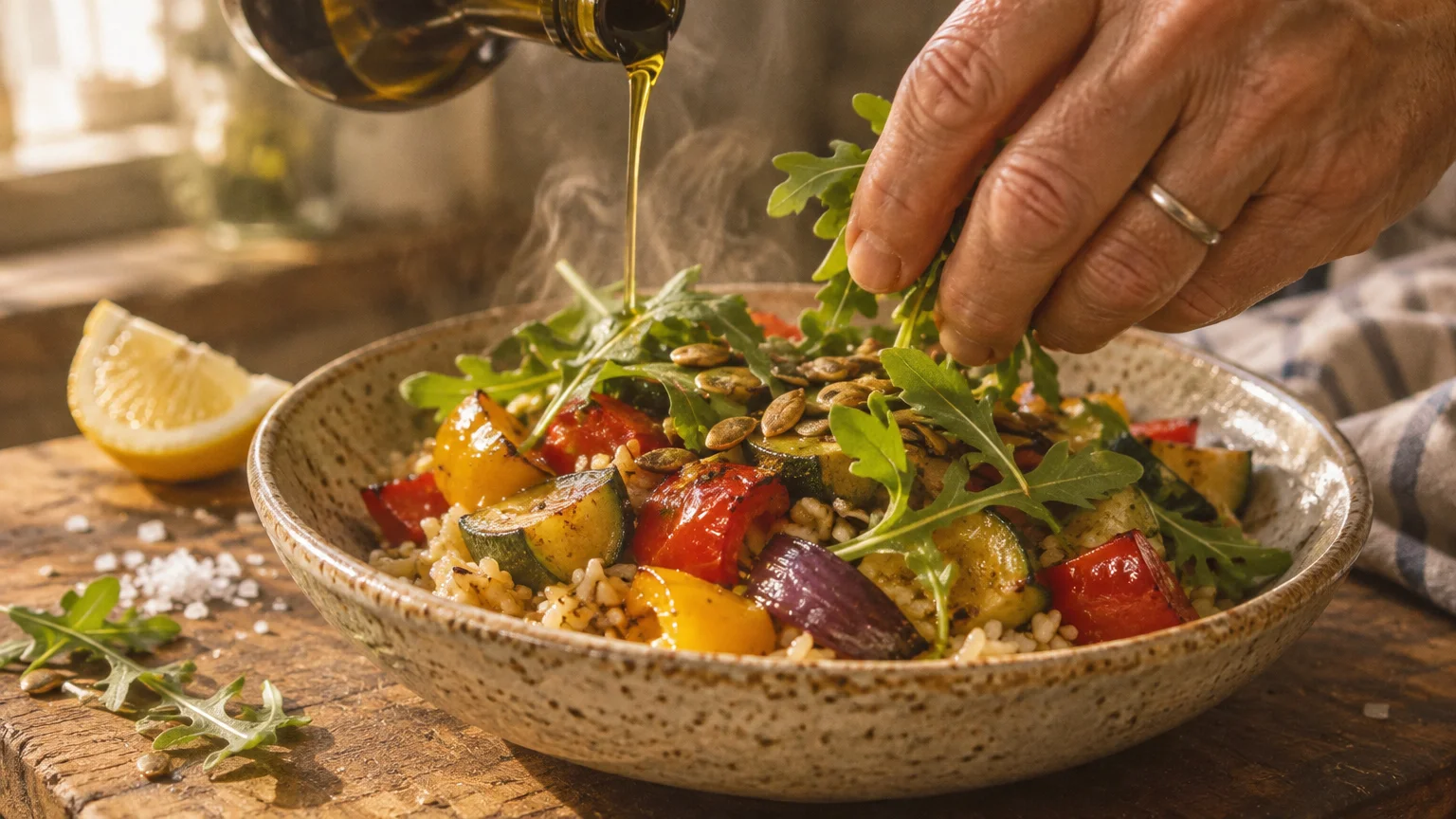
A Simple, Healthy Meal Idea
Even the best single-serve frozen bowl rarely fills an entire dinner plate with enough colorful produce. Pairing a smart entrée with two zero-salt kitchen staples turns a light tray into a deeply satisfying meal in under ten minutes.
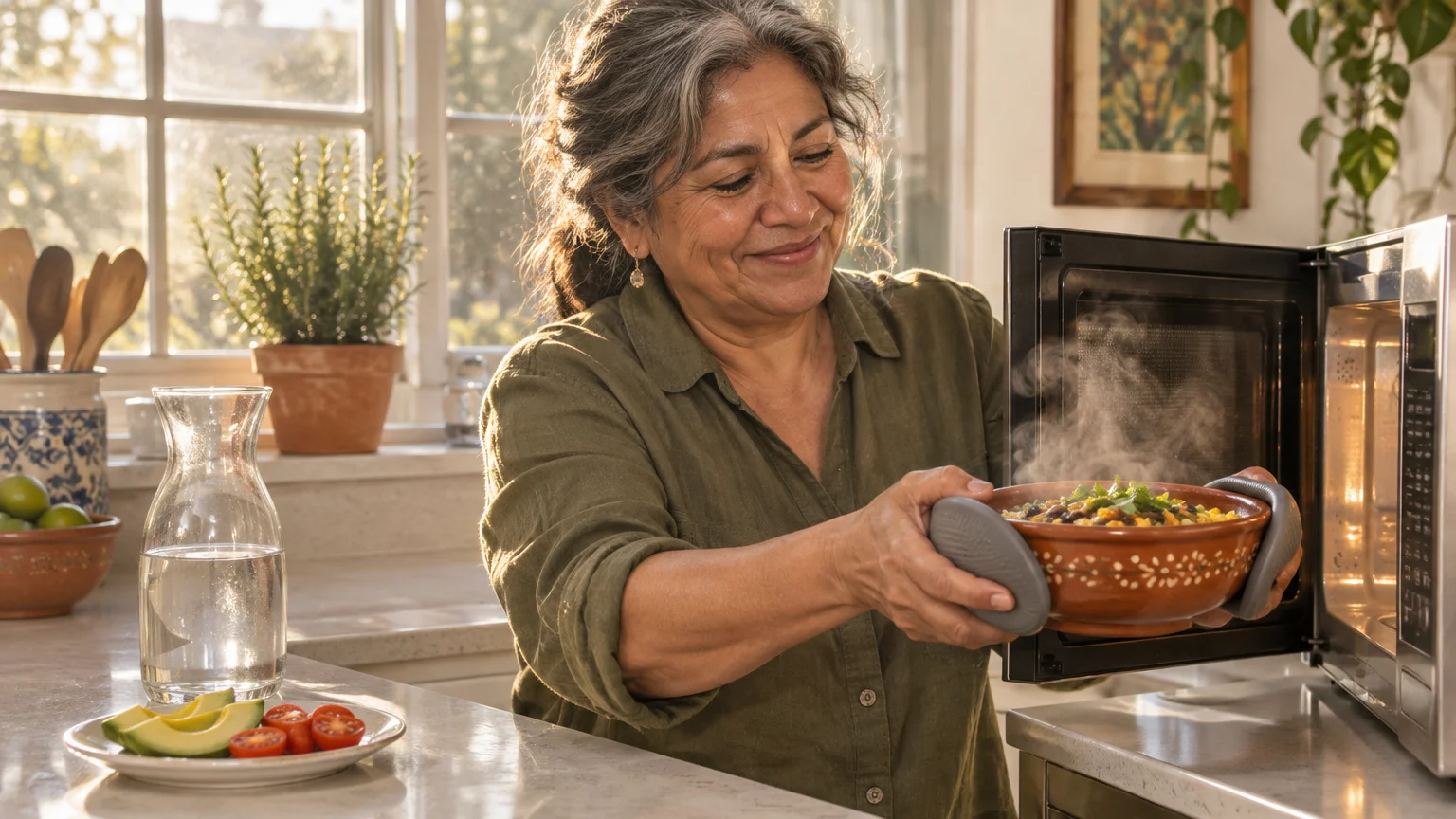
Start by heating one Amy’s Light in Sodium Mexican Casserole Bowl, which brings 370 calories, 13 grams of protein, 6 grams of fiber, and just 370 mg of sodium. While it heats, steam one cup of plain frozen broccoli or spinach in a microwave-safe bowl with a splash of water.
Toss the steamed greens with a squeeze of fresh lime juice and a pinch of garlic powder instead of salt. Spoon the hot casserole over the greens, then top everything with a quarter of a sliced avocado and two tablespoons of plain nonfat Greek yogurt.
That simple upgrade adds potassium, healthy monounsaturated fats, extra fiber, and a few grams of bonus protein while adding very little sodium. If you prefer poultry, swap in Healthy Choice Simply Steamers Grilled Chicken Marsala at 460 mg of sodium and 17 grams of protein alongside steamed green beans and a small green salad dressed with olive oil and vinegar.
Tips for Shopping and Meal Prep
A few consistent habits at the grocery store and at home make frozen food brands work harder for your health and wallet. Use these practical routines every time you restock your freezer.
Compare Labels Flavor by Flavor
Never grab a frozen dinner based solely on a green box or familiar logo. Turn the carton over and check four numbers first: sodium under 600 mg, protein of at least 14 grams, fiber of 4 grams or more, and low added sugar.
Check the serving count on the Nutrition Facts panel too, because larger family trays sometimes split nutrition across two servings. Watching unit prices helps you spot sales when dietitian-approved bowls dip toward the lower end of their $2 to $11 range.
Protect Yourself with Freezer and Heating Temperatures
Food safety deserves extra attention for older adults, because aging lowers the immune response to harmful bacteria. Per the USDA Food Safety and Inspection Service, foodborne illness causes an estimated 48 million illnesses, 128,000 hospitalizations, and 3,000 deaths in the United States each year.
Keep your home freezer at 0 degrees Fahrenheit or below and your refrigerator at 40 degrees Fahrenheit or below. Food held steadily at 0 degrees remains safe indefinitely because freezing pauses bacterial growth, though taste and texture eventually fade.
Never rely only on package minutes or hot edges when warming your meal, because microwaves heat unevenly. USDA guidance recommends heating ready-to-eat frozen meals, poultry, leftovers, and frozen vegetables to an internal temperature of 165 degrees Fahrenheit, verified with a food thermometer.
Always read cooking directions closely to catch raw cook-and-serve lookalikes with browned breading or grill marks. Raw poultry meals must reach 165 degrees Fahrenheit, and raw ground meat dishes must reach 160 degrees Fahrenheit to be safe.
Respect the Two-Hour Leftover Rule
If a meal turns out larger than your appetite, cool and store what you do not finish right away. USDA safety rules advise refrigerating heated foods within two hours, or within one hour when room or outdoor temperatures exceed 90 degrees Fahrenheit.
Eat refrigerated leftovers within four days, or freeze them promptly in an airtight container for another night. Labeling containers with masking tape and a marker keeps older dishes from getting lost in the back.
Stock Zero-Salt Pantry Boosters
Keep bags of plain frozen vegetables, frozen berries, unsalted canned beans, and dried herbs within easy reach. Plain frozen peas, cauliflower, or mixed greens contain no added salt and steam cleanly alongside any entrée.
A squeeze of lemon, a splash of balsamic vinegar, or a sprinkle of smoked paprika wakes up muted flavors immediately. You get vibrant taste and fuller plates while keeping low sodium frozen meals at the center of your routine.
Frequently Asked Questions
Are low sodium frozen meals healthy for seniors?
Yes, carefully chosen low sodium frozen meals can fit very well into a senior diet. Look for options under 600 mg of sodium per serving with strong protein, plenty of fiber, and minimal saturated fat or added sugar.
Pair your entrée with plain frozen vegetables or a small side salad to boost potassium and vitamins without adding salt. Checking the label every time keeps hidden sodium out of your cart.
What should I look for on frozen food labels?
Start with the Nutrition Facts panel rather than front-of-box marketing buzzwords. Aim for 600 mg of sodium or less per meal, at least 14 grams of protein, 4 or more grams of fiber, and minimal added sugars.
Remember that FDA rules define low sodium main dishes as 140 mg or less per 100 grams, while light in sodium means at least 50% less salt than the regular recipe. Checking saturated fat also helps protect your heart.
Can I refreeze a frozen dinner or save leftovers safely?
Once you fully cook a frozen meal to 165 degrees Fahrenheit, you can refrigerate leftovers within two hours, or one hour if temperatures top 90 degrees. Eat refrigerated leftovers within four days or freeze them safely for later.
If an uncooked frozen meal thaws in the refrigerator at 40 degrees Fahrenheit or below, you can safely refreeze it without cooking, though texture may soften. Discard anything left at room temperature too long.
How much protein should my frozen meal contain?
The 2025–2030 Dietary Guidelines for Americans suggest 1.2 to 1.6 grams of protein per kilogram of body weight daily for adults. Choosing frozen entrées with 15 to 24 grams of protein helps you meet that goal comfortably.
If your meal sits closer to 10 or 13 grams, boost it easily with unsalted beans, a hard-boiled egg, or plain Greek yogurt. Always ask your physician about personal protein targets if you have chronic kidney disease.
How much do dietitian recommended frozen meals usually cost?
According to June 2026 Healthline reporting, dietitian recommended frozen meals typically run from $2 to $11 per serving.
Stocking up during weekly store sales helps keep quick healthy dinners affordable. Even mid-priced frozen bowls usually cost far less than restaurant takeout while giving you far tighter control over sodium and portions.
For science-based nutrition information, refer to the U.S. Department of Agriculture at Nutrition.gov and the Dietary Guidelines for Americans. The National Institute on Aging also has excellent resources on healthy eating for seniors.
Disclaimer: This article is for informational purposes only and does not constitute medical advice. Always seek the advice of your physician or other qualified health provider with any questions you may have regarding a medical condition.