
Your thyroid gland dictates how your body uses energy, meaning a subtle dysfunction can quickly disrupt your daily vitality and overall aging wellness.
Recognizing the signs of an underactive or overactive thyroid empowers you to address unexplained fatigue, unexpected weight shifts, or sudden mood changes before they severely impact your quality of life.
Because thyroid symptoms in older adults often mimic the standard signs of aging, many cases go undiagnosed for years. By learning to identify these five crucial physical and emotional shifts, you can take immediate action to protect your hormonal health.
Let us explore exactly what to watch for so you can maintain the vibrant, active lifestyle you deserve.
Understanding the Basics of Thyroid Health for Seniors
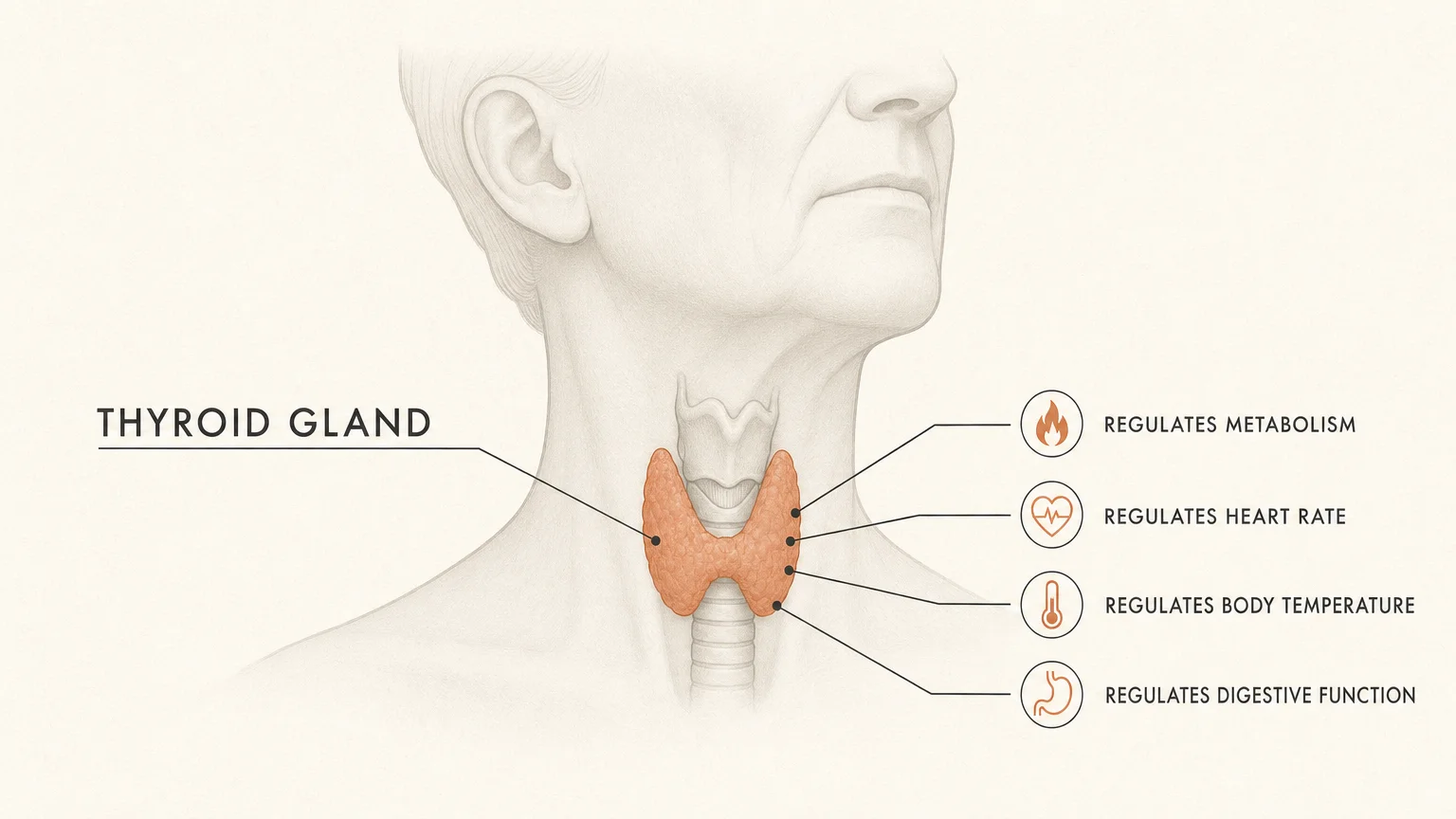
Your thyroid is a small, butterfly-shaped gland resting comfortably at the base of your neck, yet it holds immense power over your entire physical system. It produces specific hormones—primarily thyroxine and triiodothyronine—that directly regulate your metabolism, heart rate, body temperature, and digestive function.
Think of your thyroid gland as the master conductor of an intricate biological orchestra; when it keeps the correct tempo, your bodily systems work in perfect, effortless harmony. However, when the conductor slows down or speeds up unprompted, the resulting physical and emotional dissonance can drastically reduce your quality of life and interfere with your daily activities.
As you enter your sixties and beyond, your risk of developing thyroid disorders naturally increases. Medical data suggests that thyroid dysfunction affects a significant portion of the senior population, particularly women, though men are certainly not immune to these changes. What makes senior health so complex in this regard is the subtle, often misleading nature of the symptoms.
A younger person with an underactive thyroid might experience severe, classic symptoms that quickly point a doctor toward the correct diagnosis. In contrast, an older adult might only display mild cognitive changes, a slight decrease in energy, or vague joint discomfort. Healthcare professionals frequently refer to this phenomenon as atypical presentation, which unfortunately means that thyroid issues in seniors are frequently misdiagnosed as routine consequences of growing older.
The two primary thyroid conditions you need to understand are hypothyroidism and hyperthyroidism. Hypothyroidism occurs when your gland fails to produce enough hormones, causing your metabolic processes to slow down drastically. Hyperthyroidism represents the exact opposite scenario; your gland produces an excess of hormones, pushing your bodily systems into dangerous overdrive.
Both conditions carry significant implications for your aging wellness, impacting everything from your cardiovascular stability to your emotional well-being. Recognizing these disorders requires deep vigilance, as blaming your physical symptoms on simple aging remains a common and dangerous trap. By understanding how your thyroid operates and staying alert to the physical signs your body sends you, you empower yourself to advocate for proper diagnostic testing and timely medical intervention.












5 Responses
This information was very helpful. I am 68 years. Just had my blood work done, to check my thyroid. I’m a very active senior and would like to keep up with my wellness.
Could you send this pdf to my email. Thanks
Just wondering, I’m adult woman 70
Don’t sleep the night through
Always up 2 or. 3 am in the early mornings
Would this have anything to do
With my thyroid ?
I just been diagnosed with low thyroid level and I really don’t understand what symptoms to look for. I would appreciate any information on this.
I’ve been diagnosed with an overactive thyroid. The measurements show that it’s enormous. What can I do about this?
I am a 58-year-old woman, and my recent bloodwork showed a TSH level of 4.65. I discussed this with my doctor, who ordered further thyroid function tests. Everything was within the normal range except my TSH, which had increased to 4.95. He recommended repeating the tests in six months.
I am concerned about waiting that long and would like to know whether there is anything I can do now to support my thyroid health. Are there foods, dietary changes, or lifestyle habits that may help before my next test?
Although I do not have all the symptoms associated with hypothyroidism, I am experiencing weight gain. Sometimes, it feels as though I gain weight even when I only drink water, which is very worrying.
I would appreciate your advice on what I can do and whether an earlier follow-up would be appropriate.
Thank you,
Jennifer