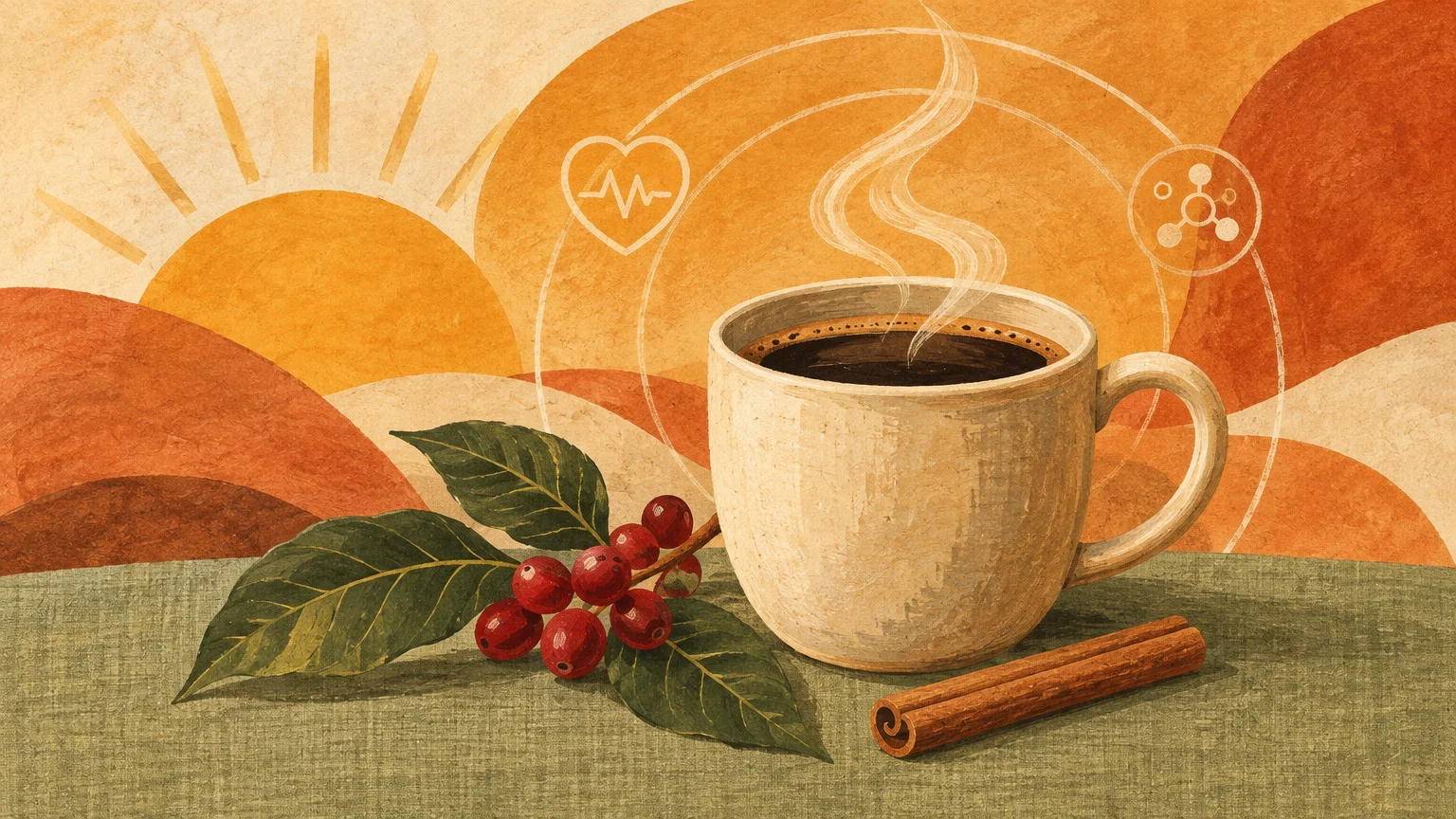
Your morning cup can protect your heart and sharpen your mind when you choose the right ingredients. Unfortunately, many popular cafe beverages pack more sugar than a pastry, quietly erasing those benefits.
Knowing which orders support healthy aging lets you enjoy every sip without guesswork. As a dietitian, I help older adults turn daily coffee rituals into steady, delicious wellness habits.
Here is how to pick the healthiest coffee drinks, smart milk swaps, and timing strategies backed by current nutrition science.
The Important Role of Nutrition in Healthy Coffee Drinks
Plain coffee is far more than a quick morning wake-up call for older adults. Brewed black coffee contains naturally occurring polyphenols, including chlorogenic acid, which support healthy blood sugar and blood vessel function.
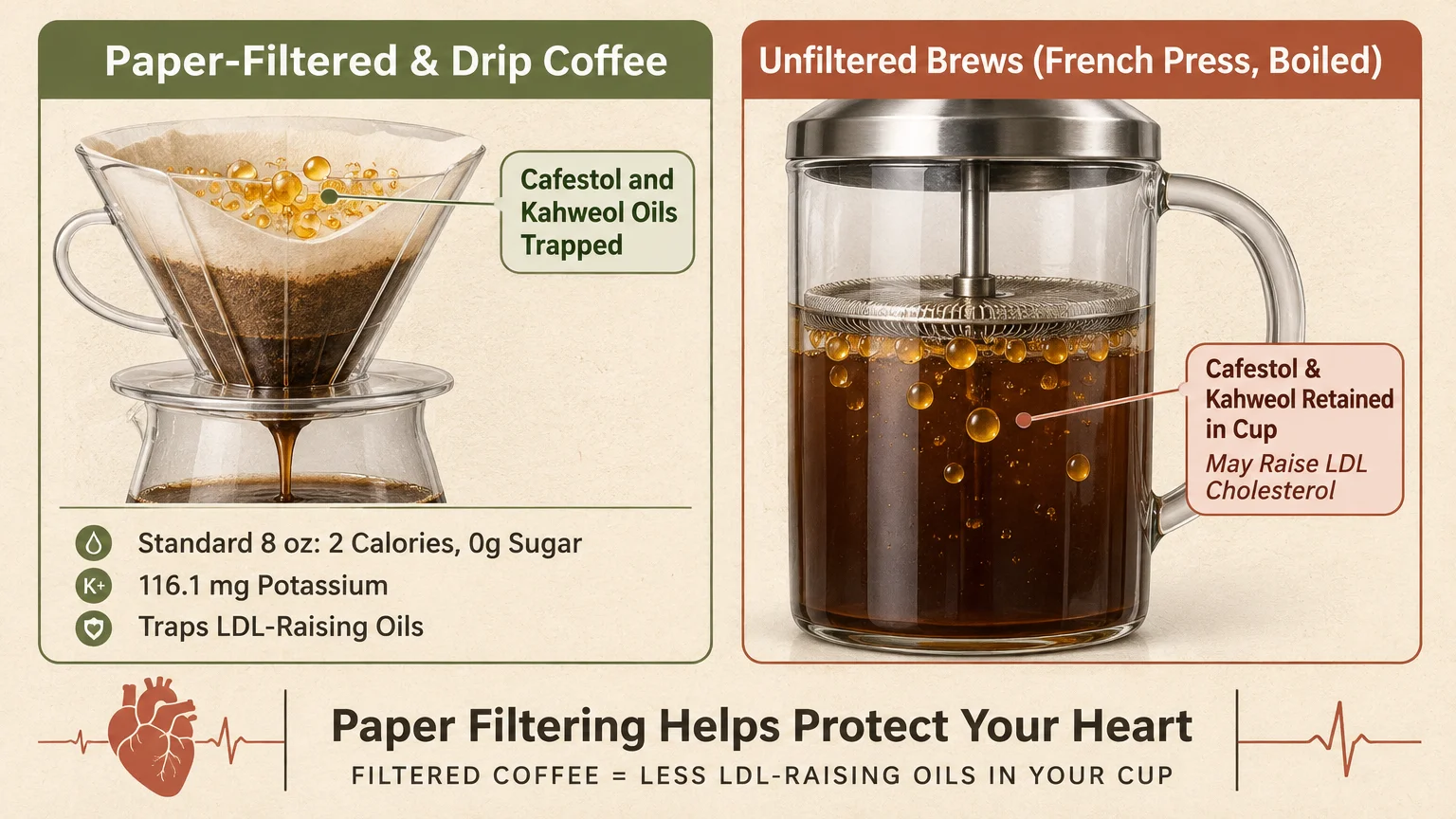
A standard eight-ounce cup of plain black coffee provides just 2 calories and zero grams of sugar or saturated fat. It also contributes small amounts of potassium, delivering about 116.1 milligrams per cup alongside minimal sodium.
Research continues to highlight impressive coffee health benefits for your heart, metabolism, and aging brain. In July 2026, the American Heart Association reported that moderate caffeinated coffee links to lower risks of Type 2 diabetes, coronary heart disease, stroke, heart failure, and atrial fibrillation.
Those cardiovascular perks depend heavily on keeping your mug simple. The same scientific statement notes that adding syrups, sugar, or heavy cream likely blunts coffee’s protective effects.
Why Additives Cancel Out Longevity Gains
Real-world population data backs up that warning about sweet and creamy add-ins. A June 2025 Tufts University study in The Journal of Nutrition tracked 46,222 U.S. adults to measure how coffee habits affect lifespan.
Drinking one to three cups of caffeinated coffee daily was tied to a 16 to 17 percent lower risk of all-cause death. However, that survival edge held only for black coffee or lightly dressed cups with under 2.5 grams of added sugar and under 1 gram of saturated fat per eight ounces.
Adults who drank coffee loaded with extra sugar and saturated fat saw no mortality benefit at all. What you pour into your cup matters just as much as the beans themselves.
Brain Health and Blood Sugar Support
Consistent coffee habits may also help protect memory and thinking skills as you age. A March 2026 Harvard study published in JAMA followed 131,821 adults over 43 years and linked two to three daily cups of caffeinated coffee to up to an 18 percent lower dementia risk.
Participants saw stronger cognitive scores regardless of genetic risk, though decaffeinated coffee did not show that same dementia protection. Meanwhile, metabolic benefits appear in both regular and decaf cups.
A meta-analysis of 30 prospective studies covering over 1.18 million participants linked each extra daily cup of either caffeinated or decaffeinated coffee to roughly a 6 percent lower risk of Type 2 diabetes. Researchers credit chlorogenic acid and related plant compounds for helping cells handle glucose more smoothly.
Brewing Methods, Cholesterol, and Serving Temperature
Your coffee maker shapes how your drink affects your cholesterol levels. Coffee oils naturally contain compounds called cafestol and kahweol that can raise LDL cholesterol when consumed in large amounts.
Paper filters used in drip machines and pour-over cones trap nearly all of those cholesterol-raising oils, and instant coffee removes them too. Unfiltered brews like French press, Turkish coffee, and boiled coffee leave high amounts in your cup.
In its July 2026 statement, the American Heart Association identified plain paper-filtered or instant coffee as the healthiest choices for heart health. A 20-year Norwegian study of 508,747 adults likewise linked filtered coffee to lower cardiovascular mortality compared with unfiltered coffee, especially in men over 60.
Espresso sits in the middle because it uses high pressure without a paper filter. The Tromso Study, which examined adults averaging 56.4 years old, found that drinking three or more espressos daily was tied to higher total cholesterol, particularly in men.
Serving temperature deserves your attention as well. While the World Health Organization’s cancer research agency does not classify coffee itself as carcinogenic, it warns that drinking any beverage above 149 degrees Fahrenheit probably increases esophageal cancer risk, so always let piping-hot mugs cool below 140 degrees before sipping.
Timing Your Cup for Heart Health and Sleep
When you drink your coffee can influence both your cardiovascular outlook and your nightly rest. A 10-year Tulane University study published in the European Heart Journal in January 2025 analyzed 40,725 U.S. adults and found striking differences by time of day.
People who drank coffee mainly before midday had a 16 percent lower risk of all-cause death and a 31 percent lower risk of cardiovascular death than non-drinkers. Those who sipped coffee all day long did not experience a meaningful drop in mortality.
Caffeine lingers in your system longer than many people realize, with an average half-life around four hours and a normal range from two to ten hours. A 2023 meta-analysis of 24 sleep trials found caffeine trimmed total sleep time by an average of 45 minutes and reduced sleep efficiency by 7 percent.
To protect restorative rest, researchers calculated that a standard 107-milligram cup of coffee should be finished at least 8.8 hours before bedtime. A 2025 randomized trial even showed a 400-milligram caffeine dose disrupted sleep architecture when taken 12 hours before bed.

The Healthiest Coffee Drinks Ranked by a Dietitian
Choosing the healthiest coffee drinks becomes effortless once you rank your options by sugar, saturated fat, brewing method, and nutrient density. These five picks give you reliable flavor while keeping your health goals front and center.
1. Paper-Filtered Black Drip or Pour-Over Coffee
Freshly brewed paper-filtered coffee sits at the very top of my list for daily heart and brain support. Passing hot water through a paper filter keeps protective antioxidants in your mug while blocking cholesterol-raising cafestol.
An eight-ounce serving typically delivers about 95 milligrams of caffeine, though real-world brews vary between 95 and 200 milligrams depending on roast and grind. With 2 calories and zero added sugar, it gives you pure coffee health benefits with nothing extra to weigh you down.
2. Plain Americano or Single Espresso
An Americano blends a single shot of espresso with hot water, creating a rich, smooth cup that feels comforting without cream or sugar. One single espresso shot provides roughly 63 milligrams of caffeine, making it gentler than many full mugs of drip coffee.
Because espresso contains moderate levels of coffee oils, stopping at one or two shots per day keeps cholesterol impact minimal for most healthy adults. Adding water slows down your pace so you can savor the aroma like a classic brewed cup.
3. Skim or Unsweetened Soy Cortado or Flat White
If you dislike black coffee, pairing espresso with steamed skim milk or unsweetened soy milk creates a velvety, nutrient-rich healthy coffee order. A cortado uses equal parts espresso and warm milk, keeping portion sizes naturally modest.
Older adults benefit enormously from extra protein at breakfast to preserve muscle strength. The 2025–2030 Dietary Guidelines for Americans, released in January 2026, raised adult daily protein targets to 1.2 to 1.6 grams per kilogram of body weight and recommend three dairy servings daily on a 2,000-calorie pattern.
Choosing skim cow’s milk or fortified unsweetened soy milk adds high-quality protein and bone-supporting calcium with virtually zero saturated fat. You get creamy café satisfaction that doubles as smart morning nutrition.
4. Unsweetened Cold Brew With a Splash of Low-Fat Milk
Steeping coarse grounds in cool water produces cold brew with lower perceived acidity, which many seniors with sensitive stomachs appreciate. Because cold brew is often steeped in concentrated batches, you must pay close attention to serving size and dilution.
Ready-to-drink cold brew packs 100 to 200 milligrams of caffeine per eight ounces, and a 12-ounce glass easily reaches 150 to 250 milligrams. Undiluted concentrate climbs even higher, hitting 150 to 300 milligrams per eight-ounce pour.
Dilute concentrates half-and-half with cold water, skip flavored cold foams, and add two tablespoons of one-percent milk for smoothness. Enjoying it before noon prevents that higher caffeine dose from interfering with your evening sleep.
5. Instant Coffee and Afternoon Decaf
Do not overlook humble instant coffee when you want convenience without sacrificing heart health. Commercial processing filters out nearly all cafestol, placing instant coffee alongside paper-filtered drip in the American Heart Association’s healthiest category.
An eight-ounce mug of regular instant coffee provides 30 to 90 milligrams of caffeine, making it ideal if standard drip leaves you jittery. When afternoon cravings strike, switching to decaf lets you enjoy warm ritual and diabetes-fighting polyphenols with only 2 to 15 milligrams of caffeine per cup.
Instant decaf drops that even lower to 2 to 5 milligrams per eight ounces. You keep the soothing routine without risking a restless night.
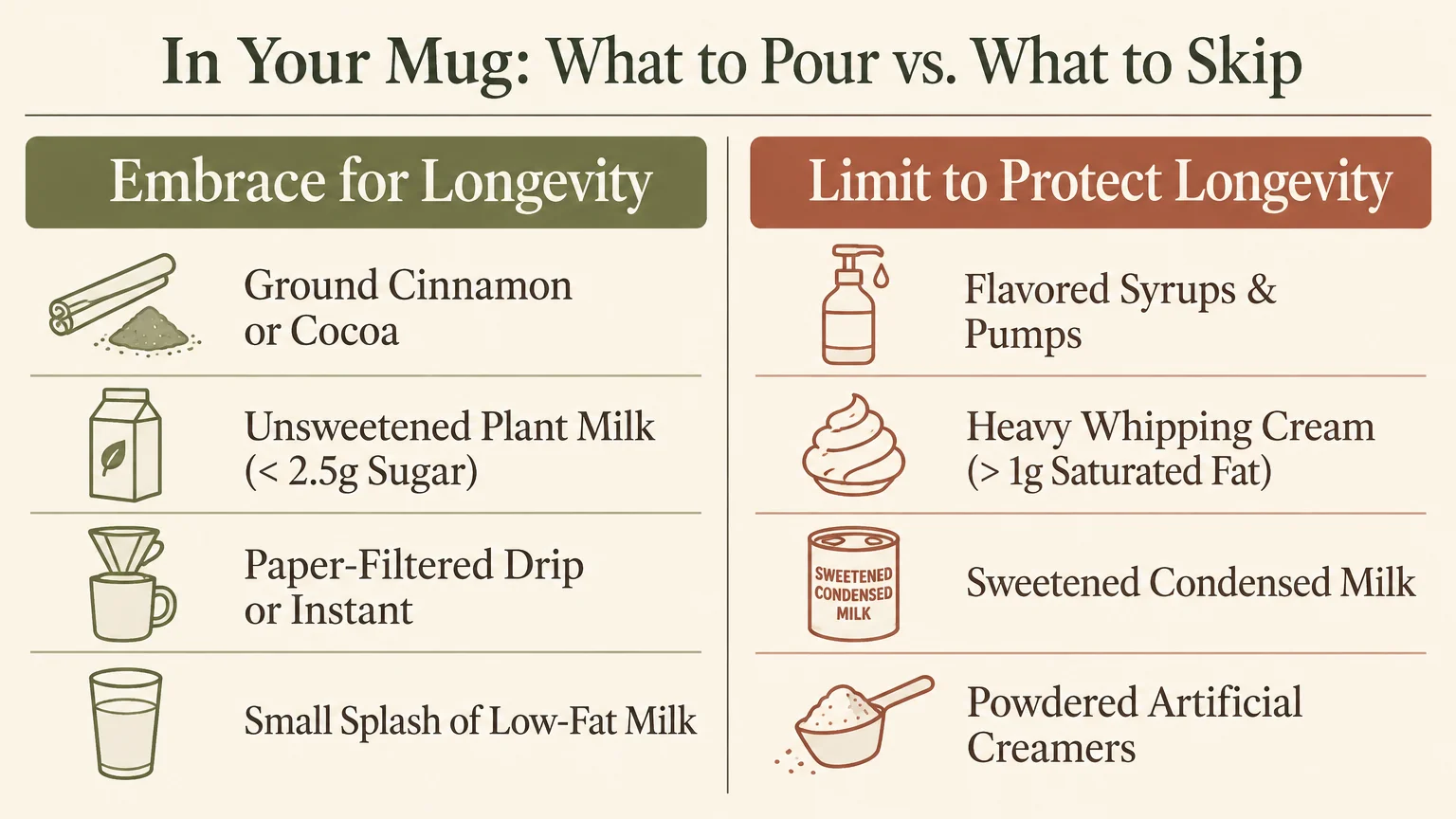
Foods to Embrace and Foods to Limit in Your Cup
Building low sugar coffee drinks starts with knowing which milk cartons and pantry spices work for your body. Small ingredient swaps quickly transform an indulgent treat into a heart-smart habit.
Milks and Plant Beverages to Embrace
Dairy milk brings built-in nutrition that non-dairy creamers rarely match. Across every fat level, an eight-ounce cup of cow’s milk supplies about 8 grams of complete protein plus roughly 113 to 125 milligrams of calcium per 100 grams.
Nonfat skim milk offers 83 to 84 calories and zero grams of saturated fat, while one-percent low-fat milk brings 102 to 106 calories and just 1 gram of saturated fat. Even a splash of milk does real work for your skeleton.
Caffeine slightly trims calcium absorption by about 4 to 6 milligrams per cup of coffee, which is fully offset by adding one to two tablespoons of milk. If you prefer plant-based options, reach for plain, unsweetened soy milk first.
One cup of unsweetened soy milk delivers 7 grams of protein, around 80 calories, only 0.5 grams of saturated fat, and roughly 45 percent of your daily calcium when fortified. Unsweetened almond milk contains just 30 calories per cup, though it provides only 1 gram of protein.
Approach oat milk with a bit more caution if you watch your blood sugar. A single cup contains roughly 130 calories, 24 grams of carbohydrates, 5 grams of sugar, and only about 4 grams of protein.
Spices and Natural Flavor Boosters to Embrace
Fresh pantry spices let you retire bottled syrups without feeling deprived. Ground cinnamon adds warm perceived sweetness alongside aromatic depth, and a pinch of nutmeg or cardamom turns ordinary drip into a cozy treat.
Stirring half a teaspoon of unsweetened cocoa powder or two drops of pure vanilla extract into hot coffee mimics a café mocha cleanly. These simple additions match the 2025–2030 Dietary Guidelines for Americans, which advise choosing unsweetened beverages and avoiding artificial sweeteners and flavors.
Creamers, Syrups, and Café Orders to Limit
Liquid coffee creamers, heavy whipping cream, and sweetened syrups are the fastest ways to derail healthy coffee habits. Whole milk carries 149 to 150 calories and 5 grams of saturated fat per cup, while heavy cream piles on far more saturated fat per tablespoon.
The American Heart Association recommends capping saturated fat under 6 percent of daily calories, or about 13 grams on a 2,000-calorie diet, while federal guidelines set a 10 percent upper limit. Just one oversized café drink can blow past those numbers before 9:00 a.m.
Added sugars deserve equally sharp scrutiny, since one level teaspoon of granulated sugar equals 4.2 grams and 16 calories. Federal guidance released in January 2026 recommends avoiding added sugars altogether or keeping them under 10 grams per meal, while the American Heart Association advises capping daily added sugar at 25 grams for most women and 36 grams for most men.
Consider how quickly café numbers climb in a standard 16-ounce grande cup. A plain grande caffè latte made with skim milk contains 128 calories, zero grams of saturated fat, 12.3 grams of protein, and 17 grams of natural lactose milk sugar with no syrups added.
Switching that plain latte to whole milk raises it to 228 calories and 7.8 grams of saturated fat. Ordering a 16-ounce Caramel Macchiato pushes sugar to 27.6 grams, already exceeding a woman’s daily added sugar budget in one cup.
Worst of all, a 16-ounce White Chocolate Mocha topped with whipped cream delivers 430 to 440 calories, roughly 49 to 53 grams of sugar, and 15 grams of saturated fat with whole milk. Treating drinks like that as occasional desserts rather than daily routines protects your heart and waistline.
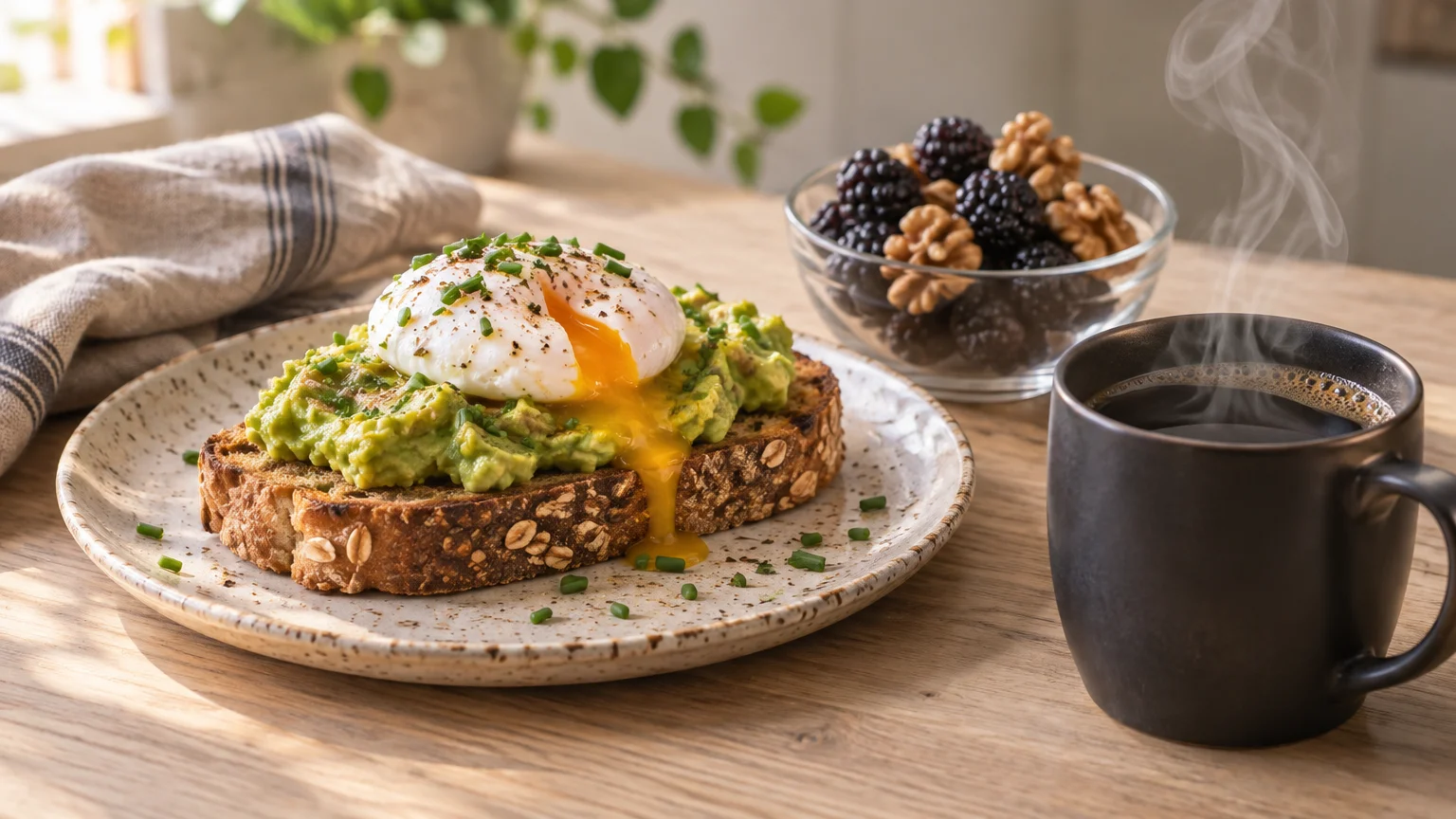
A Simple, Healthy Meal Idea
Coffee works best alongside a balanced morning plate rather than replacing breakfast on an empty stomach. Pairing your cup with protein and fiber steadies energy, supports muscle maintenance, and cushions caffeine absorption.
Try preparing a Cinnamon Soy Cortado alongside a warm two-egg vegetable scramble and one slice of sprouted whole-grain toast. Brew one shot of espresso or four ounces of strong paper-filtered coffee into a small mug.
Warm four ounces of unsweetened fortified soy milk on the stove or in the microwave until steamy, whisk briefly for light foam, and pour it over the coffee with a generous shake of ground cinnamon. That brings roughly 3.5 grams of plant protein and zero added sugar to your cup.
Meanwhile, sauté a handful of baby spinach and diced tomatoes in one teaspoon of olive oil, then scramble in two whole eggs until softly set. Serve beside toasted whole-grain bread spread with a quarter of a mashed avocado.
Together, this effortless breakfast delivers roughly 20 grams of protein, heart-healthy unsaturated fats, potassium, and bone-supporting calcium without a drop of syrup. You leave the table genuinely satisfied until lunch.
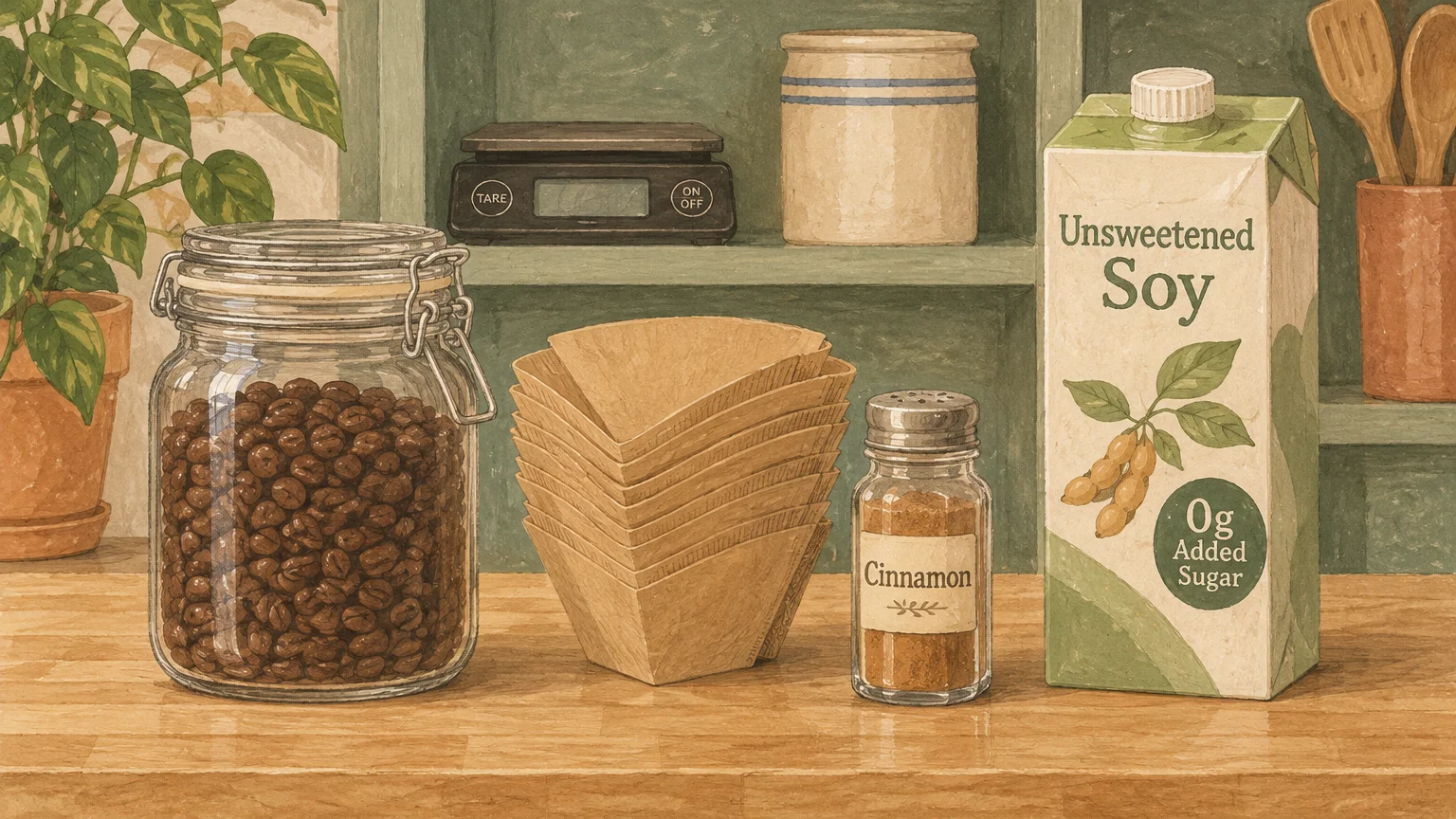
Tips for Shopping and Meal Prep
Stocking the right supplies at home and knowing a few key phrases at the counter make healthy choices automatic. Use these dietitian coffee tips to save money, time, and excess sugar every single week.
How to Order Low Sugar Coffee Drinks at Any Cafe
Coffeehouse menus look complicated, yet baristas happily customize drinks when you keep requests clear and specific. Start by sizing down to a small or medium, because larger cups multiply both milk calories and syrup pumps.
Ask for no classic syrup or request zero flavor pumps whenever you order iced coffee, cold brew, or lattes. Many shops add liquid cane sugar to iced coffee automatically unless you tell them to leave it out.
Specify skim milk, one-percent milk, or unsweetened soy milk instead of default whole milk or oat blends, and always skip whipped cream and caramel drizzle. If you want extra warmth without sugar, visit the condiment bar to dust your foam with cinnamon or cocoa powder.
Finally, avoid ordering drinks extra hot so your beverage cools comfortably below 149 degrees Fahrenheit before your first sip. Your palate tastes more flavor once scorching heat fades anyway.
Smart Grocery Shopping for Home Brewing
Navigating the grocery aisle starts with flipping over every carton of creamer and cold brew bottle to inspect the Nutrition Facts label. Look directly at the Added Sugars line and aim for zero grams per serving, remembering that even creamers labeled light or sugar-free often contain artificial sweeteners federal guidelines advise skipping.
Choose unbleached paper cone or basket filters matched to your drip brewer so you never run out and fall back on unfiltered methods. Pick up whole beans or ground coffee in medium roasts, which preserve high levels of chlorogenic acid while tasting smooth black.
In the refrigerated dairy aisle, compare unsweetened soy cartons to ensure they are fortified with calcium and contain at least 7 grams of protein per cup. If buying bottled cold brew concentrate, check the label for dilution ratios and caffeine milligrams per ounce before pouring.
Easy Batch Prep for Busy Mornings
Simple weekend preparation removes morning friction when you feel groggy. Measure two tablespoons of ground coffee per cup into airtight glass jars or set up your paper filter the night before so brewing takes only one button press.
To make gentle homemade cold brew, stir one cup of coarsely ground coffee into four cups of cold filtered water in a pitcher and refrigerate for 14 hours. Pour the mixture slowly through a paper-lined drip cone to remove both grounds and cholesterol-raising oils, then dilute the smooth concentrate with equal parts water before drinking.
Keep a dedicated small shaker filled with three parts cinnamon, one part nutmeg, and one part cocoa powder right next to your mugs. Setting a kitchen timer or personal rule to finish caffeinated cups before noon keeps your mornings bright and your nights deeply restful.
Frequently Asked Questions
How many cups of coffee can seniors safely drink each day?
Most healthy adults can safely consume up to 400 milligrams of caffeine daily, which equals roughly four to five eight-ounce cups of regular brewed coffee, according to the U.S. Food and Drug Administration and the American Heart Association. However, research on longevity and dementia points to one to three cups per day as the ideal sweet spot, and keeping any single serving under 200 milligrams helps prevent jitters or rapid heartbeat.
Always check with your doctor if you take blood pressure medications, blood thinners, or have heart rhythm conditions, because individual caffeine tolerance varies widely with age.
Does coffee weaken your bones as you age?
Moderate intake of one to three cups of coffee daily does not harm bone strength when you eat enough calcium. Caffeine reduces calcium absorption by only 4 to 6 milligrams per cup, a tiny loss easily erased by adding one to two tablespoons of dairy milk or fortified soy milk.
Recent large studies from 2024 and 2025 even associated one to two or more cups daily with a lower risk of osteoporosis. Still, aim for daily calcium targets of 1,200 milligrams if you are a woman over 50 or any adult over 70, and avoid drinking four to five or more cups per day alongside a low-calcium diet.
What is the best time of day to stop drinking caffeine?
Drinking your caffeinated coffee before midday delivers the strongest cardiovascular and survival benefits while protecting your sleep cycle. Because caffeine’s half-life averages four hours and can stretch up to ten hours in some adults, finishing a standard cup at least nine hours before bedtime helps preserve deep, uninterrupted sleep.
If your bedtime is 10:00 p.m., aim to finish your last regular coffee before noon or 1:00 p.m. at the latest. Switch to decaf or herbal tea after lunch if you want something warm to sip.
Are artificial sweeteners okay in low sugar coffee drinks?
The 2025–2030 Dietary Guidelines for Americans advise against both added sugars and non-nutritive artificial sweeteners as part of a healthy diet. Artificial sweeteners keep your taste buds craving intense sweetness, which can make naturally mild foods taste flat over time.
Gradually weaning yourself off sweeteners over two weeks lets your palate reset so you notice coffee’s natural nutty and chocolate notes. Using warm milk and spices like cinnamon makes that transition comfortable and genuinely enjoyable.
Is French press or espresso bad for cholesterol?
Unfiltered brewing methods such as French press, boiled coffee, and Turkish coffee leave high amounts of cafestol and kahweol in your cup, which can raise LDL cholesterol in older adults. Espresso contains moderate amounts of those oils and has been linked to higher total cholesterol when consumed at three or more shots per day.
If you manage high cholesterol, paper-filtered drip, pour-over, and instant coffee remain your safest everyday choices. Pouring homemade French press or cold brew through a paper filter gives you rich flavor while trapping those oils before they reach your mug.
For science-based nutrition information, refer to the U.S. Department of Agriculture at Nutrition.gov and the Dietary Guidelines for Americans. The National Institute on Aging also has excellent resources on healthy eating for seniors.
Disclaimer: This article is for informational purposes only and does not constitute medical advice. Always seek the advice of your physician or other qualified health provider with any questions you may have regarding a medical condition.