Carbohydrates often get an unfair reputation, especially if you are watching your blood sugar or weight. Yet cutting out carbs completely means missing out on some of the best protein rich foods in the grocery store.
Smart dietitians rely on high protein carbs—wholesome plant foods that deliver steady energy alongside muscle-supporting protein and gut-friendly fiber. Adding these healthy carbs to your daily meals helps protect your strength, digestion, and independence as you age.
Below, you will discover six standout choices for your dietitian grocery list, along with simple cooking ideas to enjoy them every day.
The Important Role of Nutrition in High-Protein Carbs
Your body handles both carbohydrates and protein differently after age 50, making food quality more important than ever. Choosing foods that combine complex carbohydrates with substantial protein gives you steady fuel without sharp blood sugar spikes.
Preserving muscle becomes a top priority as the decades pass. According to a December 2024 systematic review and meta-analysis in Nutrients, skeletal muscle mass declines by 1–2% annually after age 50.
Muscle strength fades even faster over time. The same review notes that strength drops by 1.5% per year between ages 50 and 60, then accelerates to 3% per year after age 60.
Left unaddressed, this gradual loss can lead to sarcopenia—a clinical decline in muscle mass and function. A 2025 clinical study estimates that sarcopenia affects 6%–22% of older adults.
Unfortunately, many seniors do not eat enough protein to counter this natural decline. Population surveys indicate that roughly 40% of adults over age 70 consume less than 1.0 gram of protein per kilogram of body weight daily.
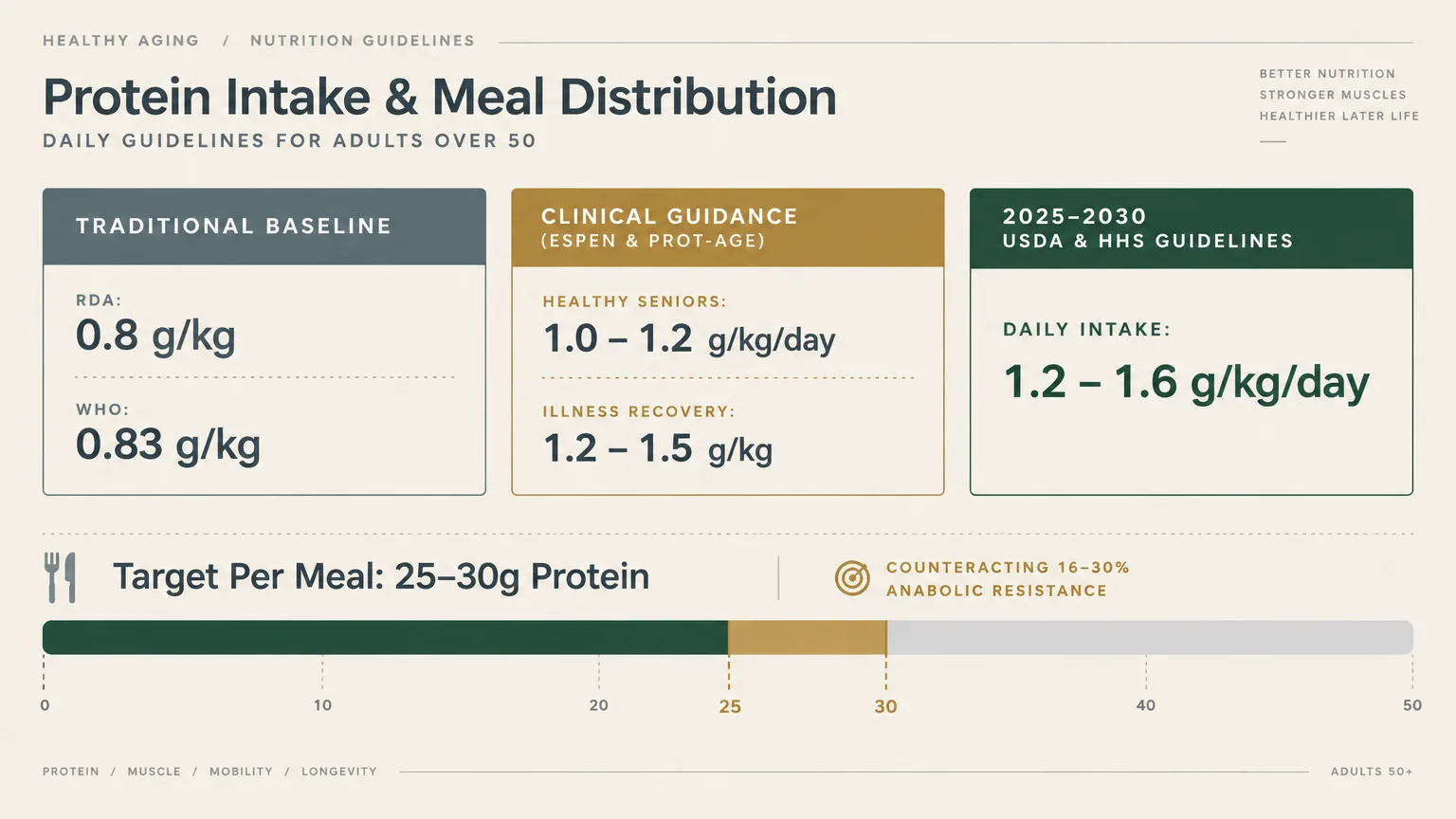
While the traditional adult Recommended Dietary Allowance sits at 0.8 grams per kilogram per day—and the World Health Organization sets a safe intake level at 0.83 grams—aging bodies need more. Both the PROT-AGE Study Group and the European Society for Clinical Nutrition and Metabolism (ESPEN) recommend 1.0–1.2 grams per kilogram daily for healthy older adults.
If you are recovering from an illness or managing a chronic condition, your needs climb higher. Those same clinical groups advise 1.2–1.5 grams per kilogram per day for older adults who are malnourished or facing acute or chronic health challenges.
Federal guidance now reflects this higher target as well. On January 7, 2026, the U.S. Department of Agriculture (USDA) and U.S. Department of Health and Human Services (HHS) jointly released the 2025–2030 Dietary Guidelines for Americans, setting a daily goal of 1.2–1.6 grams of protein per kilogram of body weight.
These updated guidelines advise prioritizing protein at every meal from both animal and plant sources. Beans, peas, lentils, legumes, nuts, seeds, and soy all play a central role in meeting that daily goal.
Timing your protein matters nearly as much as your daily total. Aging muscle develops anabolic resistance—meaning your body blunts muscle protein synthesis by roughly 16–30% compared with younger adults eating the same amount of protein.
Because of this blunted response, saving most of your protein for dinner leaves your muscles underfed all morning and afternoon. PROT-AGE consensus guidance recommends spreading protein evenly across meals at 25–30 grams per meal, or up to 30–40 grams in certain clinical settings.
High protein carbs make hitting that 25–30 gram meal target much easier without relying solely on heavy portions of meat. Pairing a cup of lentils or high protein grains with eggs, fish, or Greek yogurt creates a balanced plate effortlessly.
Fiber is the second hidden superpower inside these nutritious carbohydrates. The 2025–2030 Dietary Guidelines recommend 2–4 servings of fiber-rich whole grains each day while sharply cutting back on refined carbohydrates and added sugars.
A single serving equals 1/2 cup (50 grams) of cooked oats, 1/2 cup (85 grams) of cooked quinoa, 1/2 cup (85 grams) of cooked brown rice, or 1 slice of whole-wheat bread. Beyond steady energy, this fiber feeds helpful bacteria inside your digestive tract.
The federal guidelines note that high-fiber foods—alongside vegetables, fruits, and fermented foods—support a diverse gut microbiome and smooth digestion. Even better, dietary fiber appears to protect muscle directly.
In the European NU-AGE cohort of 981 older adults averaging 71 years old, higher fiber intake was independently linked to higher skeletal muscle mass index in women and in men without metabolic syndrome. That benefit held steady even after accounting for protein intake and physical activity.
To get the biggest payoff from these protein rich foods, pair your meals with regular movement. Both HHS and ESPEN recommend combining adequate protein with muscle-strengthening or resistance exercise at least 2 days per week to preserve strength and mobility.
Foods to Embrace and Foods to Limit
Building a healthier plate starts with knowing which carbohydrates pull double duty for your muscles and digestive tract. Based on verified USDA nutrition data, these six standout carbohydrates deliver impressive protein in every serving.
1. Edamame
Edamame—young, tender soybeans still in the pod or shelled—tops the list of high protein carbs. According to USDA FoodData Central, 1 cup (155 grams) of boiled or steamed edamame provides 18.46 grams of protein and 188 calories.
That same generous cup delivers 13.81 grams of total carbohydrates, 8.06 grams of dietary fiber, and 8.06 grams of healthy fat. Because soy is a complete plant protein, edamame supplies every essential amino acid your muscles need to repair and rebuild.
You can find shelled edamame in the freezer aisle, where it cooks in minutes. Toss warm edamame into stir-fries, mash it with olive oil and lemon for toast, or enjoy steamed pods sprinkled with sea salt as an afternoon snack.
2. Lentils
Lentils are nutritional workhorses that cook much faster than dried beans without any overnight soaking. One cup (198 grams) of cooked, unsalted lentils gives you 17.9 grams of protein and 230 calories.
Lentils also pack 39.8 grams of total carbohydrates and a remarkable 15.6 grams of dietary fiber, with only 0.8 grams of fat. That rich fiber content slows digestion, keeping you satisfied for hours while supporting healthy cholesterol and blood sugar levels.
Choose brown or green lentils when you want them to hold their shape in salads and soups. Pick red or yellow lentils when you want a creamy texture for pureed soups, stews, or curries.
3. Black Beans
Velvety black beans bring rich flavor and serious staying power to comforting meals. According to USDA data, 1 cup (172 grams) of cooked, unsalted black beans delivers 15.2 grams of protein for 227 calories.
You also receive 40.8 grams of total carbohydrates, 15.0 grams of fiber, and just 0.9 grams of fat. That combination of protein and fiber helps prevent the mid-afternoon energy slump that often follows refined snacks.
Stir black beans into vegetable chili, fold them into warm corn tortillas with avocado, or toss them over roasted sweet potatoes. A squeeze of fresh lime juice brightens their earthy flavor instantly.
4. Chickpeas (Garbanzo Beans)
Nutty, firm chickpeas earn a permanent spot on any dietitian grocery list because they adapt to both savory and sweet recipes. One cup (164 grams) of cooked, unsalted chickpeas offers 14.5 grams of protein and 269 calories.
Each cup also provides 45 grams of carbohydrates, 12.5 grams of dietary fiber, and 4.2 grams of fat. Their gentle flavor makes them easy on sensitive palates while offering steady energy for active mornings or afternoon walks.
Roast chickpeas with rosemary and olive oil until crisp for a crunchy salad topper, or simmer them in tomato-basil sauce. You can also blend them into homemade hummus for dipping crisp bell peppers and cucumber slices.
5. Spelt and Other Ancient High-Protein Grains
When people search for high protein grains, modern refined wheat falls short, yet ancient grains shine. Cooked spelt—an ancient relative of wheat with a mildly nutty taste—provides 10.7 grams of protein and 246 calories per 1-cup (194-gram) serving.
Several other whole grains offer similar muscle-friendly benefits if you enjoy variety. A cooked cup of teff supplies 9.7 grams of protein per 252-gram cup, while amaranth delivers 9.3 grams per 246-gram cup.
Chewy farro is another delicious option, offering 8.0 grams of protein and 200 calories per 160-gram cooked cup. Because spelt and farro contain gluten, skip them if you have celiac disease and reach for gluten-free teff or amaranth instead.
Use cooked spelt or farro anywhere you might serve white rice or barley. They hold up wonderfully in hearty vegetable soups, warm grain bowls, and cold Mediterranean salads.
6. Quinoa
Although we cook and eat quinoa like a grain, it is botanically a seed—sometimes called a pseudocereal. One cup (185 grams) of cooked, unsalted quinoa provides 8.14 grams of protein and 222 calories.
That serving also brings 39.4 grams of carbohydrates, 5.18 grams of fiber, and 3.55 grams of fat. Naturally gluten-free, quinoa stands apart because it is a complete protein containing all nine essential amino acids.
Fluffy quinoa cooks in about 15 minutes, making it a lifesaver on busy weeknights. Serve it warm under baked salmon, mix it into breakfast porridge with berries, or chill leftovers for a quick lunch salad.
Bonus Healthy Carbs for Your Pantry
Beyond those top six choices, a few familiar staples deserve space in your kitchen for boosting daily protein. One cup (140 grams) of cooked whole-wheat spaghetti delivers 7.46 grams of protein, 6.3 grams of fiber, 37.16 grams of carbs, and 173.6 calories.
Oats offer reliable morning comfort with 6.1 grams of protein and 154 calories per 1-cup (234-gram) cooked serving; dry rolled oats provide 16.9 grams of protein per 100 grams. Roasted, cooked buckwheat groats add another gluten-free complete protein option, offering 5.68 grams of protein and 4.54 grams of fiber per 168-gram cup.
Refined Carbohydrates to Limit
While adding high protein carbs to your meals, scale back on heavily processed carbohydrates that lose their protein and fiber during milling. White bread, pastries, sugary cereals, crackers, and standard white pasta digest rapidly and leave you hungry again soon.
The fiber gap between whole and refined products is dramatic. Whole-grain pasta provides 3.9 grams of fiber per 100 grams cooked compared with just 1.8 grams in white pasta, while whole-grain bread offers 6.9 grams per 100 grams versus 2.7 grams in white bread.
Sweetened beverages, candy, and baked desserts also crowd out protein rich foods without helping your muscles recover. Save refined treats for occasional celebrations, and let whole beans, legumes, and high protein grains anchor your everyday plate.
A Simple, Healthy Meal Idea
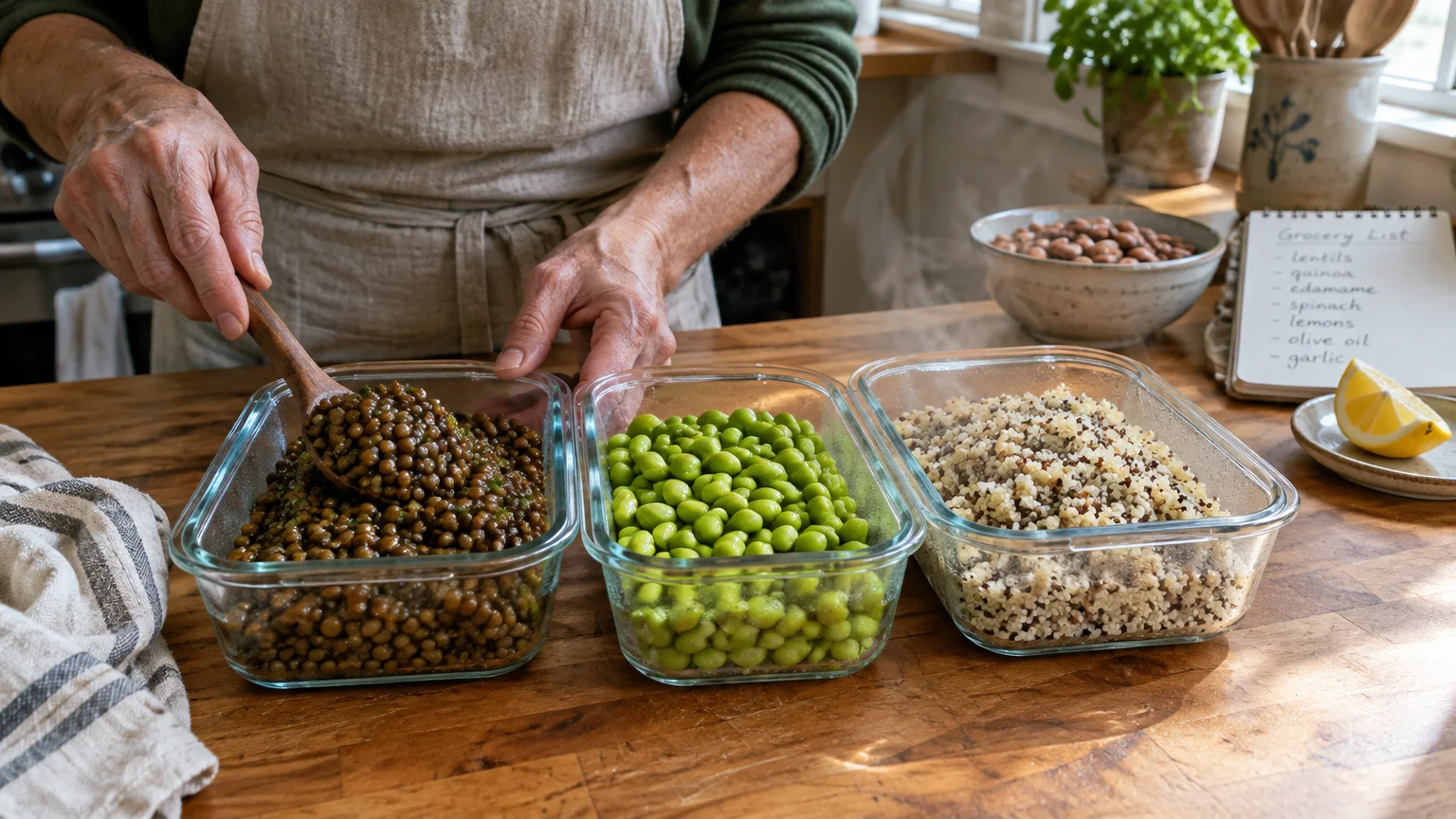
Putting these healthy carbs on your table does not require complicated recipes or hours over the stove. You can build a satisfying, balanced meal in about 15 minutes using pre-cooked grains and pantry staples.
Try a Warm Lemon-Herb Lentil and Quinoa Power Bowl for lunch or dinner. Start with a base of 1/2 cup cooked quinoa (about 4 grams of protein) and 1/2 cup warmed cooked lentils (nearly 9 grams of protein).
Top your warm base with 1/2 cup steamed shelled edamame (about 9 grams of protein) and a handful of baby spinach. Add 3 ounces of grilled chicken breast or canned wild salmon—or 1/3 cup crumbled feta and pumpkin seeds—to push the meal comfortably past 30 grams of protein.
Drizzle everything with 1 tablespoon of extra-virgin olive oil, a generous squeeze of fresh lemon juice, and a pinch of dried oregano and black pepper. The heat gently wilts the spinach while the lemon brightens the earthy lentils and nutty quinoa.
If you prefer a savory-sweet afternoon snack instead of a full bowl, whip up Warm Cinnamon Spiced Chickpeas. Toss 1 cup of drained chickpeas with a teaspoon of olive oil, cinnamon, and a pinch of salt, then toast them in a skillet for 8 minutes.
Pair those warm chickpeas with a small pear or apple for crisp contrast. You get comforting flavor, hearty fiber, and steady energy that carries you smoothly to dinner.
Tips for Shopping and Meal Prep
A thoughtful dietitian grocery list turns healthy eating from a chore into an easy weekly routine. Keep a few practical label-reading and kitchen habits in mind the next time you shop.
Check Labels for Whole Grains and Added Sodium
Front-of-package claims like “multigrain” or “made with whole wheat” can mislead shoppers. Flip the package over and confirm that a true whole grain—such as whole wheat, oats, quinoa, or spelt—appears as the very first ingredient.
For bread and pasta, compare the dietary fiber line on the Nutrition Facts label to spot genuine whole-grain products. Higher fiber almost always signals less processing and better nutrition for your gut and blood sugar.
Pay close attention to sodium when buying canned beans and lentils. Home-cooked unsalted black beans contain only about 2 milligrams of sodium per 1-cup serving.
By contrast, canned black beans—even after you drain and rinse them—typically contain 200–400 milligrams of sodium per cup depending on the brand. Look for “no salt added” cans whenever possible, and always rinse canned beans under cool running water for 30 seconds.
Nutrition databases continue to refine how these foods are measured so labels stay accurate. On October 29, 2026, USDA FoodData Central Version 16.0 added Foundation Foods entries for alternative grain flours and puffed grains—including quinoa, amaranth, buckwheat, chickpea flour, millet, sorghum, and oats—while updating protein values for whole-grain bread and whole-grain spaghetti.
Master Dry-to-Cooked Yields for Batch Cooking
Cooking dry beans and grains in batches saves money, cuts sodium, and keeps easy meals ready in your fridge. Knowing rough yields prevents you from accidentally making enough food for an entire neighborhood.
One cup of dry chickpeas (about 200 grams) expands to roughly 3 cups cooked (about 490 grams). For comparison, a standard 15-ounce (425-gram) can yields 240–260 grams drained, or roughly 1.5 cups.
Dry quinoa triples in volume as well, with 1 cup of dry quinoa yielding about 3 cups cooked. Portion extra cooked beans and grains into 1-cup freezer bags, flatten them, and freeze for up to three months so you always have single servings ready to thaw.
Use Simple Prep Tricks for Better Flavor and Digestion
Quinoa carries a natural, bitter coating called saponin that can make dishes taste soapy if skipped. Place dry quinoa in a fine-mesh strainer and rinse it under cold running water for 30–60 seconds until the water runs completely clear.
If beans occasionally cause mild bloating, start with smaller 1/4-cup portions and increase gradually over a few weeks while drinking plenty of water. Lentils and edamame are often gentler on digestion than larger beans, making them ideal starting points.
Frequently Asked Questions
Can I eat high protein carbs if I have type 2 diabetes?
Yes—whole beans, lentils, edamame, and intact grains digest slowly because their protein and fiber blunt sharp blood sugar spikes. Still, portion size matters, so start with 1/2-cup to 1-cup cooked servings and test your blood sugar or consult your care team to see how your body responds.
Do plant-based high protein carbs count toward my daily protein goal?
Yes, plant proteins count directly toward your daily protein target. Pairing high protein carbs with a small portion of animal protein—or mixing complementary plants like beans with grains or seeds—helps ensure your muscles receive every essential amino acid.
How much protein should I aim for at each meal after age 65?
Clinical nutrition guidance generally recommends aiming for 25–30 grams of protein at breakfast, lunch, and dinner rather than eating most of your protein at night. Combining a cup of lentils, black beans, or edamame with eggs, yogurt, fish, or poultry helps you hit that target smoothly.
Are canned beans healthy, or must I cook them from dry?
Canned beans are a wonderful, time-saving convenience and retain their protein and fiber. Choose low-sodium or no-salt-added varieties whenever you see them, and drain and rinse the beans under cool water to wash away excess salt.
Which high-protein carbs are safe if I avoid gluten?
Edamame, lentils, black beans, chickpeas, quinoa, buckwheat, teff, and amaranth are all naturally gluten-free. If you are strictly avoiding gluten due to celiac disease, look for certified gluten-free labels on oats and grains to prevent cross-contact during processing.
How can I add more high-protein grains to breakfast?
Swap plain white toast for thick whole-grain toast topped with mashed edamame and a poached egg, or cook rolled oats in milk with a spoonful of hemp or pumpkin seeds. Leftover cooked quinoa also makes a delicious warm breakfast bowl when simmered briefly with cinnamon, berries, and Greek yogurt.
For science-based nutrition information, refer to the U.S. Department of Agriculture at Nutrition.gov and the Dietary Guidelines for Americans. The National Institute on Aging also has excellent resources on healthy eating for seniors.
Disclaimer: This article is for informational purposes only and does not constitute medical advice. Always seek the advice of your physician or other qualified health provider with any questions you may have regarding a medical condition.