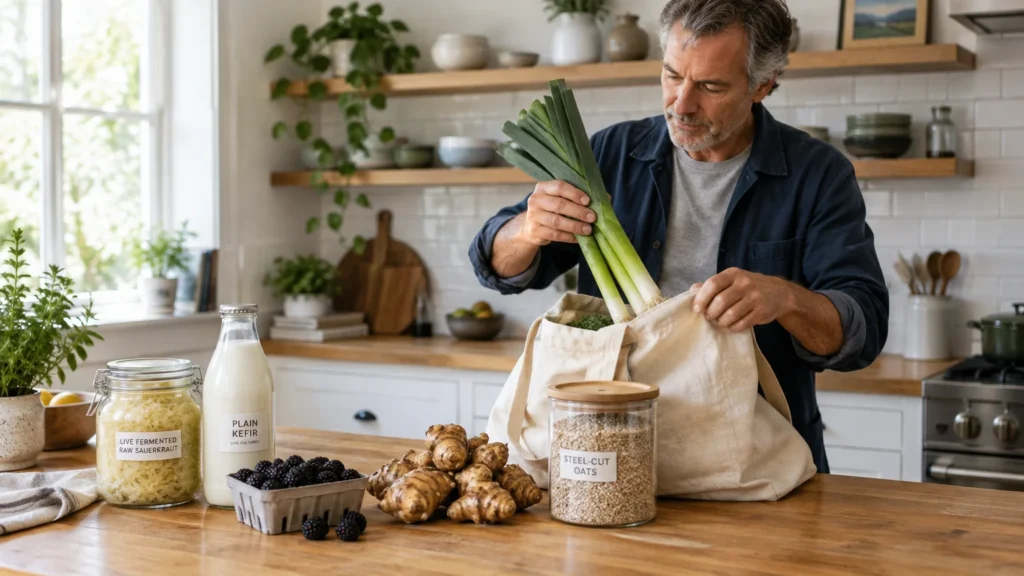
Adding healthy years to your life starts with what you put on your plate today. Top physicians who study longevity nutrition focus on simple, enjoyable foods rather than strict, joyless diets.
Dr. William Li frequently highlights three everyday staples: extra virgin olive oil, omega-3 seafood, and dark chocolate or blueberries. Paired with leafy greens and beans, these live longer foods protect your heart and brain.
You do not need expensive supplements or complicated recipes to benefit from this approach. Practical doctor diet tips can transform your daily meals at any age.
The Important Role of Nutrition in Longevity and Healthy Aging
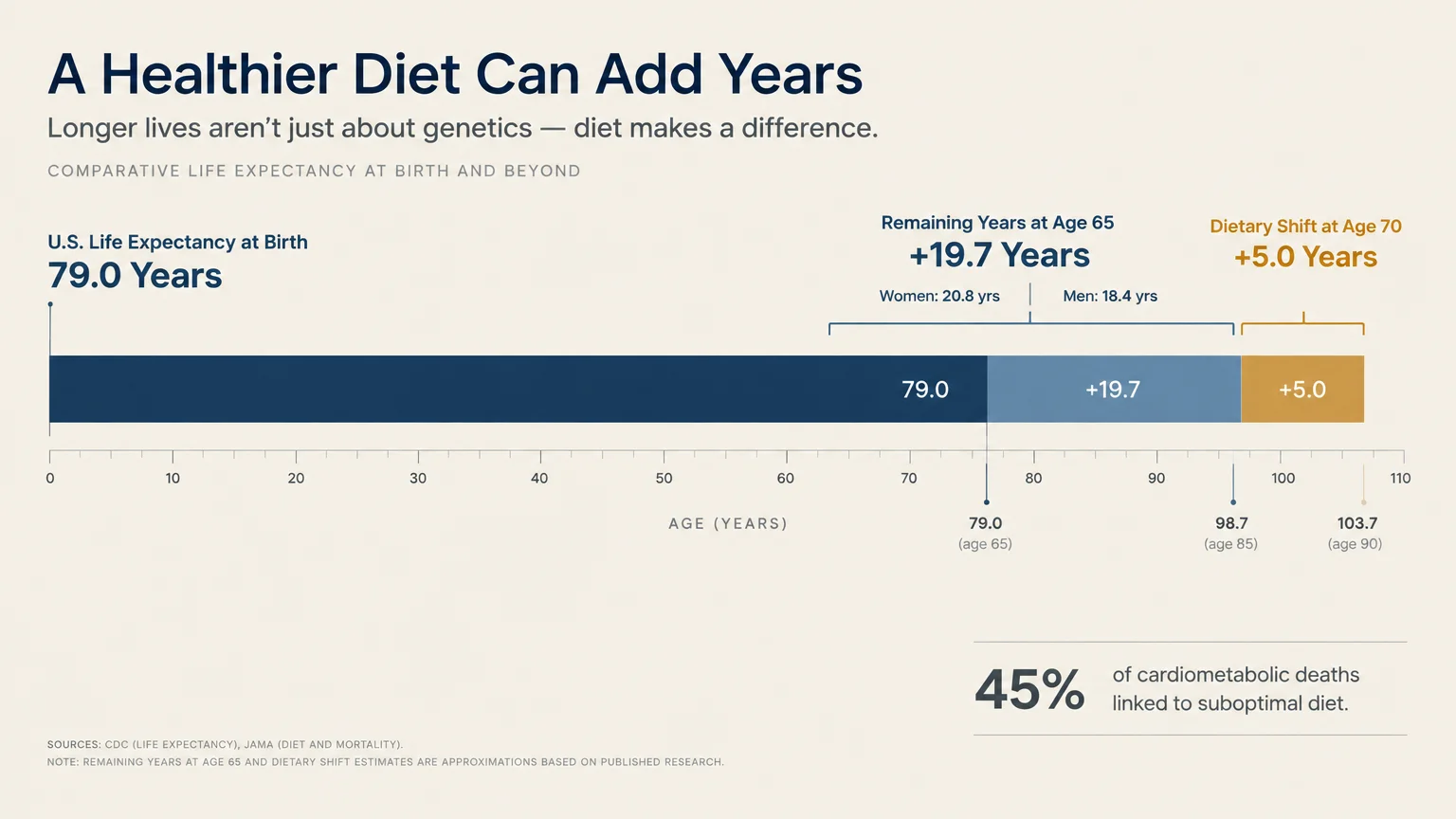
Americans are living longer than ever, which makes daily nutrition a smart investment in your independence. According to January 2026 data from the CDC and the National Center for Health Statistics, U.S. life expectancy at birth reached 79.0 years in 2024.
That report also showed that adults who reach age 65 can expect an average of 19.7 additional years of life. Women average 20.8 more years at 65, while men average 18.4 more years.
You want those extra decades to be active, sharp, and comfortable. Yet about 75% of U.S. adults report living with at least one chronic health condition, according to the CDC.
Provisional CDC figures from July 2026 show that heart disease and cancer remain the top two causes of death in the United States. Poor diet drives roughly 45% of cardiometabolic deaths from heart disease, stroke, and diabetes.
The encouraging news is that changing your daily plate shifts those odds in your favor. A healthy aging diet works alongside your genes rather than surrendering to them.
It Is Never Too Late to Change Your Plate
Many seniors wonder if improving their diet after retirement still makes a meaningful difference. Research on hundreds of thousands of adults shows that your body responds quickly to better fuel.
A UK Biobank study of 467,354 adults published in Nature Food found that shifting from an unhealthy pattern to longevity foods adds years at any stage. Starting at age 70 was still linked to roughly five additional years of life.
Another 2026 UK Biobank study in Science Advances tracked 103,649 adults for over a decade. Eating a Mediterranean-style or healthful plant-forward diet added years to life regardless of a person’s genetic longevity traits.
That means your daily grocery list holds real power even if heart problems or memory loss run in your family. Every balanced meal sends calming, protective signals to your blood vessels and cells.
What Federal Guidelines and Longevity Doctors Emphasize
In January 2026, the USDA and HHS released the 2025–2030 Dietary Guidelines for Americans. The federal guidelines shifted away from older plate graphics to prioritize whole, minimally processed foods while cutting ultra-processed snacks and added sugars.
These guidelines recognize that your nutritional needs change as you get older. You often burn fewer total calories after 60, yet your body still requires equal or greater amounts of protein, vitamin B12, vitamin D, and calcium.
That is why physician-authors who study foods for longevity focus on nutrient density rather than eating less food overall. Every bite needs to deliver fiber, healthy fats, or clean protein.
Dr. William Li regularly points to three powerhouse foods that nourish blood vessels and calm inflammation: extra virgin olive oil, omega-3 seafood, and dark chocolate, along with blueberries and coffee. Meanwhile, Dr. Mark Hyman highlights cruciferous and leafy vegetables for protective phytonutrients and magnesium.
Magnesium alone supports more than 600 enzyme reactions inside your body, helping regulate blood sugar, blood pressure, and muscle function. Combining these doctor-approved staples gives you a delicious foundation for daily vitality.
Closing the Protein, Fiber, and Vitamin Gaps After 50
Even seniors who think they eat fairly well often miss key daily targets. More than one in three adults over age 50 fall short of their daily protein needs.
Low protein accelerates sarcopenia, the gradual loss of muscle mass and strength that makes stairs, groceries, and balance harder. Clinical aging guidance often recommends 1.0 to 1.2 grams of protein per kilogram of body weight paired with light strength exercise.
The 2025–2030 Dietary Guidelines raised the broader adult protein goal to 1.2 to 1.6 grams per kilogram of body weight. However, Harvard T.H. Chan Nutrition Chair Dr. Frank Hu cautioned that the new pyramid’s visual emphasis on red meat and full-fat dairy could conflict with saturated fat limits.
Additionally, chronic kidney disease affects roughly one in seven U.S. adults, or 35.5 million people. If you have kidney concerns, ask your physician for a personalized protein target before increasing your intake.
Fiber and vitamin D shortfalls are even more widespread among older adults. Over 90% of Americans do not get enough dietary fiber or vitamin D from the foods they eat.
Adults over 51 need at least 22.4 grams of fiber daily for women and 28 grams for men, while adults 60 and older often aim for 21 grams and 30 grams. Meeting those goals keeps digestion steady and feeds helpful gut bacteria.
You also need steady calcium and vitamin D to guard your bones against fractures. Men aged 51 to 70 need 1,000 milligrams of calcium daily, while women over 50 and all adults 71 and older need 1,200 milligrams.
For vitamin D, the daily target is 600 IU from ages 51 to 70 and 800 IU at age 71 and beyond. Never exceed the upper limit of 4,000 IU per day without direct medical supervision.
Foods to Embrace and Foods to Limit
Building a longevity plate does not require exotic powders or rigid calorie counting. Focus first on the three standout foods doctors reach for every day, then round out your kitchen with whole-food allies.
1. Extra Virgin Olive Oil: Your Daily Brain and Heart Protector
Extra virgin olive oil sits at the very top of Dr. William Li’s daily list, and the long-term research backs up that habit. This liquid fat is rich in monounsaturated fatty acids and natural plant compounds called polyphenols.
A 28-year Harvard T.H. Chan School of Public Health study of 92,383 adults examined what happens when you consume more than half a tablespoon, or over 7 grams, of olive oil daily. That modest drizzle was linked to 19% lower all-cause mortality.
Those regular olive oil users also showed 19% lower cardiovascular mortality, 17% lower cancer mortality, and 18% lower respiratory mortality. Even more striking, neurodegenerative disease mortality dropped by 29% compared with people who rarely used olive oil.
A follow-up Harvard study published in JAMA Network Open in May 2024 looked specifically at brain aging across more than 92,000 participants. Consuming at least half a tablespoon of olive oil daily was tied to a 28% lower risk of dementia-related death.
That brain benefit held steady regardless of overall diet quality or whether someone carried the APOE4 risk gene. Simply swapping one teaspoon of margarine or mayonnaise for olive oil each day was linked to an 8% to 14% lower risk of dementia death.
Replacing about 10 grams of butter, margarine, mayonnaise, or dairy fat with olive oil was tied to up to 34% lower mortality risk, depending on cause. Keep a dark glass bottle near your stove and drizzle it over cooked vegetables, beans, and salads.
2. Fatty Fish and Omega-3 Seafood: Fuel for Heart and Mind
The second food this doctor never skips is omega-3 seafood. Oily cold-water fish deliver EPA and DHA, two marine omega-3 fats that your body cannot make efficiently on its own.
These specialized fats calm blood vessel inflammation, support healthy heart rhythms, and nourish aging brain cell membranes. Yet the average U.S. adult gets only about 0.1 grams of marine EPA and DHA per day.
The American Heart Association recommends eating at least two servings of fish every week, totaling 6 ounces cooked. One serving equals 3 ounces of cooked fish, or about three-quarters of a cup flaked.
Choose low-mercury fatty fish such as wild salmon, sardines, Atlantic mackerel, herring, and lake trout. Canned wild salmon and sardines are budget-friendly, soft to chew, and provide bonus calcium when they include tiny, edible bones.
If you already live with coronary heart disease, the American Heart Association recommends aiming for roughly 1 gram of EPA and DHA daily, ideally from oily fish. Talk with your doctor before taking high-dose fish oil capsules.
Both the FDA and the American Heart Association warn that taking more than 3 grams of omega-3 fatty acids per day from supplements can trigger excessive bleeding. Whole seafood gives you high-quality protein alongside safe, balanced fats.
3. Dark Chocolate, Berries, and Leafy Greens: Doctor-Backed Plant Protectors
The third spot in Dr. William Li’s longevity trio goes to dark chocolate or blueberries, two delicious treats packed with plant antioxidants. Cocoa flavanols and berry pigments help keep blood vessels flexible and support healthy circulation to your brain.
Enjoy a small square of dark chocolate with high cocoa content after lunch instead of sugary pastries. Toss a handful of fresh or frozen blueberries into your morning oatmeal or plain yogurt.
Alongside berries and cocoa, Dr. Mark Hyman emphasizes leafy and cruciferous vegetables like spinach, kale, broccoli, and arugula. These greens deliver vitamin C, magnesium, potassium, and fiber for very few calories.
Federal guidelines count 2 cups of raw leafy greens or 1 cup of raw fruit as one standard serving. Most older adults thrive when they eat 1.5 to 2 cup-equivalents of fruit and 2 to 3 cup-equivalents of vegetables every day.
One important safety rule applies if you take the blood thinner warfarin, also known as Coumadin. Do not cut out vitamin K-rich greens like spinach, kale, collards, broccoli, or Swiss chard.
According to the American Heart Association and University of Iowa Health Care, sudden cuts in vitamin K can raise bleeding risk, while sudden spikes can promote clots. Instead, eat a steady, consistent amount of greens from week to week.
Remember that cooking wilts greens and packs more vitamin K into a single measuring cup than eating them raw. If you take newer blood thinners such as rivaroxaban, you generally face no vitamin K restrictions, though you should always confirm with your pharmacist.
4. Nuts, Legumes, and Whole Grains: Everyday Longevity Partners
While three spotlight foods get your menu started, pairing them with nuts, beans, and whole grains multiplies your benefits. The 2025 EAT-Lancet Commission linked a plant-forward pattern rich in these staples to a 27% lower risk of premature death globally.
Tree nuts and peanuts pack healthy fats, plant protein, and minerals into a tiny portion. A dose-response meta-analysis found that each 28-gram daily increase in nut intake, roughly one small handful or 1 ounce, brings major protection.
That single daily ounce was associated with a 29% lower risk of coronary heart disease, a 21% lower risk of cardiovascular disease, and a 15% lower risk of total cancer. Keep unsalted walnuts, almonds, or pistachios on hand for afternoon hunger.
Legumes—including black beans, chickpeas, lentils, peas, and soy foods like tofu—are equally valuable for seniors. Across older-adult cohorts in the cross-cultural FHILL study, every 20-gram daily increase in legumes was linked to a 7% to 8% drop in mortality.
One standard serving of cooked beans or lentils is just half a cup. Legumes also close your daily fiber gap quickly without pushing up saturated fat.
Round out your meals with intact whole grains such as rolled oats, quinoa, brown rice, and barley. These grains deliver B vitamins and slow-release energy that keeps afternoon fatigue away.
Foods to Limit for Healthy Aging
Knowing what to crowd out of your kitchen is just as helpful as adding live longer foods. The 2025–2030 Dietary Guidelines urge adults to sharply reduce ultra-processed foods, refined carbohydrates, and added sugars.
Limit packaged pastries, white bread, sugary cereals, and sweetened sodas, which spike blood sugar without offering fiber or protein. Cut back on processed meats like bacon, sausage, hot dogs, and salty deli slices as well.
Keep your daily sodium intake below 2,300 milligrams, which equals about one teaspoon of table salt. Excess sodium drives up blood pressure and forces your heart and kidneys to work harder.
Keep saturated fat under 10% of your total daily calories by trading butter, lard, mayonnaise, and heavy cream for extra virgin olive oil. Go easy on fatty cuts of red meat and full-fat cheeses too.
Finally, take a careful look at alcohol as you age. Federal guidelines note that drinking less alcohol is better for your health, and people taking interacting medications such as warfarin should avoid alcohol completely.
A Simple, Healthy Meal Idea
Putting longevity nutrition into practice should feel effortless on a busy weeknight. This 15-minute dinner brings together extra virgin olive oil, omega-3 seafood, leafy greens, and beans, followed by a brain-friendly sweet finish.
15-Minute Olive Oil Salmon with Warm White Beans and Spinach
Start with one 4-ounce wild salmon fillet, patting it dry with a paper towel. Brush it lightly with one teaspoon of extra virgin olive oil, lemon juice, garlic powder, and dried oregano, skipping heavy salt.
Bake the salmon at 400 degrees Fahrenheit for 10 to 12 minutes until it flakes easily with a fork. If you prefer not to turn on the oven, warm a canned wild salmon pouch or boneless sardines instead.
While the fish cooks, warm one tablespoon of extra virgin olive oil in a skillet over medium-low heat. Add half a cup of rinsed, low-sodium canned white cannellini beans and two big handfuls of baby spinach.
Stir gently for two minutes until the spinach wilts and the beans heat through, then add a squeeze of fresh lemon juice and black pepper. Spoon the warm bean and spinach mixture onto your plate and top it with the flaky salmon.
After dinner, enjoy half a cup of fresh blueberries alongside one small square of dark chocolate and a few walnut halves. You get protein, marine omega-3s, polyphenols, magnesium, and fiber in one comforting meal.
Tips for Shopping and Meal Prep
Smart grocery habits make a healthy aging diet easy to stick with even on days when your energy runs low. A few simple kitchen routines save time, protect your budget, and cut food waste.
Tip 1: Read Labels for Sodium, Added Sugars, and Authentic Oil
Packaged soups, sauces, and frozen dinners often hide more than half your daily 2,300-milligram sodium limit in one bowl. Check the Nutrition Facts label and choose low-sodium or no-salt-added canned beans, broths, and vegetables.
Rinsing regular canned beans under cool tap water for 30 seconds washes away a large share of their surface salt. Also scan ingredient lists for hidden sugars such as corn syrup, honey, or cane juice in breads and salad dressings.
When buying extra virgin olive oil, choose dark glass bottles or tin containers rather than clear plastic, because light degrades delicate antioxidants. Check for a recent harvest date so you get fresh, peppery polyphenols rather than stale oil.
Tip 2: Stock Easy, No-Fuss Longevity Staples
Fresh fish and delicate berries can spoil quickly if you live alone or cook for two. Build a reliable backup pantry with canned wild salmon, sardines in olive oil, and single-serve packets of unsalted walnuts or almonds.
Keep bags of frozen blueberries, frozen cherries, and pre-washed baby spinach on hand so produce never goes bad in your crisper drawer. Frozen berries are picked at peak ripeness and require zero chopping or peeling.
Pre-cooked vacuum-sealed lentils and microwaveable pouches of brown rice turn into a nourishing side dish in two minutes. Having ready-to-use basics removes the temptation to order salty takeout when you feel tired.
Tip 3: Batch-Cook Gently and Balance Protein Across the Day
Instead of loading all your protein into dinner, spread protein-rich foods across breakfast, lunch, and supper. Your aging muscles rebuild more effectively when they receive steady protein at every meal.
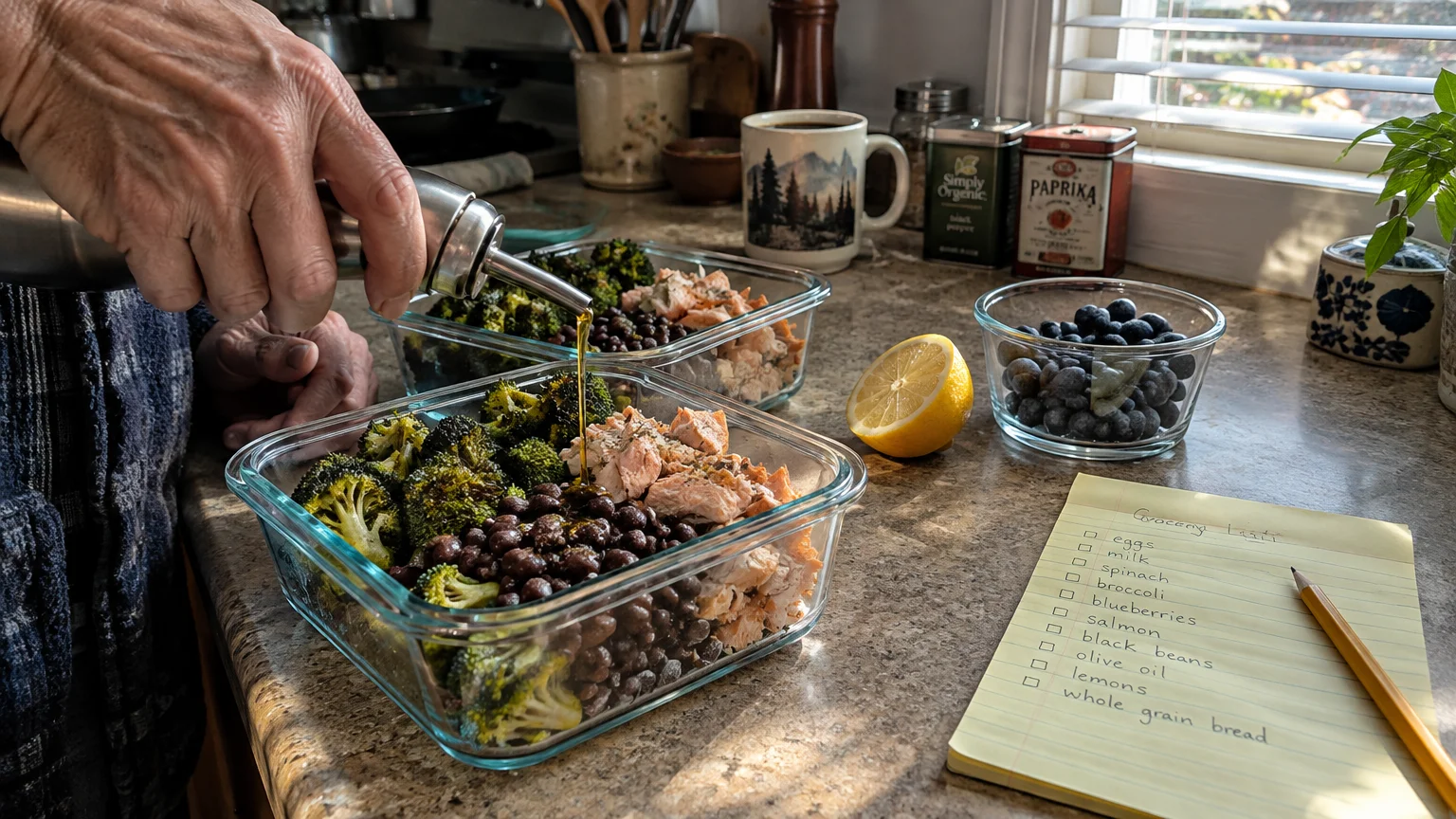
On Sunday afternoon, simmer a pot of lentil vegetable soup or roast two trays of broccoli and salmon fillets at once. Divide leftovers into single-serving glass containers and freeze half for next week.
Keep extra virgin olive oil out of smoking-hot pans so its beneficial compounds stay intact. Cook over gentle medium heat and save a fresh drizzle of raw oil for right before serving.
Frequently Asked Questions
Is it too late to improve my diet in my 60s, 70s, or 80s?
No, your body benefits from better nutrition at every stage of life. Large UK Biobank data showed that adopting a longevity diet at age 70 is still associated with roughly five extra years of life.
Within just a few weeks of eating more fiber, fish, and olive oil, many seniors notice steadier energy, smoother digestion, and better blood pressure readings. Every healthy meal supports your independence today and tomorrow.
Can I just take fish oil pills instead of eating seafood?
Whole fatty fish gives you high-quality protein, vitamin D, selenium, and balanced omega-3 fats that capsules cannot fully copy. The American Heart Association encourages getting omega-3s from two weekly servings of oily fish first.
If you struggle to eat seafood, ask your doctor before buying supplements. The FDA and American Heart Association caution that taking more than 3 grams of omega-3s daily from pills can raise bleeding risk.
Should I avoid leafy greens if I take blood thinners?
If you take warfarin, do not eliminate spinach, kale, broccoli, or other vitamin K-rich vegetables. Cutting them out suddenly can increase bleeding risk, while suddenly eating huge amounts can interfere with your medication.
Instead, keep your weekly intake of leafy greens steady and let your clinic know before making big diet shifts. Newer blood thinners like rivaroxaban generally have no vitamin K food restrictions.
How can I get enough protein without hurting my kidneys?
Most healthy older adults need 1.0 to 1.2 grams of protein per kilogram of body weight, or slightly more under current federal guidelines, to fight muscle loss. Leaning on fish, beans, lentils, yogurt, and nuts keeps saturated fat low.
However, roughly one in seven U.S. adults has chronic kidney disease, which often requires gentler protein limits. Always ask your physician for a personalized protein goal if you have any history of kidney issues.
Does extra virgin olive oil lose its health benefits when heated?
Extra virgin olive oil stays stable during gentle sautéing, baking, and roasting at moderate kitchen temperatures. Its natural polyphenols actually help protect the oil from breaking down while you cook.
Avoid letting any oil smoke in a scorching-hot pan, and save an extra spoonful of raw olive oil to drizzle over finished dishes. Using it both for light cooking and cold dressings gives you maximum flavor and protection.
For science-based nutrition information, refer to the U.S. Department of Agriculture at Nutrition.gov and the Dietary Guidelines for Americans. The National Institute on Aging also has excellent resources on healthy eating for seniors.
Disclaimer: This article is for informational purposes only and does not constitute medical advice. Always seek the advice of your physician or other qualified health provider with any questions you may have regarding a medical condition.