Osteoporosis often develops quietly for years without causing pain, yet your body frequently offers subtle clues well before a serious bone break occurs. Learning to spot these early osteoporosis warning signs gives you the power to protect your independence and stay active.
Millions of adults over 50 live with weakened bones without knowing it, especially postmenopausal women facing rapid bone loss. Recognizing small changes in your height, posture, grip strength, and dental health helps you act early.
You can rebuild strength, improve balance, and safeguard your skeleton at any age. Here is how to read your body’s signals and take practical steps toward lasting fracture prevention.
How Your Body Changes and What You Can Do
Your skeleton is living tissue that constantly breaks down old bone and builds fresh bone in its place. Most people reach peak bone mass around age 30, when bone creation outpaces bone breakdown.
As decades pass, that balance gradually shifts, especially for osteoporosis women going through midlife hormone changes. In the United States, the average age of menopause is 51, and falling estrogen removes a natural brake on bone-resorbing cells.
Women lose an average of 10% to 12% of their spine and hip bone mineral density across the menopausal transition. In the 5 to 7 years right after menopause, women can lose up to 20% of their bone density.
By age 80, roughly 30% of peak bone mass is gone. Because women start with smaller frames and experience this sharp hormonal drop, they are four times more likely to develop osteoporosis than men.
According to the Bone Health and Osteoporosis Foundation, about 55% of U.S. adults aged 50 and older have low bone mass or osteoporosis. Roughly 10 million Americans have osteoporosis, and another 43 million live with osteopenia—a milder stage of bone thinning.
More than one in four U.S. women over age 65 have osteoporosis, yet roughly 69% of people with the disease remain undiagnosed. Among men, that screening gap climbs to nearly 87%, even though about two million American men have the condition.
In fact, most fragility fractures happen in adults whose bone density falls in the osteopenia range rather than full osteoporosis. That makes early bone health checks essential for both men and women.
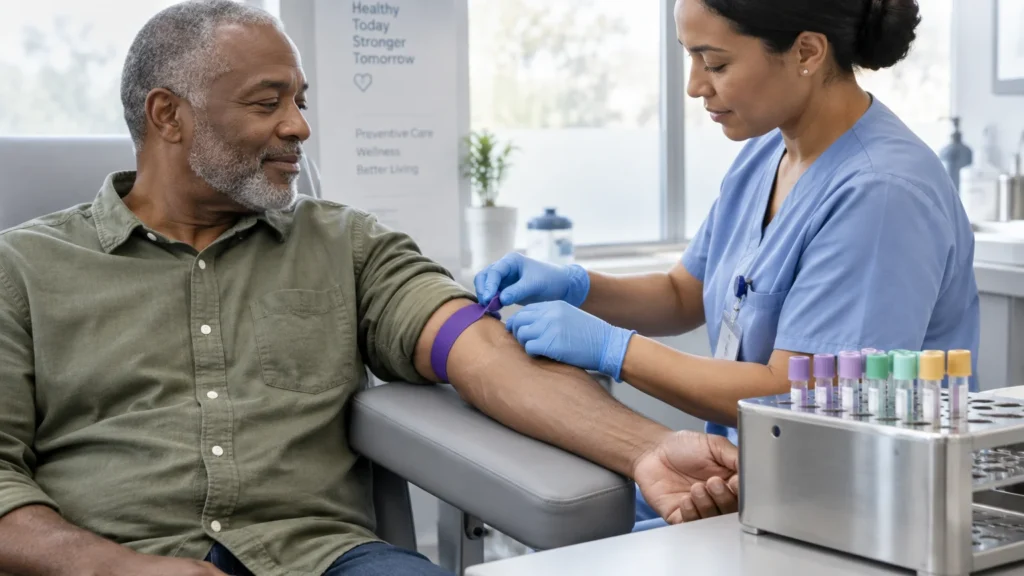
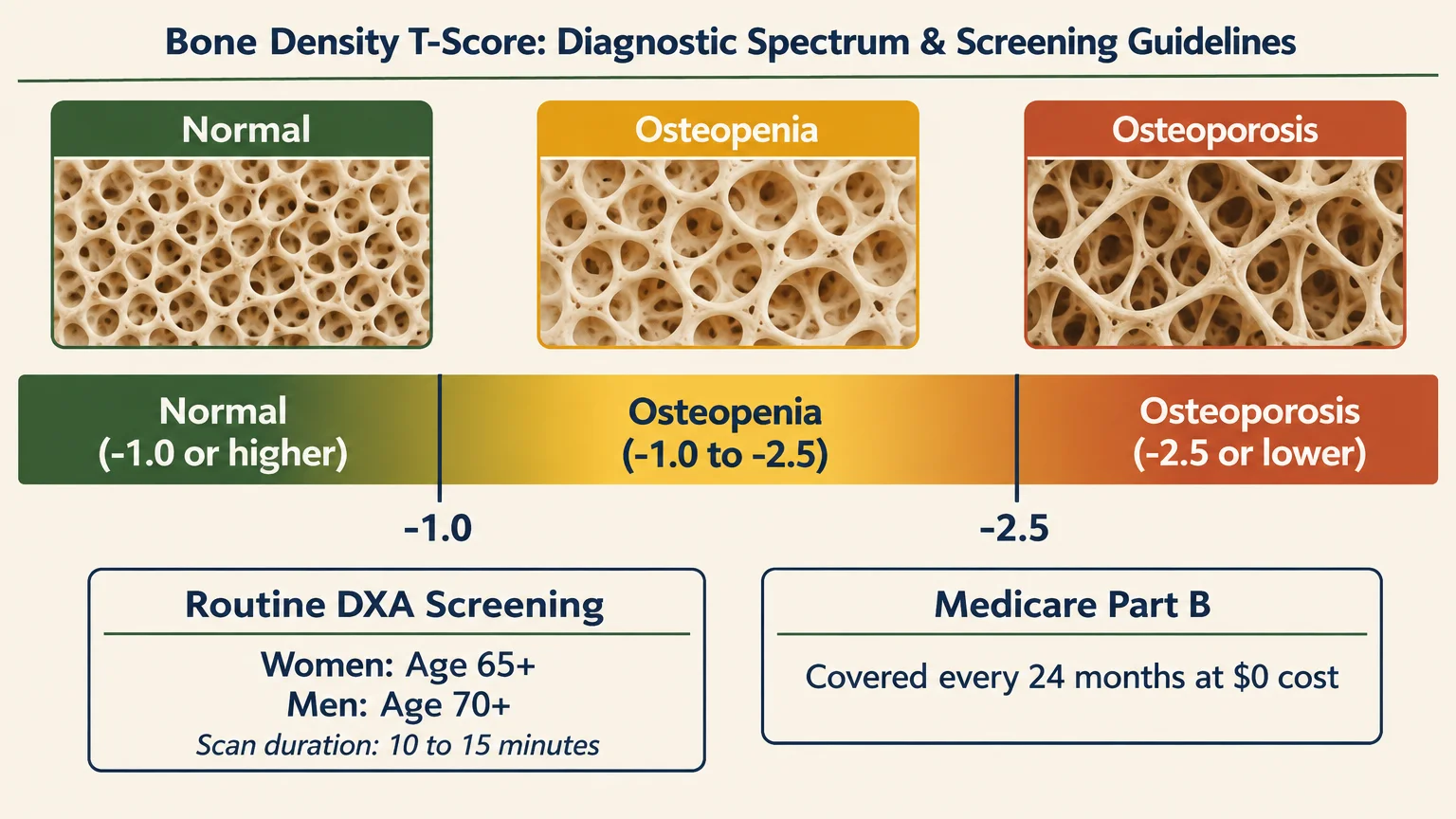
A central DXA scan—a painless X-ray of your hip and lower spine—takes just 10 to 15 minutes and measures your bone mineral density. You simply avoid calcium supplements for 24 hours beforehand so the scan reads clearly.
The U.S. Preventive Services Task Force recommends routine DXA screening for all women aged 65 and older, plus a risk check for younger postmenopausal women with risk factors. Those risks include a parent’s hip fracture, low body weight, early menopause, rheumatoid arthritis, or long-term steroid use.
The Bone Health and Osteoporosis Foundation also advises routine screening for all men aged 70 and older, as well as men aged 50 to 69 with risk factors. Medicare Part B covers eligible bone mass measurements once every 24 months at $0 cost when providers accept assignment.
Commercial ACA health plans also cover recommended preventive screenings at $0 out of pocket. If you pay cash without insurance, freestanding imaging centers typically charge $99 to $200, while hospital outpatient departments range from $200 to $600.
When you review your results, a T-score of -1.0 or higher indicates normal bone density. Scores between -1.0 and -2.5 indicate osteopenia, while -2.5 or lower confirms osteoporosis.
Doctors often pair your scan with the FRAX fracture risk calculator to guide treatment. In osteopenia patients, U.S. guidelines generally consider bone-protecting medication when 10-year hip fracture risk reaches 3% or major osteoporotic fracture risk reaches 20%.
Daily nutrition forms the bedrock of your defense at every T-score. The Bone Health and Osteoporosis Foundation recommends 1,200 milligrams of total daily calcium from food and supplements for women 51 and older and men 71 and older.
Men aged 50 to 70 need 1,000 milligrams of calcium each day. Dairy foods, fortified plant milks, canned salmon with bones, tofu, and leafy greens help you meet your goal naturally before adding a low-dose supplement if needed.
Vitamin D helps your gut absorb that calcium efficiently. Federal guidelines set the daily target at 600 IU up to age 70 and 800 IU after age 70, while bone health groups often suggest 800 to 1,000 IU daily for older adults.
Keep in mind that the U.S. Preventive Services Task Force advises against taking untargeted vitamin D or calcium purely for primary prevention if you do not have osteoporosis or a deficiency. If you do have low vitamin D or diagnosed bone loss, your doctor can tailor the right daily dose.
7 Osteoporosis Warning Signs Before a Major Fracture Happens
Medical authorities—including the Mayo Clinic and the World Health Organization—note that early bone loss produces no pain on its own. Still, your posture, teeth, grip, and minor aches often reveal hidden bone loss symptoms before a devastating hip fracture happens.
1. Gradual Loss of Height
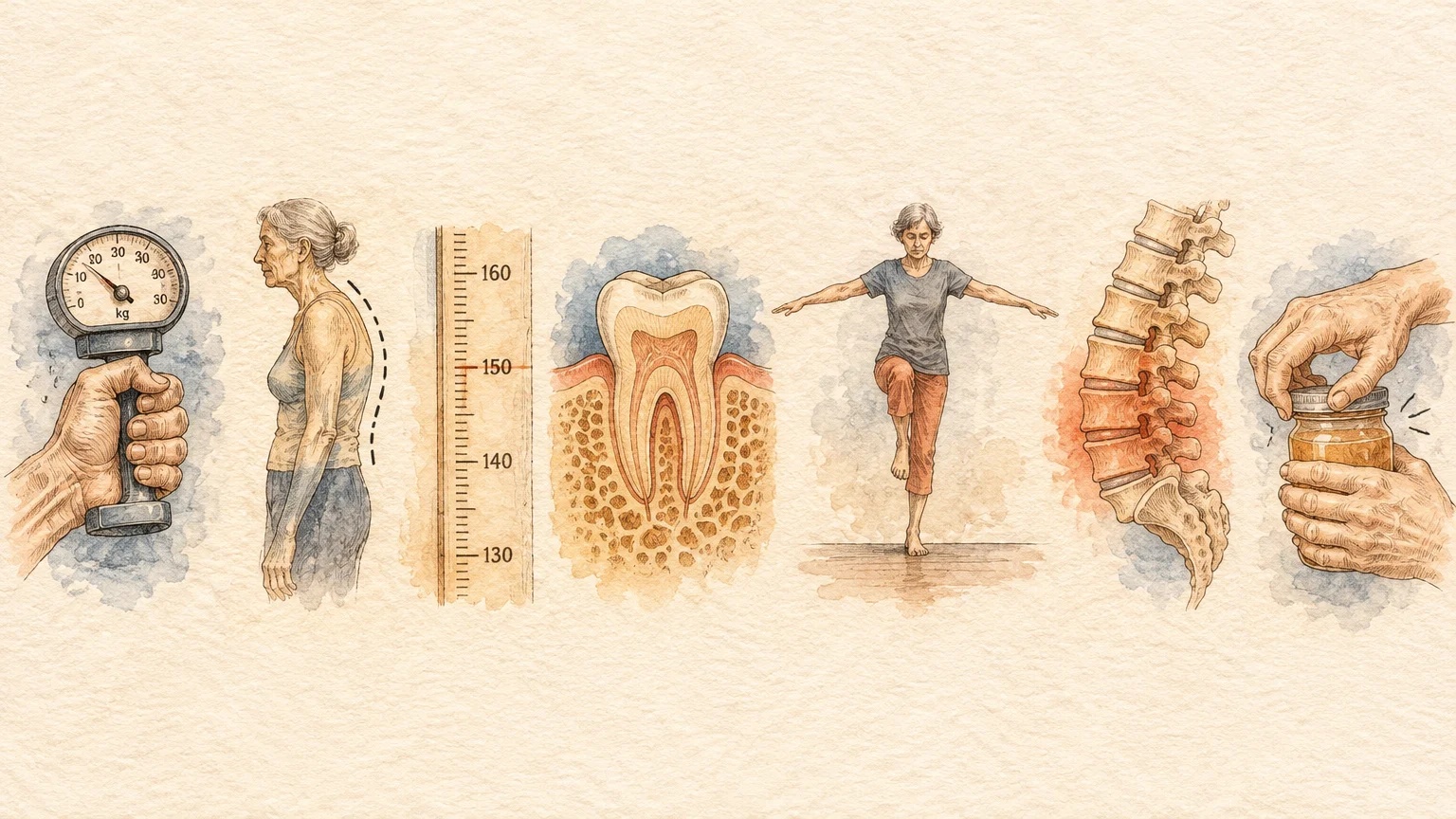
Shrinking slightly over the decades feels normal to many seniors, yet noticeable height loss is one of the clearest osteoporosis warning signs. Losing more than 1 inch—and clinically 1.5 inches or more—points strongly toward silent spinal compression fractures.
Research shows that two-thirds to three-quarters of vertebral fractures happen without sharp, memorable pain at the moment of injury. Even half an inch of height loss raises your odds of an underlying spinal fracture by 19%, climbing to 177% at 3 inches.
Ask your nurse to measure your height barefoot against a wall chart at every annual wellness visit. Tracking that single number over time catches quiet spinal changes early.
2. A Stooped or Rounded Upper Back
When weakened vertebrae in your middle or upper back slowly collapse, your spine curves forward into a rounded posture known as kyphosis. You might notice your shoulders sloping forward or your head jutting ahead of your chest.
Shirts may hang unevenly, and the space between your bottom ribs and hip bones can begin to shrink. In advanced cases, a compressed rib cage leaves less room for your lungs, leading to unexpected shortness of breath during light chores.
Try a simple home check by standing barefoot with your heels and buttocks touching a flat wall. If the back of your head struggles to rest against the wall without tipping your chin up, mention this posture shift to your physician.
3. Unexplained Back Pain Without a Clear Injury
While early bone thinning hurts no one, tiny hairline collapses in a fragile vertebra can spark persistent back pain. A routine movement—like lifting a bag of groceries, reaching into a low cupboard, or coughing hard—can compress weakened spinal bone.
This discomfort often feels like a dull ache near your mid-to-lower back that worsens when you stand or walk and eases when you lie flat. Because having one vertebral fracture raises your risk of another by up to four times, never brush off lingering new back pain.
Jot down when the pain started, what movements trigger it, and whether it changes your daily routine. Sharing those notes helps your doctor decide whether a spinal X-ray or DXA scan makes sense.
4. Receding Gums or Shifting Teeth
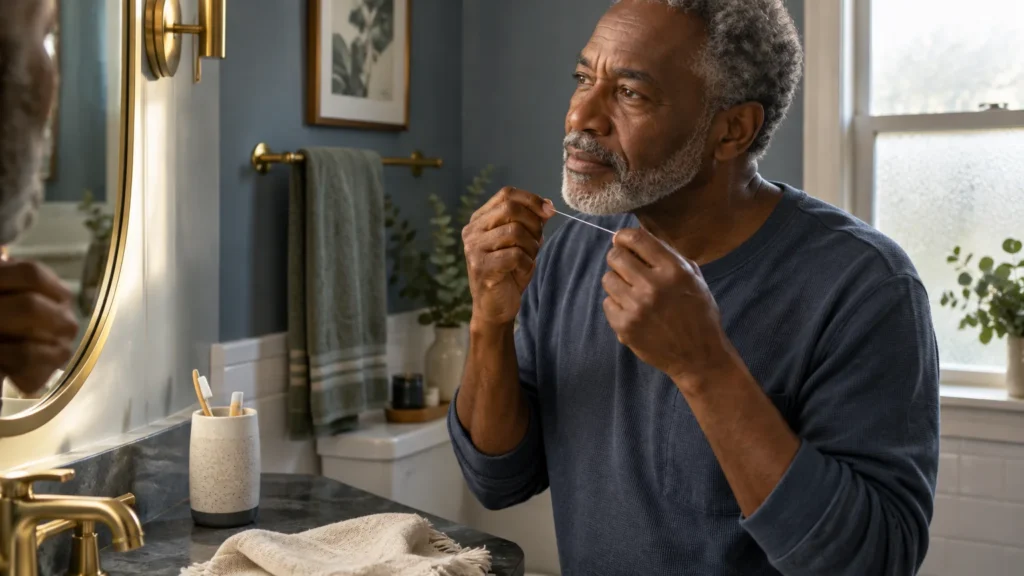
Bone loss affects your entire skeleton, including the jawbone that anchors your teeth in place. Clinical studies link systemic bone thinning to jawbone loss, which can reveal itself right in your bathroom mirror.
Watch for gums that pull back from your teeth, teeth that feel slightly loose, or partial dentures that suddenly stop fitting snugly. Researchers have found that thinning in the jawbone correlates closely with lower bone mineral density in the lumbar spine.
Keep up with twice-yearly dental checkups and cleanings. Ask your dentist whether your routine dental X-rays show reduced jawbone density, and pass that insight along to your primary care provider.
5. Noticeably Weaker Hand-Grip Strength
Struggling to twist open a jam jar or lift a full tea kettle can signal more than simple hand stiffness. Clinical research by Li and colleagues found that weaker hand-grip strength correlates directly with lower bone mineral density.
Muscles and bones operate as partners; strong muscles tug on bone during movement and signal your body to keep building dense tissue. When grip strength drops, it reflects broader muscle loss and flags a higher risk of falls and future fractures.
Pay attention to whether carrying grocery bags, wringing out a dishcloth, or gripping a stair rail feels noticeably harder than last year. A physical therapist can measure your grip quickly and help you rebuild upper-body strength safely.
6. A Minor Break From a Low-Impact Fall
Healthy bones should withstand a simple slip from standing height without snapping. Breaking a wrist, forearm, ankle, or rib during a gentle fall—or cracking a bone while bending over—is called a fragility fracture.
A low-trauma wrist fracture in your late 50s or 60s often serves as an early warning sign years before a far more serious hip fracture occurs. Globally, half of women and one in five men over age 50 will sustain a fragility fracture in their lifetime.
Yet 60% to 80% of women do not receive bone-protective treatment within a year after breaking a bone. If you ever fracture a bone from a minor bump or standing fall, insist on a bone density evaluation right away.
7. Brittle Nails Paired With Nutritional Clues
Many people notice peeling, splitting, or soft fingernails and wonder if their skeleton is weakening at the same pace. To be clear, major authorities—including the Mayo Clinic, the World Health Organization, and the U.S. Preventive Services Task Force—do not recognize brittle nails as a formal diagnostic sign of osteoporosis.
Even so, suddenly fragile nails often point to nutritional gaps, low protein intake, poor mineral absorption, or thyroid imbalances that also undermine bone health. Frequent handwashing and dry weather play a role too, so context matters.
Use persistent nail changes as a friendly reminder to review your diet and ask your doctor about vitamin D, calcium, and digestive health. Checking those building blocks early supports both stronger nails and steadier bones.
Safe and Effective Exercises and Activities
Targeted movement is one of the most reliable tools you have for fracture prevention, no matter your starting fitness level. Bones respond to gentle physical load by growing stronger, while muscles cushion your joints and steady your stride.
Guidelines from the Royal Osteoporosis Society and the Bone Health and Osteoporosis Foundation highlight three pillars of bone-healthy exercise: weight-bearing impact, resistance training, and balance work. Combining all three gives your skeleton well-rounded protection.
Weight-Bearing Impact Movement
Weight-bearing activities keep you upright on your feet so gravity works gently through your hips, legs, and spine. Brisk walking, climbing stairs, gardening, and low-impact dancing all count toward your weekly total.
Aim for weight-bearing movement on most days of the week. If you feel frail or have already experienced a fracture, start with brisk walks of up to 20 minutes on flat, well-lit paths wearing supportive, non-slip shoes.
If your balance is steady and your doctor clears higher-impact motion, adding up to 50 gentle impacts on most days—such as light heel drops or low stepping hops—gives bone-building cells an extra spark.
Targeted Resistance Training
Strength training builds the muscles that pull on your bones and hold your posture upright. Schedule resistance exercises two to three days per week, resting at least one day between sessions so muscles recover.
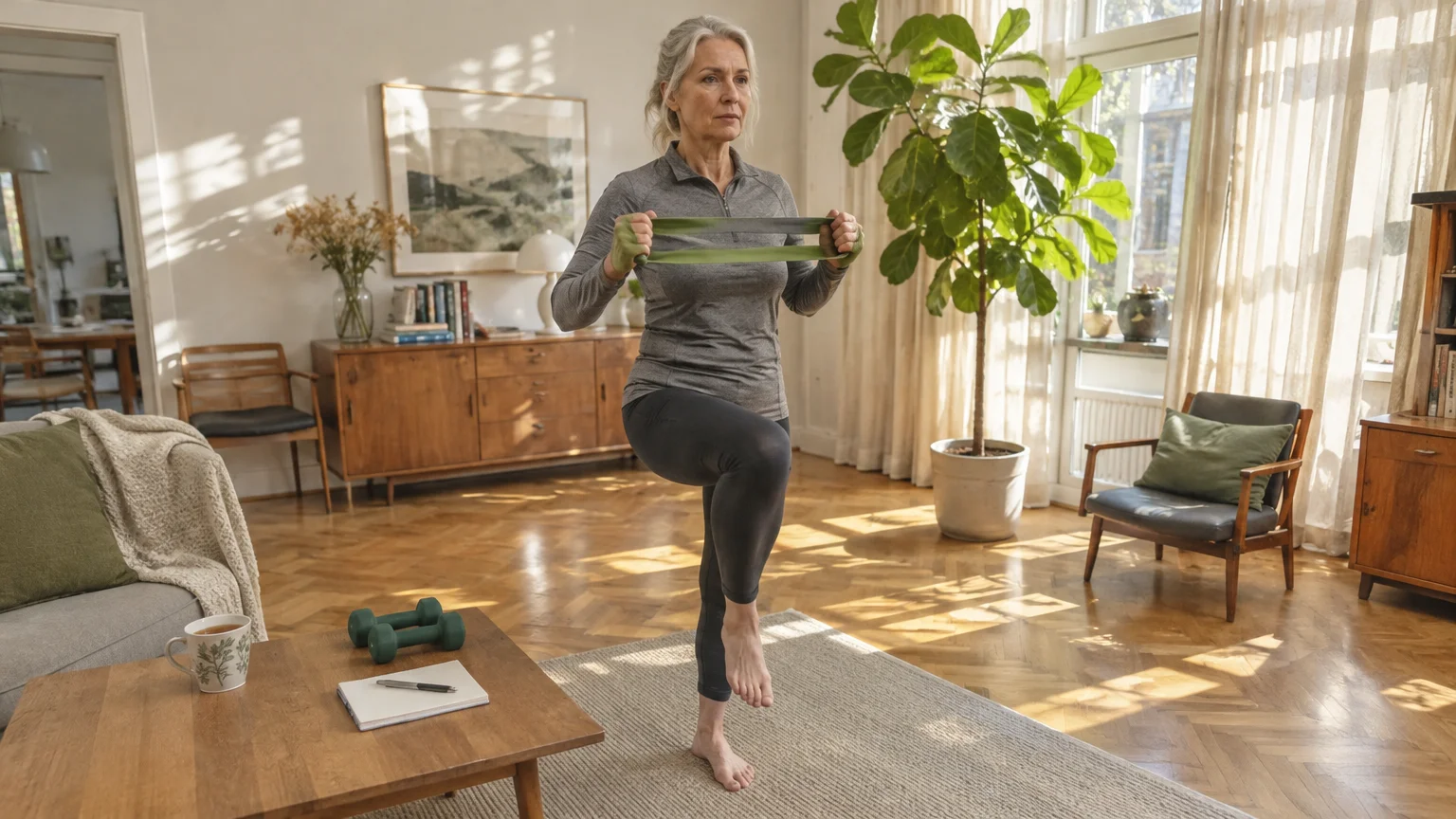
Start with light dumbbells, stretchy resistance bands, or simple bodyweight movements. Practice sit-to-stands from a sturdy armchair, wall push-ups against a kitchen wall, and seated band rows that draw your shoulder blades gently together.
Focus on smooth, controlled form rather than heavy weight, breathing out as you lift or push. Over several weeks, gradually build up to three sets of eight to twelve repetitions per exercise.
Balance and Spine-Safe Posture Work
Because roughly 27.6% of U.S. adults aged 65 and older fall each year, balance training protects your bones just as much as lifting weights. Practice balance work two to three days every week, especially if you feel unsteady on uneven ground.
Try standing on one foot for 10 to 20 seconds while keeping your fingertips lightly on a sturdy kitchen counter. You can also walk heel-to-toe in a straight line down a hallway or join a gentle tai chi class.
Protect your vertebrae during every workout and household chore by following the spine-safety rule. Always bend from your hips—a movement called a hip hinge—with your back flat and chest lifted rather than rounding forward from your waist.
Avoid sit-ups, deep toe touches, and sharp spinal twists, which squeeze the front edges of fragile vertebrae. Keeping your spine long and neutral lets you bend, lift, and reach without unnecessary strain.
For information on physical activity for older adults, consult the National Institute on Aging. The American Heart Association and the Arthritis Foundation also provide excellent resources for senior-friendly exercise.
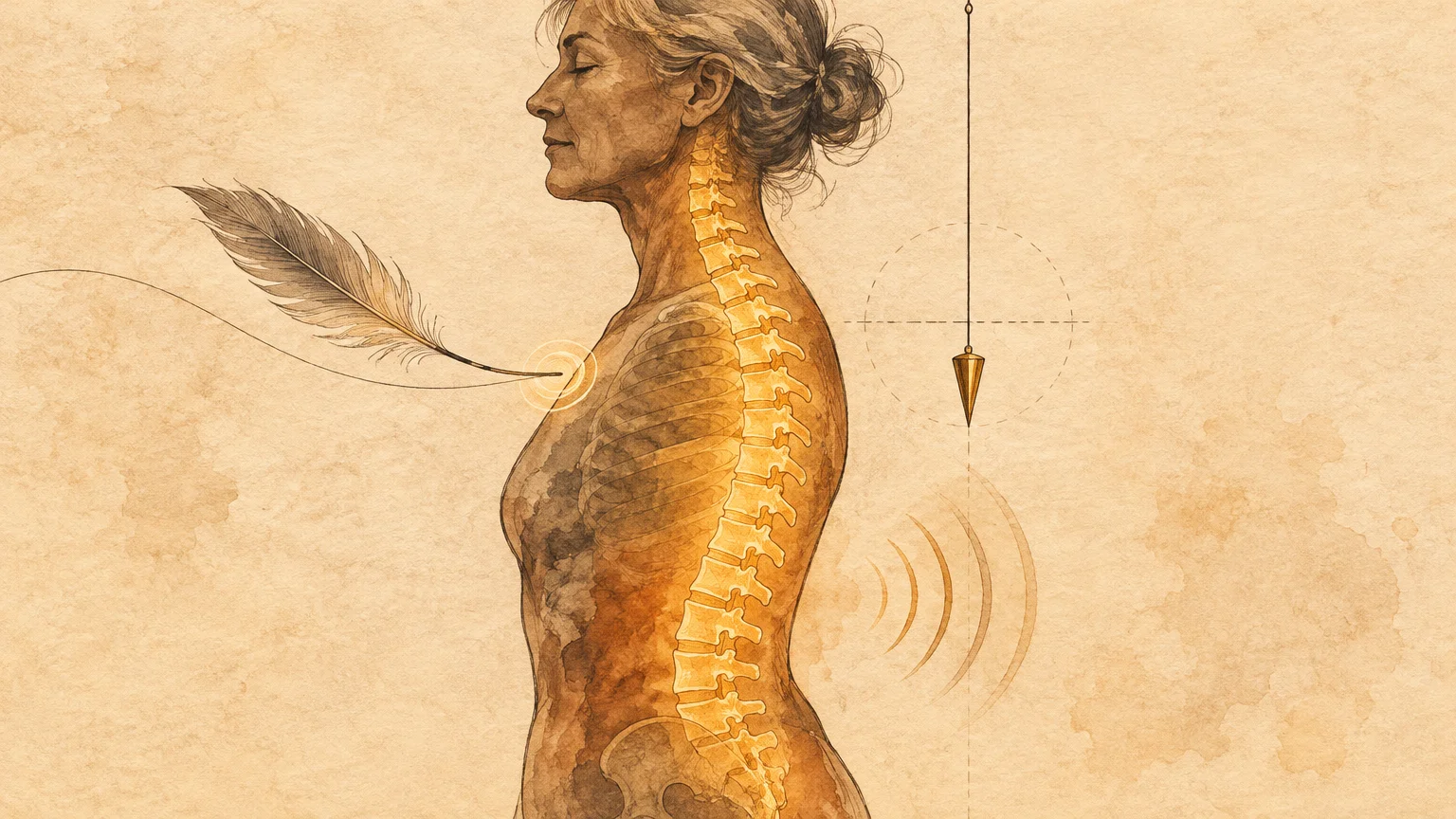
Listening to Your Body: Signs to Watch For
Staying active does not mean pushing through pain. Learning the difference between healthy effort and a true warning signal keeps your workouts safe and sustainable.
Normal exertion feels like warm, working muscles, mild fatigue during the last few repetitions, and slightly deeper breathing that still lets you speak in short sentences. Mild muscle soreness that peaks the next day and fades within 48 hours is normal too.
Stop exercising right away if you feel sharp, stabbing, or shooting pain in your back, hips, knees, or shoulders. Pause immediately if you notice dizziness, chest tightness, sudden shortness of breath, or tingling down an arm or leg.
Joint pain that lingers for more than two days—or pain that wakes you up at night—signals that an exercise needs modification. Scale back the range of motion, lighten the resistance, or ask a physical therapist to check your form.
Protecting yourself against falls is equally critical because the stakes of a major break are high. Nearly 40% of people who suffer a hip fracture cannot walk independently one year later, and half stop living independently.
Even spinal fractures carry serious health consequences, with international data linking them to an eight-fold rise in age-adjusted mortality. A May 2026 study in the journal Menopause also connected low hip bone density to up to a 47% higher overall mortality risk in postmenopausal women.
Those numbers are not meant to frighten you—they show why listening early to your body pays off so richly. Clear clutter from hallways, install bright nightlights, add grab bars in your shower, and schedule regular vision checks.

Tips for Staying Motivated
Building stronger bones happens through small, steady habits rather than dramatic weekend workouts. These practical strategies help you keep moving on busy or low-energy days.
Pair Movement With Daily Habits
Attach brief exercises to routines you already complete without thinking. Do ten slow heel raises while holding the counter as your morning coffee brews, or practice a single-leg stand while brushing your teeth.
Short bursts of movement spread across the day add up quickly and feel far less intimidating than blocking off a full hour.
Celebrate Consistency Over Intensity
Keep a simple wall calendar by your kitchen door and mark an X on every day you walk, stretch, or lift light weights. Watching a streak of steady days grow gives you a tangible sense of momentum.
If arthritis flares up or a cold sidelines you for a few days, return gently with a five-minute walk rather than giving up entirely.
Move Alongside Someone You Enjoy
Exercising with a friend, neighbor, or spouse turns health maintenance into pleasant social time. A walking partner makes morning strolls fly by and keeps you accountable when the couch looks tempting.
Local senior centers and community pools also offer bone-friendly strength and balance classes where instructors tailor movements to your comfort level.
Frequently Asked Questions
Can you rebuild bone density naturally without medication?
Weight-bearing exercise, resistance training, and adequate calcium and vitamin D slow down bone loss and can modestly support bone strength. However, if your T-score is -2.5 or lower—or your fracture risk is high—combining healthy habits with prescribed medication offers the strongest protection.
How often should I schedule a DXA bone density scan?
When monitoring borderline bone loss or tracking how well a treatment works, doctors usually repeat a DXA scan every one to two years. If your bones test healthy at age 65, your physician may wait longer before rechecking.
Are sit-ups and forward bends safe if I have osteopenia?
Traditional sit-ups and deep forward waist bends put heavy downward pressure on the front of your spinal vertebrae, increasing compression fracture risk. Swap them for gentle wall planks, heel slides, and hip-hinge movements that keep your back straight and supported.
Do men need to watch for bone loss symptoms too?
Yes, roughly two million U.S. men have osteoporosis, and nearly 87% remain undiagnosed because bone loss is often viewed as a women’s issue. Worldwide, about one in five men over age 50 will break a bone from weakened tissue, making screening vital for older men.
What should I do first if I spot two or more warning signs?
Schedule a dedicated visit with your primary care doctor and bring a short list of the changes you noticed, such as height loss or gum recession. Ask whether a central DXA scan and a 10-year FRAX fracture risk review fit your medical history.
Disclaimer: This article is for informational purposes only and does not constitute medical advice. Always seek the advice of your physician or other qualified health provider with any questions you may have regarding a medical condition.