
Identifying an autoimmune flare early allows you to manage symptoms before they severely disrupt your daily routines. When you pass the age of 70, subtle shifts in your body—like lingering fatigue, sudden joint stiffness, or mild cognitive fuzziness—are remarkably easy to dismiss as a normal part of healthy aging. You might blame a restless night or a change in weather, masking the true underlying inflammation. Because older bodies process and display immune responses differently than younger ones, recognizing the specific autoimmune flare symptoms unique to seniors is essential for maintaining your independence. By learning to distinguish between ordinary age-related changes and actual autoimmune disease activity, you protect your long-term mobility and well-being.

Understanding the Basics of Autoimmune Flares for Seniors
As you age, your immune system undergoes a natural, biological transformation known as immunosenescence; this process fundamentally changes how your body responds to threats, infections, and even its own tissues. An autoimmune disease occurs when your immune system mistakenly identifies healthy cells as foreign invaders and attacks them, leading to systemic inflammation. For younger adults, these conditions often present with aggressive, unmistakable symptoms. However, for seniors over 70, the clinical presentation frequently becomes muffled or atypical. You might experience chronic, low-grade inflammation—often referred to in geriatric medicine as “inflammaging”—which creates a constant hum of baseline immune activity that obscures acute flare-ups.
As you progress through your seventies, your bone marrow and thymus gland produce fewer fresh immune cells. Consequently, your body relies on older, memory-heavy immune cells that occasionally become confused, misidentifying your joint linings, skin, or thyroid as dangerous pathogens. This age-driven biological shift means that recognizing the signs of an autoimmune flare requires a completely different perspective than it did during your youth.
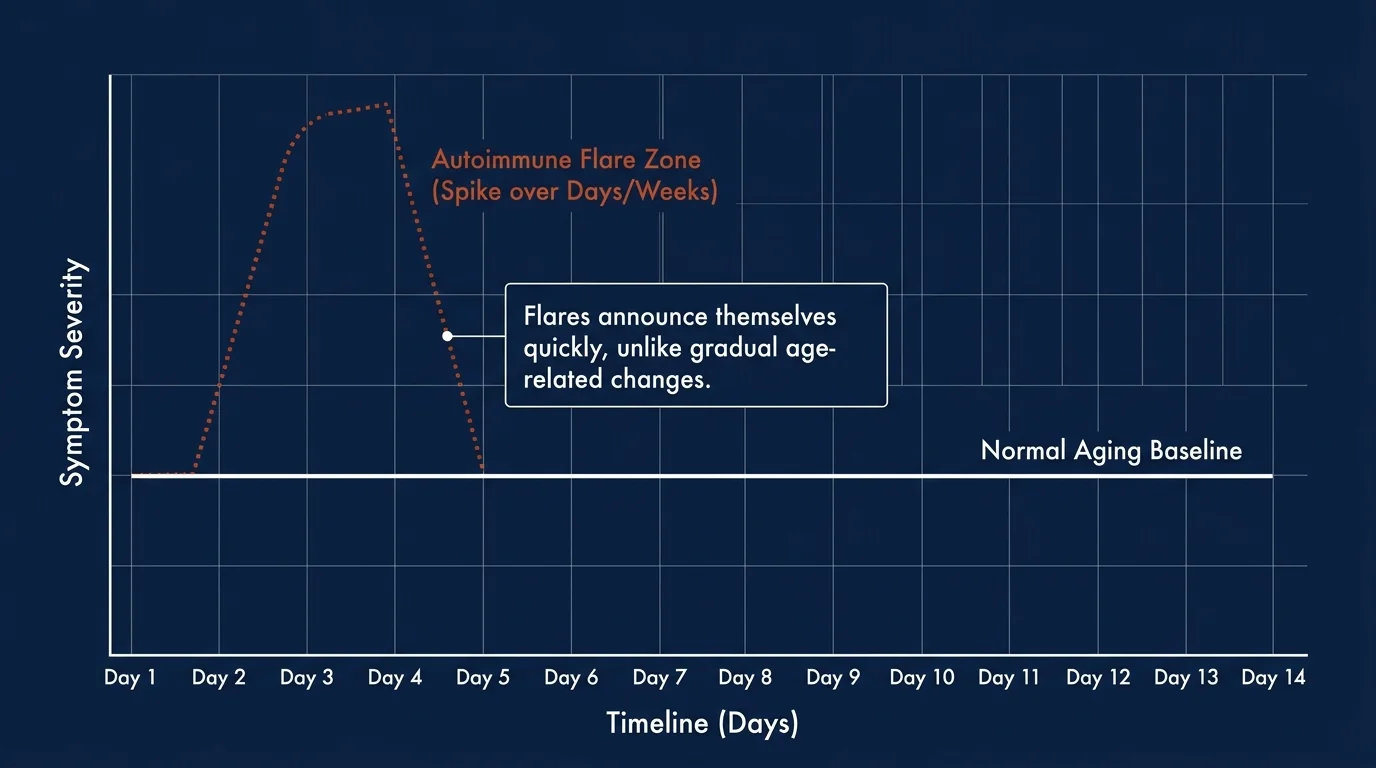
When an autoimmune condition like rheumatoid arthritis, lupus, or Hashimoto’s thyroiditis flares up, it means the disease activity has spiked after a period of relative calm. Data from rheumatology studies suggest that up to a third of older adults with autoimmune conditions experience delayed diagnoses simply because their symptoms overlap so closely with typical aging. You might assume your aching knees are just standard wear and tear, or you might brush off a sudden wave of exhaustion as a normal byproduct of your age. Recognizing these flares requires you to pay close attention to sudden changes in your baseline health. A flare does not usually creep up over years; it announces itself over days or weeks. By understanding how inflammation uniquely impacts your body in your seventies and beyond, you can take proactive steps to communicate effectively with your healthcare providers. This knowledge empowers you to seek appropriate interventions before a minor flare escalates into a major health crisis, safeguarding your overall senior health.

Practical Tips for a Healthier, Happier Life
Protecting your health requires you to tune in to the specific, often hidden signals your body sends during a flare. Below are the seven crucial signs of autoimmune activity that older adults frequently mistake for normal aging, paired with actionable tips to help you manage them safely.
Sign 1: Profound, Unrelenting Fatigue (Not Just a Bad Night of Sleep)
Many seniors expect to slow down in their seventies, but autoimmune fatigue operates on an entirely different level. This is not the standard tiredness you feel after a long afternoon of gardening or playing with your grandchildren. Autoimmune exhaustion feels like a heavy, paralyzing weight that does not improve with a daytime nap or a full night of deep rest. It happens because your body is expending massive amounts of cellular energy fighting its own tissues. Clinical research indicates that profound, debilitating fatigue affects up to eighty percent of individuals living with active autoimmune conditions, making it one of the most common early warning signs.
Actionable Tip: Maintain a daily energy journal to track your stamina. Rate your energy levels on a scale of one to ten each morning and evening. If you notice a sudden, inexplicable drop in your energy that lasts for more than a few days, bring this log to your doctor. Managing your pacing—breaking large household tasks into smaller, manageable chunks—will help you conserve valuable energy during these difficult periods.
Sign 2: Morning Joint Stiffness Lasting Longer Than an Hour
Osteoarthritis is incredibly common among older adults, making it very easy to blame new joint pain on simple wear and tear. However, osteoarthritis stiffness usually loosens up within ten to fifteen minutes of moving around in the morning. In stark contrast, an autoimmune flare—such as late-onset rheumatoid arthritis or polymyalgia rheumatica—causes severe morning stiffness that often lasts for well over an hour. You might find it incredibly difficult to grip your coffee mug, button your shirt, or rise smoothly from your favorite chair.
Actionable Tip: Incorporate gentle range-of-motion stretches into your morning routine before you even get out of bed. Slowly rotating your wrists, ankles, and shoulders can help circulate joint fluid without causing strain. If you find that your stiffness consistently extends past the one-hour mark, notify your doctor immediately; early medical intervention is critical for preserving your joint function and independence.
Sign 3: Persistent, Unexplained Low-Grade Fevers
As we age, our average body temperature naturally drops. Many seniors over 70 actually run a little cooler than they did in their younger years. Therefore, a temperature reading of 99 or 99.5 degrees Fahrenheit might represent a genuine fever for you. Low-grade fevers are a classic hallmark of systemic inflammation and a primary indicator of autoimmune flare symptoms. Unfortunately, older adults often write off these mild fevers as a lingering cold, a reaction to a warm room, or a slight dehydration issue.
Actionable Tip: Purchase a reliable digital thermometer and learn your true baseline temperature by taking it at the same time every day for a week while you feel perfectly well. If you start experiencing sudden chills, unusual night sweats, or a sustained increase in your baseline temperature without any accompanying respiratory symptoms, contact your healthcare provider to investigate for underlying systemic inflammation.
Sign 4: Sudden Cognitive Fog and Memory Blips
Forgetfulness is a common fear for seniors, and many immediately worry about dementia or Alzheimer’s disease when they start losing their train of thought. Yet, sudden and severe brain fog is a frequent, highly underreported sign of an autoimmune flare. Inflammatory molecules can easily cross the blood-brain barrier, temporarily impairing your concentration, executive function, and short-term memory. You might suddenly struggle to find the right word in casual conversation or completely lose track of a familiar family recipe.
Actionable Tip: Do not panic and immediately assume the worst about your cognitive health. Instead, simplify your daily routines during these episodes to reduce mental strain. Write down important information, set daily medication alarms on your smartphone, and minimize background distractions like the television when you need to focus. Discussing the sudden onset of these cognitive changes with your physician can help them differentiate between a temporary inflammatory flare and permanent cognitive decline.
Sign 5: Shifting, Unexplained Skin Rashes and Sensitivities
Skin naturally thins out as you age, becoming much more susceptible to bruising, dryness, and minor tears. Because of these expected dermatological changes, you might easily ignore a new rash, assuming it is just a reaction to a new laundry detergent or dry winter air. However, autoimmune diseases like lupus, psoriasis, and vasculitis often present with highly distinct dermatological signs. You might notice raised, scaly patches on your elbows, a sudden severe sensitivity to sunlight, or unexplained purplish spots on your lower legs.
Actionable Tip: Keep a close eye on your overall skin health by performing a weekly full-body check after your shower. If a rash appears suddenly, does not respond to standard over-the-counter moisturizers, or is accompanied by unusual joint pain, take clear photographs of the affected area in good natural lighting. These photos provide invaluable diagnostic clues for your dermatologist or rheumatologist, especially if the rash happens to fade before your scheduled appointment.
Sign 6: Abrupt Digestive Distress and Bowel Changes
Older adults frequently experience changes in digestion due to a naturally slowing metabolism, dietary adjustments, or common medication side effects. It is incredibly easy to attribute a sudden bout of diarrhea, abdominal cramping, or severe bloating to a heavy meal you recently ate. Yet, an abrupt, lasting change in your gastrointestinal habits can signal a flare-up of inflammatory bowel disease, celiac disease, or systemic sclerosis. When your immune system attacks your digestive tract, it severely compromises your ability to absorb essential vitamins and nutrients.
Actionable Tip: Focus on staying hydrated and eating easily digestible, nutrient-dense foods like warm bone broths, well-cooked root vegetables, and lean proteins during a digestive upset. Keep a detailed food and symptom diary to track whether specific meals directly correlate with your distress. If your symptoms persist for more than three days, or if you notice unexplained weight loss alongside them, seek a thorough medical evaluation promptly.
Sign 7: Unintentional Weight Fluctuations
Losing or gaining a few pounds around the holidays is normal, but significant, unintentional weight changes in your seventies warrant careful, immediate attention. Unexplained weight loss often occurs during severe autoimmune flares because chronic inflammation burns through your caloric reserves and actively suppresses your appetite. Conversely, sudden weight gain can indicate a flare of an autoimmune thyroid condition, such as Hashimoto’s disease, or significant fluid retention caused by kidney involvement in diseases like lupus. Seniors often mistakenly attribute these dramatic changes to a natural loss of muscle mass or a naturally slowing metabolism.
Actionable Tip: Weigh yourself once a week on a reliable bathroom scale, preferably at the exact same time of day and wearing similar clothing. Medical studies show that losing more than five percent of your body weight within a six-month period without trying is a significant clinical marker. If you notice a sudden fluctuation of more than five pounds in a single month without actively changing your diet or exercise habits, schedule an appointment with your doctor. Maintaining a balanced, anti-inflammatory diet rich in omega-3 fatty acids and fresh produce can help stabilize your overall well-being during these uncertain periods.
Important Safety Precautions to Keep in Mind
Managing autoimmune flares requires a delicate balance of proactive care and cautious living, especially for adults over the age of seventy. When your body is engulfed in an intense inflammatory response, your physical stability and natural immune defenses become significantly compromised. One of the most critical safety precautions you must prioritize involves aggressively minimizing your risk of falls. Autoimmune flares that affect your delicate joint linings or cause profound exhaustion heavily increase your likelihood of losing your balance. Ensure your living space is completely free of loose rugs and tripping hazards, install sturdy grab bars in your bathroom, and do not hesitate to use a mobility aid like a cane or walker if you feel unsteady.
Furthermore, you must exercise extreme caution when self-medicating for unexpected flare symptoms. It is very tempting to reach for over-the-counter nonsteroidal anti-inflammatory drugs (NSAIDs) to relieve joint pain or reduce a low-grade fever. However, these medications can interact dangerously with prescription drugs you might already take for blood pressure, heart health, or existing autoimmune therapies. They also significantly increase your risk of dangerous gastrointestinal bleeding and kidney distress; these risks naturally elevate as you age. Always check with your local pharmacist or physician before introducing a new supplement, vitamin, or pain reliever into your daily regimen. Lastly, because an autoimmune flare indicates that your immune system is currently malfunctioning, you may be highly susceptible to secondary infections. Practice rigorous hand hygiene, avoid crowded indoor spaces during peak cold and flu seasons, and stay consistently up to date with your recommended vaccinations to protect your vulnerable system.

When to Speak with a Healthcare Professional
While making gentle lifestyle adjustments and faithfully tracking your symptoms are excellent tools for managing your health, they are never substitutes for professional medical intervention. You should immediately speak with a healthcare professional if you experience sudden, severe symptoms that completely disrupt your ability to function independently. Warning signs that require urgent, emergency medical evaluation include sharp chest pain, severe shortness of breath, sudden weakness or numbness on one side of your body, or an absolute inability to bear weight on your legs. These critical symptoms can mimic a severe autoimmune flare but may actually indicate life-threatening events like a heart attack, stroke, or severe systemic infection.
For less emergent but persistent symptoms, schedule a comprehensive visit with your primary care physician or rheumatologist if your flare indicators—such as profound fatigue, unusual morning stiffness, or lingering low-grade fevers—last for more than two weeks. Bring your meticulously kept symptom journals, temperature logs, and any photographs of skin rashes directly to your appointment. Clear, documented evidence of your daily struggles helps your doctor piece together the complex clinical puzzle. Remember that your primary care physician acts as the central gatekeeper to specialized care; they can run initial inflammatory blood panels and seamlessly refer you to a rheumatologist, endocrinologist, or gastroenterologist depending on your specific symptoms. Early medical intervention can often halt a flare before it causes permanent tissue or joint damage. Do not suffer in silence or accept severe pain as an unavoidable consequence of healthy aging; a qualified medical provider can adjust your treatment plan to get your immune system back under proper control.
Frequently Asked Questions
Can you develop a new autoimmune disease after age 70?
Yes, absolutely. While many autoimmune diseases are diagnosed in early adulthood or middle age, it is entirely possible to develop conditions like late-onset rheumatoid arthritis, polymyalgia rheumatica, or mucous membrane pemphigoid well into your seventies and eighties. Doctors sometimes miss these late-onset diagnoses initially because the subtle symptoms blend so seamlessly with common, age-related ailments.
How does an autoimmune flare differ from an ordinary infection?
An ordinary infection is caused by an external pathogen—like a harmful bacteria or a virus—invading your body. Your immune system fights the external pathogen, and once the invader is cleared, you fully recover. An autoimmune flare occurs when your immune system turns inward, mistakenly attacking your own healthy tissues and organs. While both events can cause extreme fatigue and low-grade fevers, an infection typically resolves with time or targeted antibiotics, whereas an untreated autoimmune flare can persist indefinitely and cause chronic, irreversible tissue damage.
Does diet actually impact autoimmune flare symptoms in seniors?
Diet plays a substantial, medically recognized role in managing systemic inflammation. Consuming highly processed foods, excess sugars, and refined carbohydrates can easily trigger inflammatory pathways in your body, potentially exacerbating your existing symptoms. Conversely, adopting an anti-inflammatory eating pattern—rich in leafy greens, fresh berries, fatty fish, and extra virgin olive oil—can help naturally soothe an overactive immune system. While diet alone will not cure an autoimmune disease, it remains a powerful, everyday tool for significantly reducing the severity and frequency of your flares.
Why are my blood tests normal even when I feel terrible?
Blood tests are incredibly useful diagnostic tools, but they do not always capture the complete picture of autoimmune activity, especially in older adults. Standard inflammatory markers like C-reactive protein (CRP) or erythrocyte sedimentation rate (ESR) can fluctuate wildly from day to day. Sometimes, the localized inflammation trapped in your joint tissues or skin is not severe enough to elevate systemic blood markers, even though you are experiencing debilitating pain and exhaustion. Your physical symptoms and daily personal experiences are just as important as your laboratory results when your doctor is diagnosing an active flare.
For authoritative, trustworthy health information, always consult official sources like the National Institute on Aging (NIA) and MedlinePlus from the National Library of Medicine. The CDC also provides excellent resources for older adults.
Disclaimer: This article is for informational purposes only and does not constitute medical advice. Always seek the advice of your physician or other qualified health provider with any questions you may have regarding a medical condition.