
Taking a daily multivitamin routine might offer a false sense of security if your body cannot properly absorb or utilize those essential nutrients. Over 70% of adults aged 60 and older take at least one dietary supplement daily, yet age-related digestive changes often block these nutrients from reaching your bloodstream. Knowing how to evaluate your body’s response helps you make smarter choices about your daily nutrition. From persistent fatigue to conflicting laboratory results, subtle signals indicate when your daily supplement falls short. Recognizing these warning signs ensures you invest in targeted dietary strategies that genuinely support your health, vitality, and overall longevity as you navigate your golden years.
Understanding the Basics of Multivitamin Effectiveness for Seniors
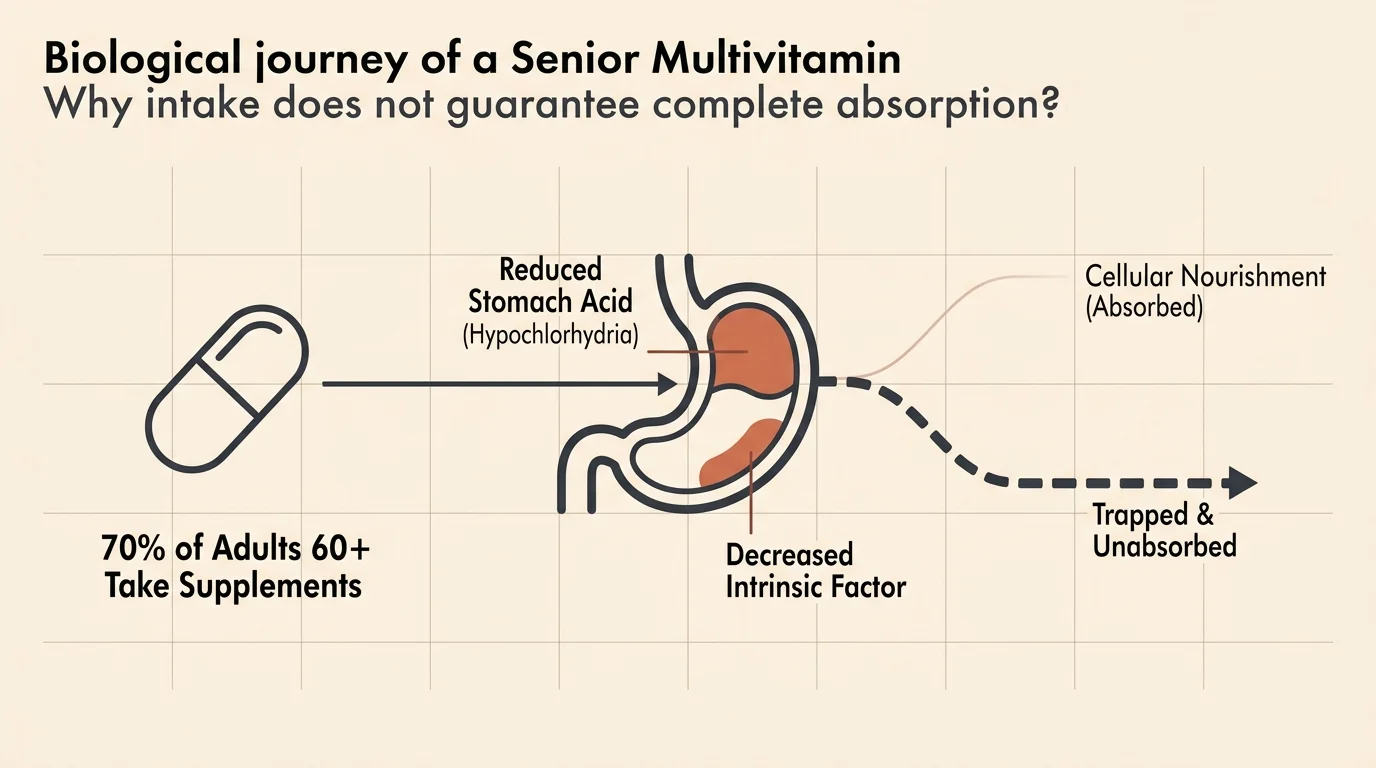
As you age, your digestive system undergoes subtle yet significant transformations that change how you process food and dietary supplements. Many older adults assume that swallowing a daily pill guarantees proper nutrition; however, nutrient breakdown and uptake require a delicate sequence of chemical reactions. According to National Health and Nutrition Examination Survey data published by the Centers for Disease Control and Prevention, 60.2% of American adults take dietary supplements. That number climbs rapidly with age; over 70% of adults aged 60 and older use at least one supplement product, and 56.4% take two or more supplements every single day. Understanding these numbers highlights how deeply ingrained supplement habits have become in daily life.
Despite this high rate of consumption, taking a pill does not automatically translate to cellular nourishment. Aging often reduces the secretion of hydrochloric acid in your stomach—a condition known as hypochlorhydria—and decreases the production of intrinsic factor, a vital transport protein required for vitamin B12 absorption. Without sufficient stomach acid, your stomach struggles to break down dense, hard tablets, leaving active ingredients trapped inside the compressed pill as it moves through your gastrointestinal tract. Consequently, vitamin absorption issues become far more frequent as the decades pass.
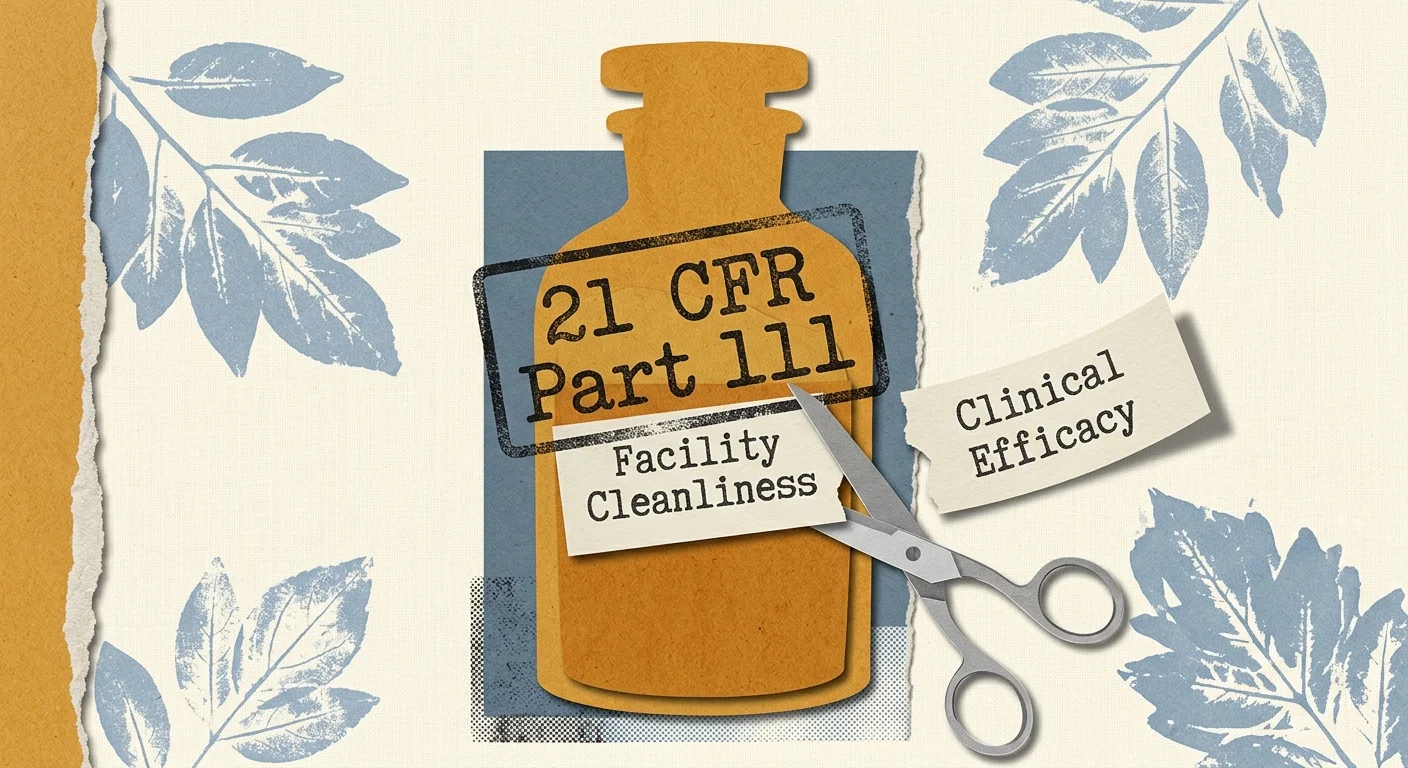
Furthermore, understanding regulatory realities helps clear up common multivitamin myths regarding supplement safety and performance. Under the Dietary Supplement Health and Education Act of 1994, the U.S. Food and Drug Administration does not review or approve dietary supplements for safety or clinical efficacy before manufacturers market them to consumers. While the FDA requires manufacturers to adhere to Current Good Manufacturing Practices under 21 CFR Part 111, these regulations focus strictly on facility cleanliness, sanitation, and manufacturing consistency. They do not verify product health claims or guarantee that your body will absorb the ingredients on the label.
You may spot independent third-party testing seals on bottle labels, such as certification from United States Pharmacopeia or NSF International. These seals offer helpful reassurance because they confirm that the product contains the ingredients listed on the label in the specified amounts and remains free from harmful levels of heavy metals or contaminants. However, third-party testing evaluates manufacturing quality alone—it does not measure clinical effectiveness or determine whether a specific formulation meets your personal physiological needs. Recognizing these foundational mechanics empowers you to look beyond marketing claims and evaluate whether your daily supplement actually supports your ongoing health.

Practical Tips for Identifying Signs Your Multivitamin Isn’t Working
Recognizing multivitamin effectiveness signs requires paying close attention to how your body feels, reviewing lab results with your doctor, and understanding how nutrients interact inside your digestive tract. Here are seven distinct signs that your daily supplement may not be delivering the results you expect, along with practical steps to address each situation.
1. You Experience Persistent Low Energy and Unexplained Fatigue
If you take a daily pill yet constantly feel sluggish, depleted, or brain-fogged, your supplement may fail to deliver essential energy-supporting nutrients like vitamin B12 or iron. Many commercial multivitamins use synthetic forms of B12—such as cyanocobalamin—which your body must convert through multiple enzymatic steps before utilization. Older adults often lack sufficient stomach acid and intrinsic factor to execute this chemical conversion efficiently. If your body cannot convert or absorb these nutrients, your energy levels remain low despite consistent supplementation. Switching to an active, pre-converted form—such as methylcobalamin—dramatically improves nutrient uptake and helps restore your natural vitality.
2. Your Blood Work Shows Ongoing Micronutrient Deficiencies
Your annual blood panel provides objective, undeniable evidence regarding whether is your multivitamin working effectively. If your doctor reports persistent deficiencies in vitamin D, ferritin, or vitamin B12 despite your daily habit, your gut is failing to absorb those specific nutrients. Standard multivitamins contain modest, broad-spectrum doses designed for general nutritional insurance rather than therapeutic correction. For instance, a multivitamin providing only 400 IU of vitamin D3 cannot correct an established deficiency that requires higher, targeted medical doses. When lab results lag behind your supplementation efforts, consult your healthcare provider to transition toward specialized single-nutrient formulations.
3. You Frequently Suffer Digestive Upset, Nausea, or Heartburn
Experiencing stomach cramps, nausea, or acid reflux shortly after taking your multivitamin indicates a breakdown in your daily routine. High concentrations of minerals—particularly elemental iron, zinc, and calcium carbonate—can severely irritate the delicate lining of an aging stomach. Furthermore, fat-soluble vitamins (A, D, E, and K) require dietary fats to stimulate bile secretion for proper breakdown; taking them on an empty stomach frequently triggers nausea and prevents complete uptake. To eliminate digestive distress, always take your multivitamin alongside a meal containing healthy fats, such as olive oil, avocado, or full-fat yogurt. If discomfort continues, consider choosing a formula featuring gentler mineral chelates, such as iron bisglycinate.
4. You Use Your Pill to Overlook a Balanced, Whole-Food Diet
One of the most persistent multivitamin myths assumes that swallowing a daily pill excuses poor dietary choices. Whole foods contain intricate matrices of dietary fiber, phytonutrients, antioxidants, and digestive enzymes that work synergistically to maintain overall health. A synthetic tablet cannot replicate the thousands of beneficial bioactive compounds found in fresh leafy greens, berries, wild fish, legumes, and whole grains. If you rely on a supplement while skipping wholesome meals, your body misses out on essential non-vitamin nutrients that protect long-term cellular health. Treat your multivitamin as a modest supplement to an already nutrient-dense diet, never as a replacement for real food.
5. Your Urine Turns Instantly Bright Neon Yellow
If your urine turns a bright, fluorescent yellow within an hour of taking your pill, your body is rapidly excreting water-soluble vitamins—specifically vitamin B2, also known as riboflavin. While riboflavin excretion is entirely harmless, an immediate and intense color change indicates that your digestive tract absorbed only a fraction of the dose before flushing the excess out through your kidneys. High doses of synthetic B vitamins often overwhelm your intestinal transport proteins in a single moment. Selecting a timed-release formula or dividing your daily dose into smaller amounts taken with separate meals allows your body to absorb these delicate vitamins gradually, maximizing cellular delivery.
6. You Swallow Hard Compressed Tablets That Pass Unbroken
Many traditional multivitamins rely on heavily compressed binder agents and outer coatings designed for extended shelf stability rather than rapid dissolution. As stomach acid production declines with age, your stomach struggles to break down these dense tablets within a normal timeframe. In severe cases, compressed pills pass through the gastrointestinal tract virtually intact, delivering zero nutritional value to your body. When choosing the right multivitamin, evaluate alternate delivery formats such as softgels, powders, or liquid formulations. Softgels and liquid supplements eliminate the requirement for complex tablet breakdown, making them substantially easier for aging digestive systems to process and absorb.
7. You Expect Your Multivitamin to Prevent Chronic Disease
If you take a daily multivitamin expecting it to prevent heart disease, stroke, or cancer, scientific evidence suggests you should adjust your expectations. In June 2022, the U.S. Preventive Services Task Force issued an updated recommendation statement concluding that current evidence is insufficient to assess the balance of benefits and harms of routine multivitamin supplements for preventing cardiovascular disease or cancer in non-pregnant, community-dwelling adults. Furthermore, the USPSTF issued an explicit Grade D recommendation advising against beta-carotene or vitamin E supplementation for CVD or cancer prevention. Rigorous research demonstrates that vitamin E provides no net benefit, while beta-carotene supplementation actually increases lung cancer risk in individuals with high baseline risk, such as current or former smokers. Understanding these limitations prevents false security and keeps your focus on proven lifestyle habits like active movement and balanced nutrition.
Important Safety Precautions to Keep in Mind
While over-the-counter vitamins appear harmless, high-dose supplementation presents genuine health risks for older adults. Drug-nutrient interactions represent one of the most critical safety concerns in senior healthcare. For example, supplemental vitamin K promotes blood clotting and directly opposes the blood-thinning action of medications like warfarin, leading to dangerous fluctuations in blood coagulation levels. Similarly, high doses of supplemental calcium or iron can bind to thyroid medications such as levothyroxine inside your digestive tract, preventing your body from absorbing essential hormone replacement therapy.
Furthermore, fat-soluble vitamins—specifically vitamins A, D, E, and K—accumulate in your body’s fatty tissues and liver rather than flushing out through urine. Accumulating excessive quantities over time leads to hypervitaminosis and toxic organ stress. High doses of preformed vitamin A can weaken bone density and increase fracture risk, while excessive vitamin D elevates serum calcium, causing kidney damage and cardiac arrhythmias. Always examine the Percent Daily Value on supplement labels, avoiding products that provide massive mega-doses far exceeding 100% of your daily intake unless specifically prescribed by your doctor.
To protect your well-being, maintain a complete, written list of every supplement, vitamin, mineral, herb, and prescription drug you take daily. Bring this list to every medical appointment and review it with your pharmacist whenever filling a new prescription. Open communication prevents accidental double-dosing and guards against hidden drug-supplement interactions.

When to Speak with a Healthcare Professional
Navigating dietary supplements requires personalized medical guidance, especially as health conditions and medication regimens evolve over time. Self-diagnosing nutrient deficiencies or attempting to manage persistent sluggishness with store-bought pills can delay the diagnosis of underlying medical conditions, such as anemia, thyroid disorders, or chronic kidney disease. If you experience persistent exhaustion, unexplained muscle weakness, balance problems, or digestive pain, schedule a comprehensive medical evaluation rather than increasing your supplement dosage.
Your physician can order targeted clinical blood tests—including serum B12, 25-hydroxy vitamin D, comprehensive metabolic panels, and ferritin levels—to evaluate your exact nutritional baseline. Based on these objective lab results, your physician can prescribe precise, therapeutic single-nutrient supplements in appropriate dosages rather than relying on a generic multivitamin formulation.
For authoritative, trustworthy health information, always consult official sources like the National Institute on Aging (NIA) and MedlinePlus from the National Library of Medicine. The CDC also provides excellent resources for older adults.
Frequently Asked Questions
How can I tell if my body is absorbing my multivitamin properly?
The most reliable way to confirm nutrient absorption is through routine clinical blood tests ordered by your doctor. While improved energy, healthy skin, and good digestion provide general clues, lab tests measure exact serum concentrations of critical vitamins like B12, folate, and D3. If your lab values remain within optimal clinical ranges, your body is effectively processing your supplement.
Are liquid or softgel vitamins better for seniors than hard tablets?
Liquid and softgel vitamins are generally easier for older adults to absorb because they eliminate the need for mechanical tablet breakdown in a low-acid stomach. Softgels hold fat-soluble vitamins in pre-dissolved oils, boosting absorption efficiency. While gummy vitamins are easy to chew, they often contain added sugars, lower nutrient concentrations, and degrade faster on store shelves compared to softgel options.
Should I take my multivitamin in the morning or at night?
Taking your multivitamin with your largest meal of the day—typically breakfast or lunch—is best. Most multivitamins contain fat-soluble vitamins (A, D, E, and K) that require dietary fats for optimal absorption. Additionally, B vitamins stimulate cellular energy production, which can occasionally interfere with restful sleep if taken right before bedtime.
Is it safe to combine a multivitamin with individual supplements like Calcium or Vitamin D?
Combining multiple products can inadvertently cause you to exceed safe upper intake levels for specific vitamins and minerals. For example, taking a calcium-rich multivitamin alongside a separate high-dose calcium supplement can increase your risk of kidney stones and vascular calcification. Always review your total combined supplement doses with your doctor or pharmacist to avoid accidental toxicity.
Disclaimer: This article is for informational purposes only and does not constitute medical advice. Always seek the advice of your physician or other qualified health provider with any questions you may have regarding a medical condition.