
Experiencing an abrupt drop in your hearing can feel deeply unsettling, but treating it as a time-sensitive medical priority can safeguard your auditory health and long-term quality of life. Sudden sensorineural hearing loss often develops within hours or over a few short days, signaling a serious physiological change inside your inner ear or auditory nerve rather than a simple earwax blockage. When you recognize the warning signs early, medical professionals can administer targeted treatments that dramatically improve your chances of full recovery. Knowing when hearing loss requires immediate care empowers you to act swiftly, protecting your independence and long-term peace of mind.
Understanding the Basics of Sudden Hearing Loss for Seniors
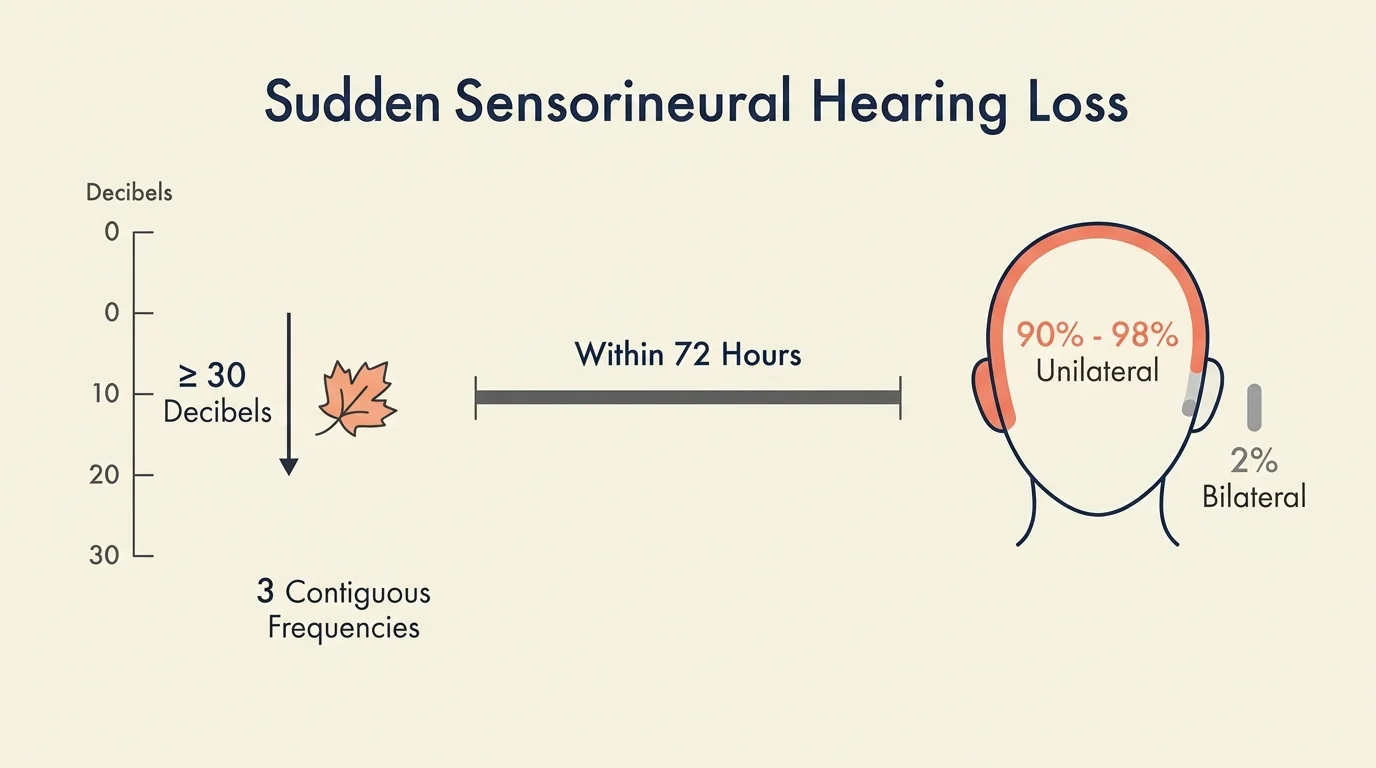
To protect your hearing, you first need to understand what happens inside your auditory system during an acute event. According to clinical guidelines from the American Academy of Otolaryngology–Head and Neck Surgery (AAO-HNS) and the National Institutes of Health, doctors define Sudden Sensorineural Hearing Loss (SSNHL) as an unexplained, rapid loss of hearing of at least 30 decibels across three contiguous sound frequencies that occurs within a 72-hour window. To put 30 decibels into daily perspective, a soft whisper or the gentle rustling of autumn leaves measures around 30 decibels. Losing this level of hearing sensitivity almost instantly transforms clear conversation into muffled noise or complete silence in your affected ear.
In the United States, sudden sensorineural hearing loss affects between 5 and 27 individuals per 100,000 people each year. This rate translates to approximately 60,000 to 66,000 new cases annually. While sudden deafness can strike individuals at any point in life, medical research shows a peak incidence in adults aged 45 to 65. As you navigate your senior years, distinguishing this acute condition from typical age-related hearing changes becomes essential for maintaining your well-being.
Many older adults are familiar with age-related hearing loss, known medically as presbycusis. Presbycusis develops slowly over several years, affecting both ears equally as microscopic hair cells in your inner ear undergo gradual wear and tear. Sudden sensorineural hearing loss behaves completely differently. It arrives abruptly—often overnight or across a few short hours—and usually affects only one ear. Clinical statistics reveal that between 90% and 98% of sudden hearing loss cases are unilateral, meaning they occur in just one ear. Bilateral sudden deafness, where both ears lose hearing simultaneously, accounts for only about 2% of cases and often points to complex systemic health issues.
Understanding the primary causes of sudden hearing loss can help demystify what is occurring in your body. Rather than a mechanical issue in your outer or middle ear, sudden deafness typically stems from damage to the delicate sensory structures of the inner ear or the nerve pathways leading to your brain. Medical experts categorize the primary triggers into several main mechanisms:
Microvascular Disturbances: The inner ear relies on a tiny, single artery for its entire blood and oxygen supply. If blood flow slows down or encounters a micro-clot, delicate sensory hair cells in your cochlea can experience rapid oxygen deprivation and injury.
Viral Infections: Latent viruses—such as herpes simplex, varicella-zoster (which causes shingles), or cytomegalovirus—can reactivate and cause acute inflammation in the cochlear nerve, disrupting sound transmission.
Autoimmune Conditions: Sometimes your immune system mistakenly attacks the delicate inner ear tissue, causing localized swelling and sudden auditory impairment.
Acoustic Neuroma: A benign, slow-growing tumor on the vestibulocochlear nerve can reach a threshold where it suddenly compresses nerve fibers or shuts off blood supply to the inner ear.
Inner Ear Membrane Tears: Physical trauma, severe pressure changes, or strenuous straining can create a tiny tear in the thin membranes separating your middle and inner ear, causing fluid leaks that disrupt hearing.

7 Signs Sudden Hearing Loss Is a Medical Emergency
Because your delicate inner ear cells cannot survive prolonged oxygen loss or inflammation, recognizing acute symptoms allows you to seek care before permanent tissue damage occurs. Below are the seven key signs that indicate your sudden hearing loss requires immediate, urgent medical evaluation.
1. A Rapid Hearing Drop in One Ear Within 72 Hours
If you wake up realizing sound in one ear feels muffled, or if you hear a sharp pop followed by immediate silence, treat this moment as a high-priority health event. The clinical definition of sudden sensorineural hearing loss centers on a 30-decibel drop across three frequencies within 72 hours. While gradual hearing changes over years allow your brain to adapt, a rapid drop signals acute sensory failure inside your inner ear. High-dose corticosteroid treatment works best when started immediately after onset, making swift action your best defense against permanent loss.
2. Sudden Hearing Loss Accompanied by Vertigo or Severe Dizziness
Your inner ear contains two main systems: the cochlea for hearing and the vestibular labyrinth for balance. Because these structures share the same fluid compartments and nerve pathways, a sudden drop in hearing combined with spinning sensations (vertigo), loss of balance, or severe nausea indicates widespread inner ear inflammation or vascular compromise. Conditions like acute labyrinthitis or a blockage in the internal auditory artery demand immediate emergency evaluation to stabilize your balance and protect your auditory nerve.
3. Profound, Sudden-Onset Ringing or Buzzing (Tinnitus)
Tinnitus refers to hearing sounds like ringing, roaring, or buzzing when no external noise is present. While mild ringing can happen occasionally, the sudden arrival of loud, persistent tinnitus alongside a drop in hearing indicates acute distress along your auditory nerve pathway. When sensory hair cells in your inner ear suffer injury, they often fire erratic electrical signals to your brain, creating intense artificial sound. Recognizing this sudden deafness warning sign allows doctors to evaluate inner ear inflammation before lasting damage takes hold.
4. A Feeling of Ear Fullness Paired with Facial Numbness or Weakness
Many people mistake a sudden drop in hearing for a simple sensation of pressure, describing it as feeling like cotton stuffed inside the ear. However, if this fullness occurs alongside facial drooping, numbness, or weakness on the same side of your face, you may be facing a cranial nerve emergency. Conditions such as Ramsay Hunt syndrome—a shingles outbreak affecting the facial nerve—or localized neurological events require immediate medical treatment with antiviral and anti-inflammatory medications.
5. Simultaneous Hearing Loss in Both Ears (Bilateral Loss)
While over 90% of sudden hearing loss cases affect only one ear, experiencing an abrupt drop in hearing in both ears simultaneously is an extreme emergency. Bilateral sudden deafness accounts for only about 2% of total cases and rarely occurs from localized inner ear issues alone. Instead, bilateral sudden loss points to severe systemic triggers, such as vascular inflammation, autoimmune flares, brainstem vascular events, or adverse reactions to ototoxic medications. Seeking emergency hospital care immediately is essential for uncovering the underlying cause.
6. Hearing Drop Following Physical Head Trauma or Acoustic Shock
If you experience sudden hearing loss after a fall, a bump to your head, or exposure to an extraordinarily loud blast of sound, seek urgent emergency evaluation. Physical force can cause micro-fractures in your temporal bone or tear the delicate membranes separating your middle and inner ear—a condition known as a perilymphatic fistula. When these membranes rupture, fluid leaks from your inner ear, causing sudden hearing loss and severe dizziness. An ear, nose, and throat (ENT) specialist must evaluate this injury promptly to prevent permanent damage.
7. Sudden Loss Paired with Neurological Symptoms
When a sudden drop in hearing occurs alongside broader neurological changes—such as slurred speech, confusion, blurred vision, difficulty swallowing, or weakness and numbness in your arms or legs—it represents a life-threatening emergency. These hearing loss emergency symptoms can indicate a stroke or transient ischemic attack (TIA) in the posterior circulation of your brain, which supplies both the brainstem and the inner ear. Call 911 or go to the nearest emergency room immediately if you observe these red-flag symptoms.
Important Safety Precautions to Keep in Mind
When you face sudden auditory changes, knowing what not to do is just as important as taking the right actions. Steering clear of common mistakes will keep you safe and prevent unnecessary delays in your care.
Avoid the “Wait and See” Approach: The most frequent mistake older adults make is assuming their ear will simply pop or clear up on its own over time. Research shows that early intervention—ideally within 72 hours and generally within 14 days of symptom onset—using high-dose oral or intratympanic corticosteroid therapy gives you the highest chance of regaining your hearing. Delaying evaluation beyond two weeks drastically reduces the likelihood of recovery.
Do Not Assume It Is Simple Earwax: It is easy to attribute sudden muffled hearing to earwax buildup or sinus congestion. However, clinical practice guidelines from the American Academy of Otolaryngology–Head and Neck Surgery emphasize that healthcare providers must immediately perform diagnostic differentiation using otoscopy and tuning fork tests (such as the Weber and Rinne tests). These simple bedside tests allow doctors to quickly distinguish a minor outer-ear blockage from an acute inner-ear medical emergency.
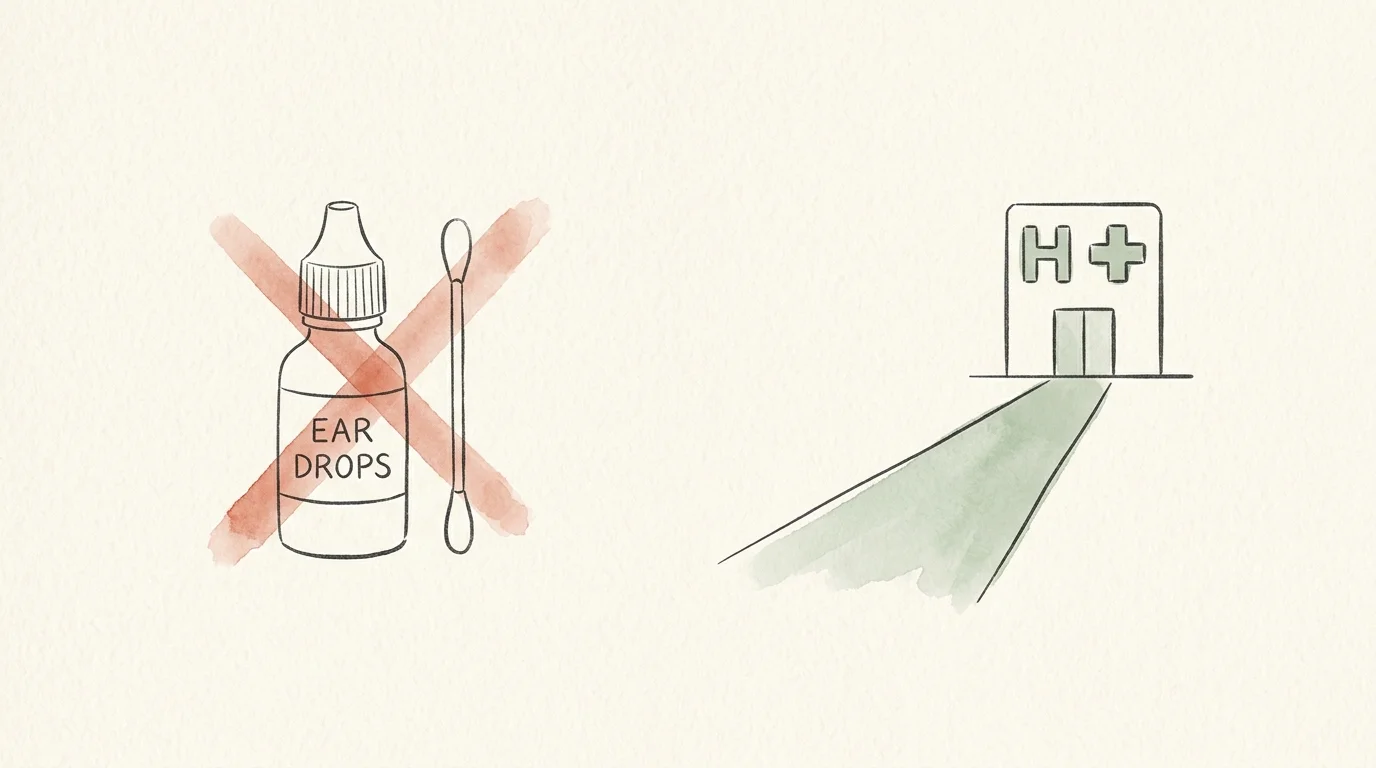
Avoid Inserting Anything into Your Ear Canal: Never try to clear your ear canal using cotton swabs, hairpins, or ear candles when experiencing sudden hearing changes. If your symptoms stem from a ruptured eardrum or fluid leak, inserting objects or liquid drops into your ear canal can introduce dangerous bacteria and exacerbate inner ear damage.
Keep a Precise Timeline of Symptoms: Note the exact hour your hearing changed, along with any secondary symptoms like spinning, ringing, or pressure. Providing your medical team with an accurate history helps them choose the best diagnostic tests and treatments right away.

When to Speak with a Healthcare Professional
You should consult a healthcare professional immediately whenever you notice a sudden drop in your hearing. Do not hesitate to visit an urgent care clinic, go to an emergency room, or seek an emergency fit-in appointment with an ear, nose, and throat specialist. Immediate clinical evaluation ensures you receive proper testing to protect your auditory system.
While clinical research shows that spontaneous recovery occurs in roughly 32% to 65% of sudden sensorineural hearing loss cases (typically within one to two weeks), waiting in hopes of natural recovery carries a severe risk. If your hearing does not restore spontaneously, you miss the critical therapeutic window for corticosteroid treatment, which can lead to permanent hearing loss. Seeking prompt medical care removes the guesswork and gives your ears the best opportunity for healing.
For authoritative, trustworthy health information, always consult official sources like the National Institute on Aging (NIA) and MedlinePlus from the National Library of Medicine. The CDC also provides excellent resources for older adults.
Disclaimer: This article is for informational purposes only and does not constitute medical advice. Always seek the advice of your physician or other qualified health provider with any questions you may have regarding a medical condition.
Frequently Asked Questions
How do doctors treat sudden sensorineural hearing loss?
The primary medical treatment for sudden sensorineural hearing loss is high-dose corticosteroid therapy, which reduces swelling and inflammation in the inner ear. Doctors may prescribe oral steroids like prednisone or administer intratympanic steroid injections directly through your eardrum into the middle ear space. Intratympanic injections deliver high medication concentrations directly to your inner ear while minimizing systemic side effects, making them especially helpful for seniors with diabetes or high blood pressure.
How can a doctor tell if sudden hearing loss is caused by earwax or a sensorineural emergency?
A doctor uses an otoscope to look directly inside your ear canal to check for physical obstructions like wax buildup, fluid, or infection behind the eardrum. If your canal is clear, the doctor will perform tuning fork tests (the Weber and Rinne tests). Placing a vibrating tuning fork against your forehead or behind your ear allows the physician to immediately determine whether sound waves are blocked in your outer/middle ear or if the inner ear nerve pathways are failing.
Can sudden hearing loss resolve on its own without treatment?
Yes, clinical studies indicate that spontaneous recovery happens in approximately 32% to 65% of sudden hearing loss cases, usually within the first 1 to 2 weeks. However, medical experts strongly advise against waiting to see if your hearing returns naturally. Because there is no way to predict who will recover spontaneously, seeking immediate treatment within 72 hours gives you the best statistical chance of restoring your hearing.
Is sudden hearing loss in both ears more dangerous than in one ear?
Yes, sudden bilateral hearing loss is considered a critical medical emergency. While 90% to 98% of sudden deafness cases affect only one ear, simultaneous loss in both ears accounts for just 2% of cases and often signals severe underlying conditions such as systemic autoimmune disease, vascular issues, stroke, or severe drug toxicity. Experiencing a sudden drop in hearing in both ears requires immediate hospital evaluation.