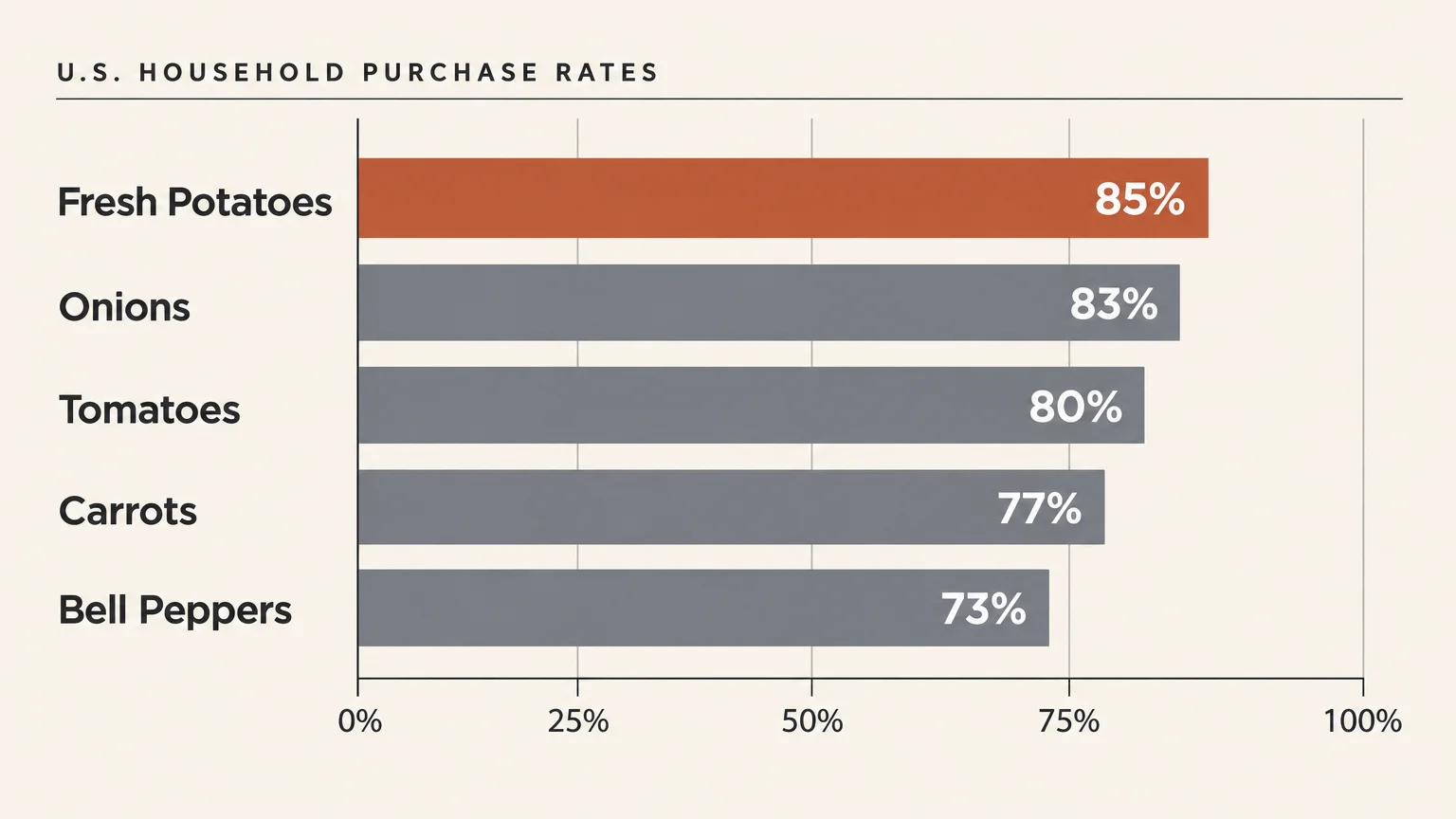
You probably already have the nation’s favorite vegetable sitting in your pantry right now. Potatoes ranked number one in American shopping carts in 2025, landing in 85% of U.S. households ahead of onions, tomatoes, and carrots.
Seeing what tops the list of top selling vegetables helps you spot both your kitchen strengths and hidden nutrition gaps. Grocery shopping trends 2026 show that tight budgets and busy routines strongly shape your dinner plate.
With a few smart tweaks, you can turn familiar staples into vibrant, heart-healthy meals. Here is what the latest numbers reveal about the American diet and your grocery cart.
The Important Role of Nutrition in America’s Top-Selling Vegetables
Why Potatoes Still Rule the Produce Aisle
Shoppers across the country keep coming back to familiar comforts when they fill their baskets. According to the International Fresh Produce Association using Circana household panel data, 85% of U.S. households bought fresh potatoes in 2025.
Onions followed closely at 83%, while tomatoes reached 80% of homes. Carrots and lettuce tied at 77%, and bell peppers landed in 73% of carts.
Rounding out the top ten were cucumbers at 65%, celery at 62%, broccoli at 51%, and pre-packaged salad kits at 48%. Sweet potatoes and yams sat farther down in twentieth place at 19%.
Popularity polls tell the same story about what makes potatoes the most popular vegetable in America. In Q3 2026, YouGov Ratings placed potatoes first with an 87% positive opinion rating and 97% familiarity.
Sweetcorn earned an 85% approval rating, while garlic and broccoli tied at 82% and carrots reached 80%. The Potatoes USA 2026 Consumer Attitudes and Usage Study also confirmed that potatoes held their number-one spot for a tenth consecutive year.
That loyalty adds up to massive volume at the checkout register. U.S. retail potato sales reached $20 billion from July 2025 through June 2026, with Americans eating roughly 110 pounds per person each year.
The Surprising Nutrient Power Inside a Baked Potato
Many older adults worry that white potatoes offer nothing more than empty starch. In reality, a whole potato prepared without heavy toppings delivers impressive nutrition for healthy aging.
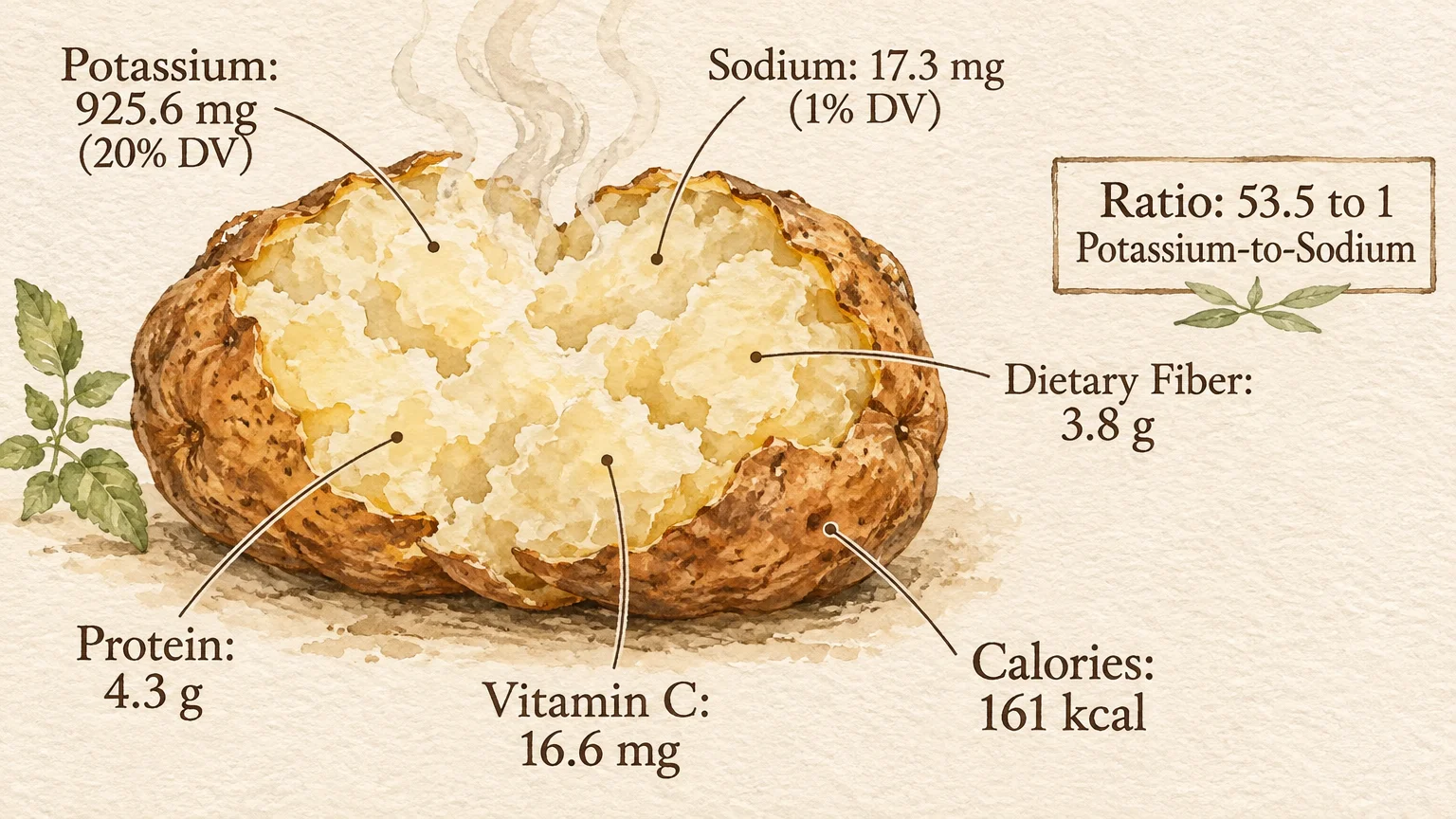
Data from USDA FoodData Central shows that one medium baked potato with flesh and skin, weighing 173 grams and left unsalted, contains only 161 calories. It also provides 0.22 grams of fat and zero milligrams of cholesterol.
What truly stands out for seniors is the mineral balance inside that humble skin. That single baked potato packs 925.6 milligrams of potassium, which equals 20% of your daily value and beats a medium banana.
At the same time, it holds just 17.3 milligrams of sodium, or 1% of your daily value. That gives you an extraordinary potassium-to-sodium ratio of 53.5 to 1, which helps your blood vessels relax and supports healthy blood pressure.
You also get 3.8 grams of dietary fiber—14% of your daily target—to keep your digestion running smoothly. Alongside the fiber, that potato supplies 16.6 milligrams of vitamin C for immune defense and 4.3 grams of protein for muscle maintenance.
Small amounts of iron and phosphorus round out the package at 10% of your daily value each. When you eat the skin along with the flesh, a plain potato works hard for your heart, gut, and energy levels.
How the American Diet Falls Short on Vegetables
Even though 41.2 billion pounds of U.S. potatoes were produced in 2025, most people do not eat them straight from the oven. Potatoes USA reports that 36% of U.S. potato utilization goes to frozen products, while only 27% goes to fresh potatoes.
Another 23% turns into potato chips, 8% becomes dehydrated flakes or mixes, and 4% lands in refrigerated items. Deep-frying and heavy salting strip away the natural benefits that make whole potatoes shine.
Looking beyond potatoes, most older adults still miss their daily produce targets. Released on January 7, 2026, the Dietary Guidelines for Americans, 2025–2030 from the USDA and U.S. Department of Health and Human Services introduced an updated daily guide.
That federal framework replaced the old plate graphic with an inverted food pyramid focused on minimally processed whole foods. It recommends three servings of vegetables and two servings of fruits every day, alongside whole grains and steady protein.
In a September 2026 report from the Centers for Disease Control and Prevention, roughly 93% of U.S. adults ate at least some vegetables on a given day. However, eating a single garnish or side dish rarely meets your full daily goal.
Earlier federal tracking showed that only 10.0% of U.S. adults met daily vegetable recommendations overall. Adults aged 51 and older performed best of any age group at 12.5%, yet 87.5% still fell short.
For science-based nutrition information, refer to the U.S. Department of Agriculture at Nutrition.gov and the Dietary Guidelines for Americans. The National Institute on Aging also has excellent resources on healthy eating for seniors.
What 2026 Vegetable Sales and Prices Mean for Your Cart
Money plays a real role in why your produce crisper might look sparse by Thursday. According to FMI – The Food Industry Association in its 2026 fresh foods report, fresh departments account for 41% of total U.S. food retail sales.
Yet vegetable sales barely budged over the prior year, growing just 0.3% in dollars while fruit sales jumped 5.9%. Full-year 2025 figures from the International Fresh Produce Association and Circana even showed fresh vegetable dollar sales dipping 0.2%.
Meanwhile, food prices have started climbing again in the produce aisle. The USDA Economic Research Service reported in October 2026 that retail fresh vegetable prices rose 2.8% year-over-year in September and could climb 5.8% across full-year 2026.
Because roughly 35% of fresh vegetables sold in America are imported and weather disrupts harvests, farm-level vegetable prices jumped 29.6% year-over-year in September 2026. Overall grocery prices rose 1.8% over the 12 months ending September 2026, according to the Bureau of Labor Statistics.
Those rising tags explain why 44% of shoppers eat fresh produce no more than three days a week, citing cost as the main hurdle. Still, shoppers protect their produce habits; only 5% to 9% say they would cut fresh produce if prices rise further.
Foods to Embrace and Foods to Limit
Top-Selling Vegetables and Colorful Partners to Embrace
You do not need exotic or pricey superfoods to build a nourishing diet after age 60. Many of the top selling vegetables already sitting in your local store deliver exceptional value for your heart, bones, and eyesight.
Start by embracing whole fresh potatoes with their skins intact, whether you choose russets, Yukon golds, or red potatoes. Scrubbing them well and roasting or baking them preserves all that blood-pressure-friendly potassium and gut-supporting fiber.
Pair your potatoes with other household favorites like yellow onions, red onions, and fresh garlic. These savory bulbs add bold flavor without a single grain of salt and provide natural compounds that support healthy circulation.
Make room in your basket for carrots, sweet potatoes, and red bell peppers as well. Higher-income households tend to eat more red and orange vegetables, which supply vitamin A for sharp vision and resilient skin.
Broccoli deserves a regular spot on your dinner plate, too. Bought by just over half of U.S. households, broccoli offers vitamin K for bone strength, vitamin C for tissue repair, and gentle plant fiber.
Keep crisp choices like tomatoes, cucumbers, romaine lettuce, and celery on hand for quick lunches. Tomatoes bring lycopene for cardiovascular health, while cucumbers and celery add refreshing hydration when thirst signals fade with age.
To meet the 2025–2030 federal nutrition guidelines, match your three daily vegetable servings with two daily servings of whole fruit and lean protein. Federal guidance suggests 1.2 to 1.6 grams of protein per kilogram of body weight daily to protect aging muscles.
When you pair a baked potato and steamed broccoli with baked fish, grilled chicken, or hearty lentils, you create a balanced meal that keeps blood sugar steady. Adding whole grains like brown rice or oats rounds out your fiber intake effortlessly.
Processed Vegetable Items and Heavy Toppings to Limit
A vegetable only stays healthy if the preparation method respects your heart and waistline. Knowing which forms to dial back saves you from hidden sodium, excess calories, and unhealthy fats.
Limit frozen french fries, hash browns, and tater tots, which account for more than a third of all U.S. potato consumption. Manufacturers typically par-fry these items in oil and coat them with salt before freezing them.
Treat bagged potato chips and boxed dehydrated mashed potatoes as occasional snacks rather than daily sides. Dehydrated mixes often contain extra sodium, refined starches, and artificial flavorings that crowd out real nutrients.
Watch out for loaded restaurant baked potatoes piled high with butter, bacon bits, sour cream, and shredded cheese. Those toppings easily push saturated fat past the federal limit of 10% of your total daily calories.
Take a careful look at pre-made refrigerated potato salads and deli vegetable trays, too. Commercial mayonnaise dressings and creamy dips pack heavy sodium and added sugars into what looks like a wholesome side dish.
Even pre-packaged salad kits—bought by 48% of households—deserve a closer check before they hit your bowl. The greens inside are wonderful, but the included packets of creamy dressing, candied nuts, and fried tortilla strips can turn a light salad heavy.
Finally, ease up on traditional canned vegetables packed in salted brine whenever fresh or plain frozen choices are available. If canned vegetables fit your budget best, choose low-sodium cans or rinse the contents under cool running water to wash away excess salt.
A Simple, Healthy Meal Idea
Herb-Roasted Potato, Broccoli, and Salmon Sheet-Pan Dinner
Cooking a nutritious dinner for one or two people does not require a sink full of dirty pots. This colorful sheet-pan meal brings together top-selling produce and heart-healthy protein in roughly 30 minutes.
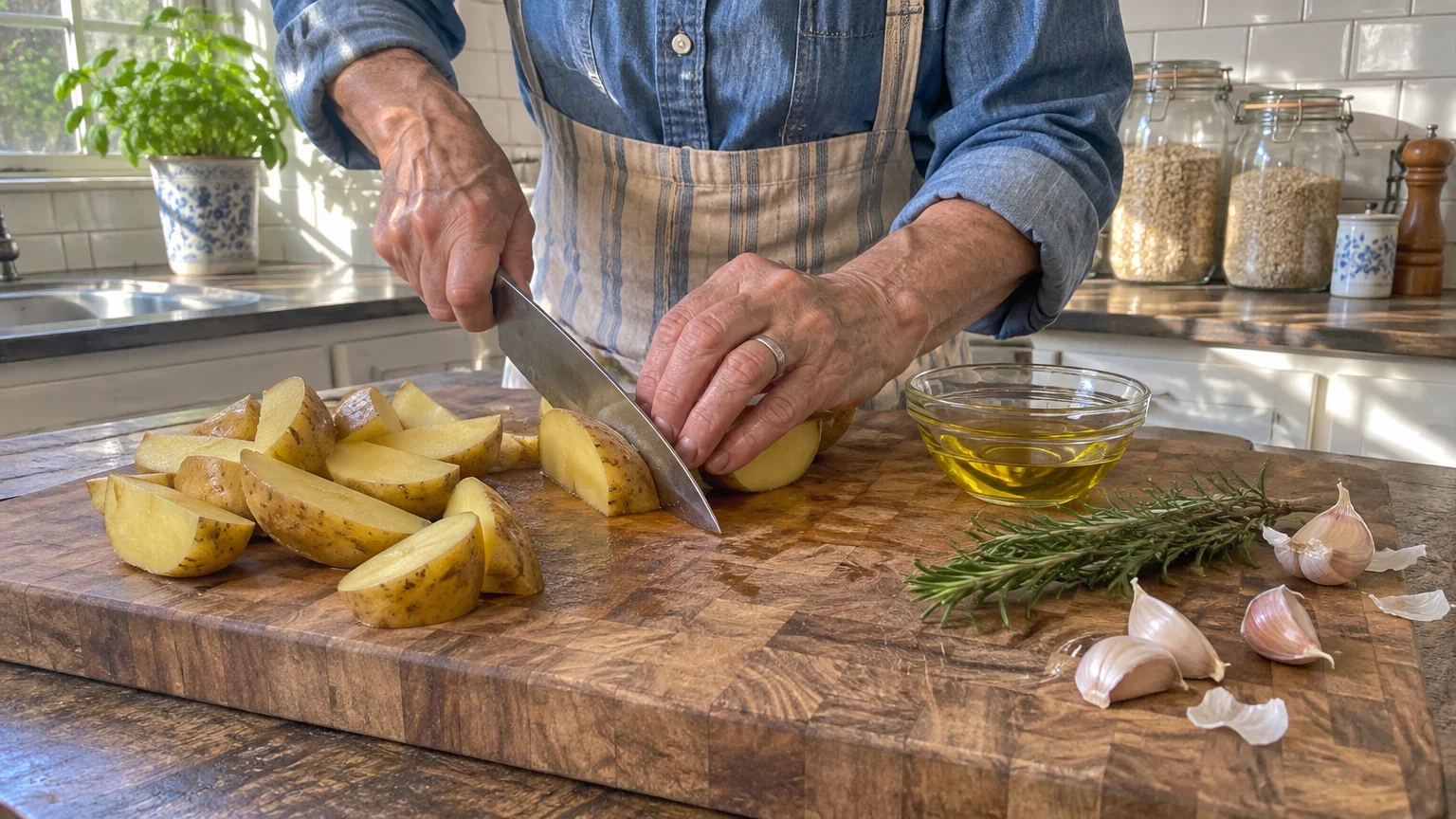
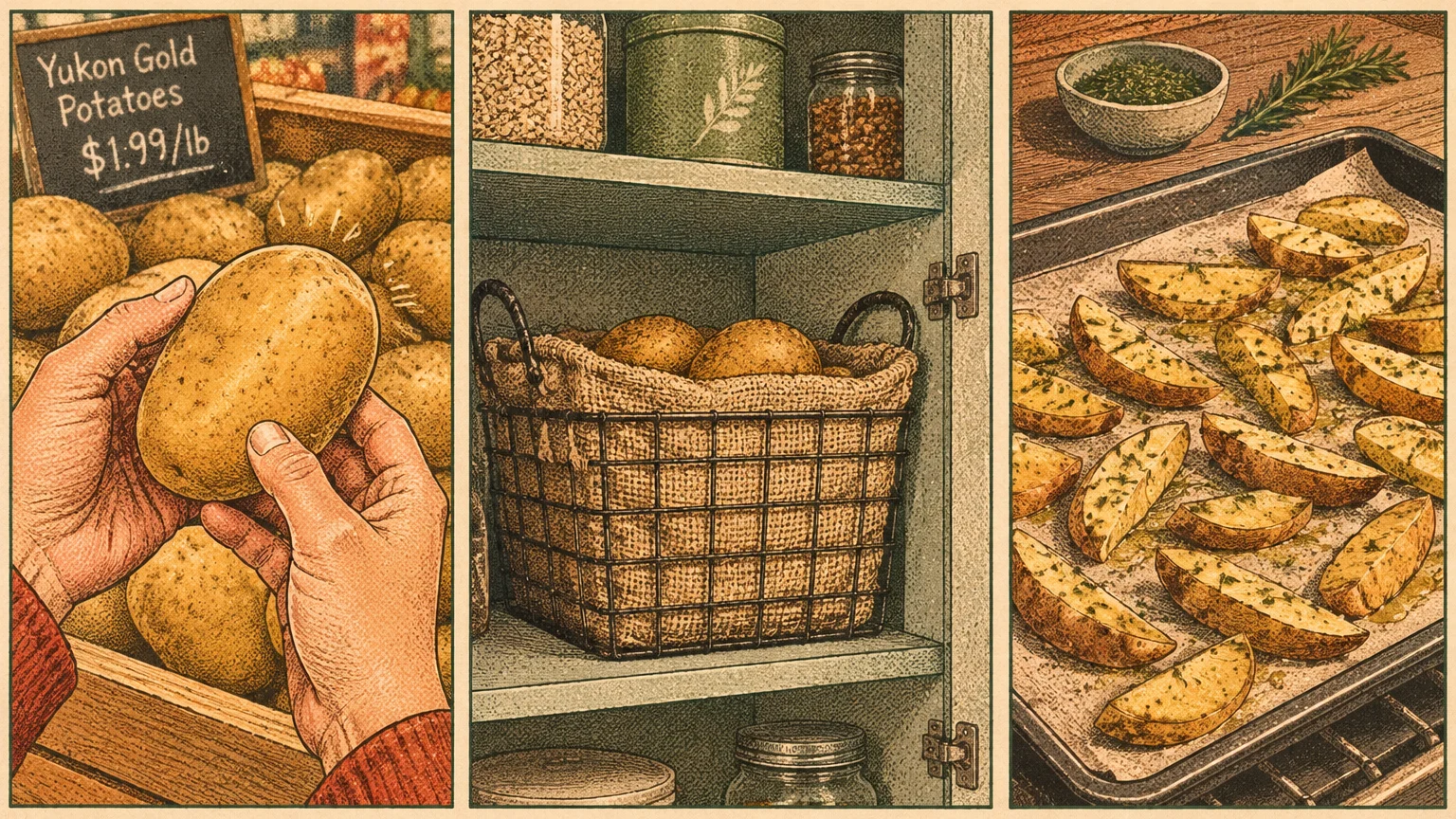
Start by preheating your oven to 400 degrees Fahrenheit and lining a rimmed baking sheet with parchment paper. Scrub two medium Yukon gold or russet potatoes clean, dry them, and cut them into bite-sized cubes with the skins left on.
Slice one small yellow onion into wedges and peel two medium carrots, cutting the carrots into thin coins so they soften quickly. Place the potatoes, onions, and carrots into a large mixing bowl.
Drizzle the vegetables with one tablespoon of extra-virgin olive oil, two minced cloves of garlic, one teaspoon of dried rosemary, and a generous pinch of black pepper. Toss everything well so the herbs coat every piece evenly.
Spread the seasoned vegetables in a single layer on one side of your baking sheet and roast them for 15 minutes. Leaving space between the pieces helps the edges turn golden and crisp instead of steaming.
While the root vegetables start roasting, cut two cups of fresh broccoli florets into small, tender bites. Toss the broccoli with one teaspoon of olive oil and a squeeze of fresh lemon juice.
Pull the baking sheet from the oven and push the potatoes and carrots slightly aside to make room. Place two four-ounce wild salmon fillets—or boneless chicken breasts—onto the pan, then scatter the broccoli and a handful of cherry tomatoes around them.
Sprinkle a pinch of dried dill or paprika over the fish, then return the pan to the oven for another 12 to 15 minutes. Dinner is ready when the salmon flakes easily with a fork and a knife slides smoothly into the potatoes.
Finish the warm dish with another bright squeeze of lemon juice instead of reaching for the salt shaker. You get potassium from the potatoes, fiber from the broccoli and carrots, and muscle-supporting protein from the salmon on one easy tray.
An Effortless Five-Minute Backup Plan
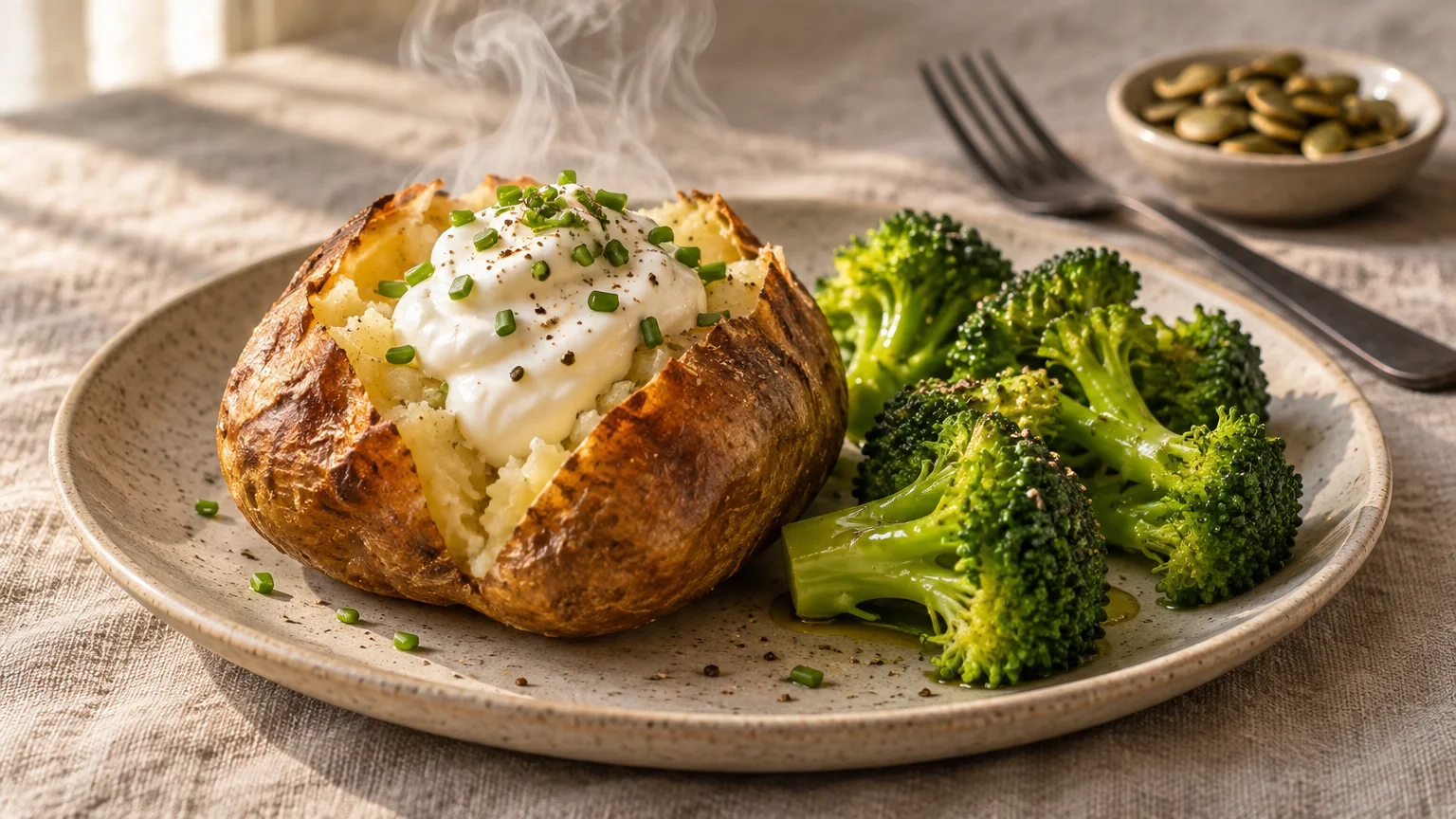
On evenings when standing by the oven feels tiring, your microwave makes a fantastic healthy-cooking shortcut. Scrub a medium potato, pierce it several times with a fork, and microwave it on high for six to eight minutes until tender.
During the final two minutes, heat a cup of plain frozen broccoli florets in a microwave-safe bowl with a splash of water. Split the steaming potato open and fluff the inside with a fork.
Top the potato with the bright green broccoli, two tablespoons of plain nonfat Greek yogurt instead of sour cream, and a sprinkle of chopped green onions. You get creaminess, extra protein, and rich potassium in less than ten minutes.
Tips for Shopping and Meal Prep
Protect Freshness and Value in the Produce Aisle
Most older shoppers prefer picking out their own food; 54% of U.S. grocery shoppers always shop in-store so they can inspect perishable items firsthand. In 2026, 77% of consumers rank both freshness and value for money above store coupons.
Put that hands-on advantage to work by checking potatoes carefully before placing them in your bag. Choose firm, smooth potatoes free of bruises, soft spots, sprouting eyes, or green patches under the skin.
Store your potatoes in a cool, dark pantry or paper bag rather than the refrigerator. Cold fridge temperatures convert potato starch into sugar, which alters the flavor and causes potatoes to darken too fast when roasted.
Keep onions in a separate basket nearby rather than right on top of your potatoes. Onions release moisture and natural gases that cause potatoes stored beside them to sprout and spoil faster.
To stretch your budget as vegetable prices climb, shop for hardy staples sold in three-pound or five-pound bags rather than individual wrapped items. Loose potatoes, carrots, and onions usually cost far less per pound and stay fresh for weeks.
If you prefer organic foods—a habit practiced by 55% of consumers in 2026, up from 46% in 2024—focus your organic dollars on thin-skinned produce you eat raw, such as lettuce and tomatoes. Conventional thick-skinned vegetables like onions and winter squash offer safe, affordable savings.
Read Labels on Packaged Kits and Frozen Helpers
Convenience items like bagged salad kits and frozen vegetables can keep you eating produce on busy weeks, provided you read the Nutrition Facts panel first. Flip the package over and compare sodium, added sugars, and saturated fat before dropping it into your cart.
With pre-made salad kits, you can enjoy all the crisp cabbage, romaine, and carrots while controlling the extras. Use only half of the included dressing packet and toss in a splash of red wine vinegar or olive oil to lighten the sodium.
Stock your freezer with plain frozen broccoli, peas, green beans, and mixed vegetables that list only the vegetable on the ingredient label. Because frozen produce is flash-frozen right after harvest, it rivals fresh nutrition without spoiling in your fridge.
Skip frozen vegetable medleys that come packaged with cheese sauces, teriyaki glazes, or butter pouches. Adding your own garlic powder, lemon zest, or fresh herbs at home costs pennies and protects your heart.
Batch Prep Once to Eat Well All Week
Prepping vegetables does not have to mean spending your entire Sunday afternoon chopping. Spend just 15 minutes right after unpacking your groceries to wash and trim two or three versatile items.
Wash and slice celery sticks, carrot coins, and bell pepper strips, then store them in clear glass containers at eye level in your refrigerator. When healthy snacks sit ready to grab, you naturally eat more vegetables between meals.
Whenever you turn on the oven to bake one potato, bake three or four at the same time. Wrap the extras once cooled and refrigerate them for quick reheating, slicing into morning egg scrambles, or tossing into a light vinegar-dressed potato salad.
If arthritis or hand stiffness makes peeling and chopping tough, invest in a wide-grip Y-shaped vegetable peeler or a sharp chef’s knife with a comfortable handle. Pre-cut bags of plain broccoli florets or shredded carrots are also worth the modest extra cost when they help you cook at home.
Frequently Asked Questions
Are white potatoes healthy for seniors, or should I switch to sweet potatoes?
Both white potatoes and sweet potatoes deserve a place in your kitchen because they offer complementary nutrients. A medium baked white potato delivers 925.6 milligrams of potassium, 3.8 grams of fiber, and vitamin C for only 161 calories.
Sweet potatoes bring extra vitamin A for eye and skin health along with a gentle natural sweetness. Rotating both colors across the week gives you wider nutritional coverage without boredom.
If I have diabetes or watch my blood sugar, can I still eat potatoes?
Yes, many people managing blood sugar can enjoy modest portions of whole potatoes when they pair them wisely. Keeping the skin on provides helpful fiber, and combining a half-cup or small potato with protein and non-starchy vegetables slows digestion.
Baking or boiling potatoes and letting them cool slightly before eating them—or reheating them gently—also forms resistant starch, which leads to a steadier blood sugar response. Always check with your doctor or dietitian about portion sizes tailored to your health plan.
How many servings of vegetables do older adults really need each day?
The Dietary Guidelines for Americans, 2025–2030 recommend three servings of vegetables and two servings of fruits each day. Most adults eat some vegetables daily, yet nearly nine out of ten seniors fall short of the full amount.
Reaching three servings is easier when you spread produce across the entire day rather than saving it all for dinner. Add spinach to morning eggs, slice tomatoes and cucumbers beside lunch, and enjoy a generous roasted vegetable side at supper.
Do frozen and canned vegetables count toward my daily goals?
Plain frozen and low-sodium canned vegetables count fully toward your daily vegetable servings and help you beat rising fresh produce prices. Choose frozen bags without creamy sauces and look for canned vegetables labeled no-salt-added.
Keeping frozen broccoli, carrots, and green beans in your freezer ensures you always have a healthy side ready even when bad weather keeps you out of the store. They also eliminate food waste when you cook for one or two.
Why do grocery prices for fresh vegetables seem to jump so much?
Fresh vegetable prices respond quickly to weather events, transportation costs, and seasonal growing shifts because roughly 35% of U.S. fresh vegetables come from abroad. Farm-level prices swung nearly 30% higher in autumn 2026, nudging store prices upward.
Buying hearty domestic staples in season—such as potatoes, onions, carrots, cabbage, and winter squash—shields your wallet from sharp spikes. Mixing fresh items with plain frozen produce keeps your meals colorful and affordable year-round.
Should I eat potato skins if I have sensitive digestion?
Potato skins hold much of the vegetable’s dietary fiber and minerals, so eating them is ideal when your stomach handles them comfortably. Scrub the skin gently with a vegetable brush and cook the potato until completely tender.
If you experience digestive flare-ups or follow a low-fiber diet on your physician’s advice, peeling the potato after baking still leaves plenty of potassium inside the warm flesh. Gradually adding soft cooked carrots, zucchini, and peeled potatoes can help your gut adjust smoothly.
Disclaimer: This article is for informational purposes only and does not constitute medical advice. Always seek the advice of your physician or other qualified health provider with any questions you may have regarding a medical condition.