Keeping nutritious food in your vehicle stabilizes your energy and prevents sudden drops in blood sugar during unexpected traffic delays. Having wholesome nourishment within arm’s reach ensures you bypass greasy drive-thru windows with complete confidence.
Thoughtfully chosen travel snacks support steady vitality, protect heart health, and respect sensitive digestion. You deserve reliable fuel that keeps pace with your active daily routine.
Stocking your glove compartment or console with smart choices turns mundane errands into pleasant, nourishing outings. Discover how simple, non perishable snacks can transform your road travel into a revitalizing wellness routine.
Understanding the Basics of Healthy Car Snacks for Seniors
As our bodies mature, metabolic rates naturally slow down and nutrient absorption becomes less efficient. You require foods rich in fiber, lean protein, and essential micronutrients rather than empty calories.
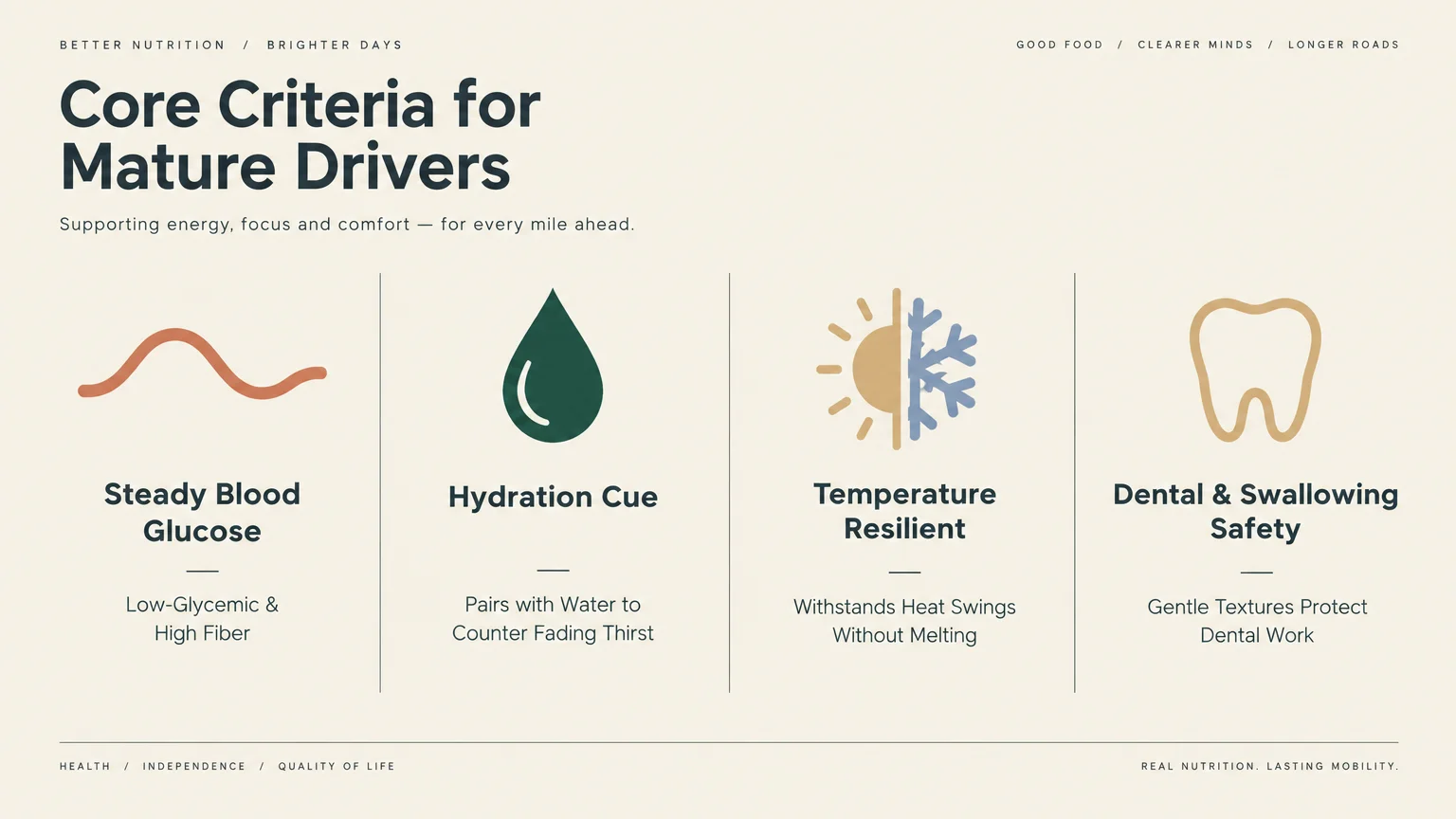
Maintaining steady blood glucose levels matters immensely when you spend time behind the wheel. Sudden sugar spikes followed by steep crashes cause sluggishness, brain fog, and delayed physical reaction times.
Thirst cues also fade as we get older, leading many adults to confuse mild dehydration with hunger. Choosing snacks with high natural moisture or pairing treats with water helps you maintain optimal hydration.
Digestive transit naturally decelerates over time, making heavy roadside diners hard on your stomach. Eating smaller, frequent portions keeps acid reflux away and prevents that uncomfortable, heavy sensation while driving.
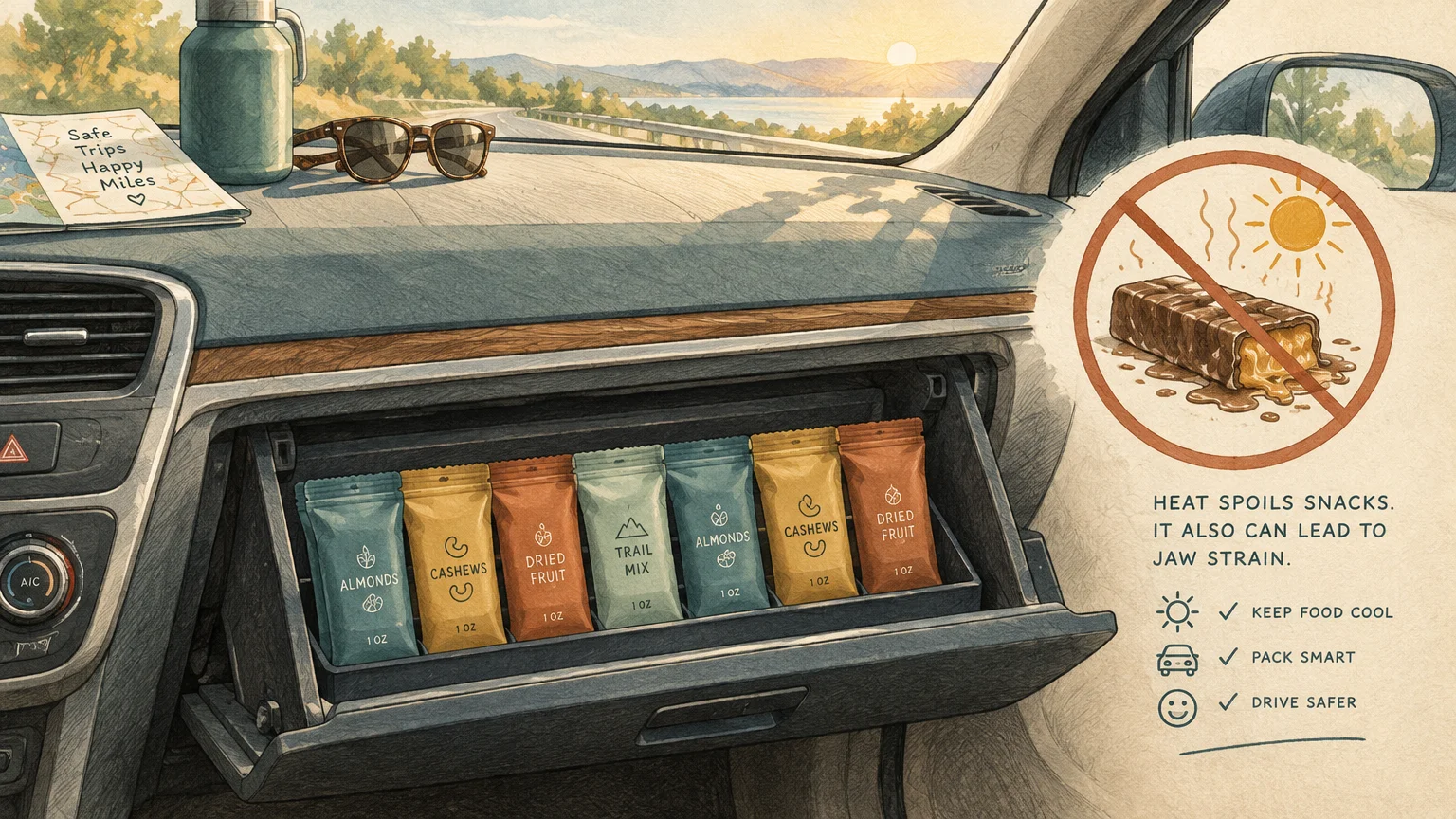
Vehicle interiors present unique storage hurdles that rapidly degrade standard grocery store foods. Scorching summer afternoons and freezing winter nights compromise delicate nutrients and accelerate spoilage in vulnerable ingredients.
True non perishable snacks must withstand these wild temperature swings without melting, spoiling, or growing mold. Choosing resilient items protects your gastrointestinal tract from distressing foodborne illnesses.
Dentition and swallowing safety also require gentle consideration when you choose healthy car snacks. Overly hard, crunchy, or excessively chewy treats can crack natural teeth, harm gums, or loosen expensive bridge work.
Selecting softer textures or pre-portioned items allows you to chew comfortably and swallow without strain. Thoughtful planning balances oral comfort, physical ease, and superior nourishment during every trip.
Stocking your own snacks also shields your cardiovascular system from excessive sodium. Commercial fast foods load your bloodstream with salt, which elevates blood pressure and encourages fluid retention in your ankles.
By building a dedicated traveling pantry, you take gentle control over your daily wellness. You ensure that every bite supports your longevity, independence, and joy on the open road.
Practical Tips for a Healthier, Happier Life
1. Dry-Roasted Unsalted Almonds and Walnuts
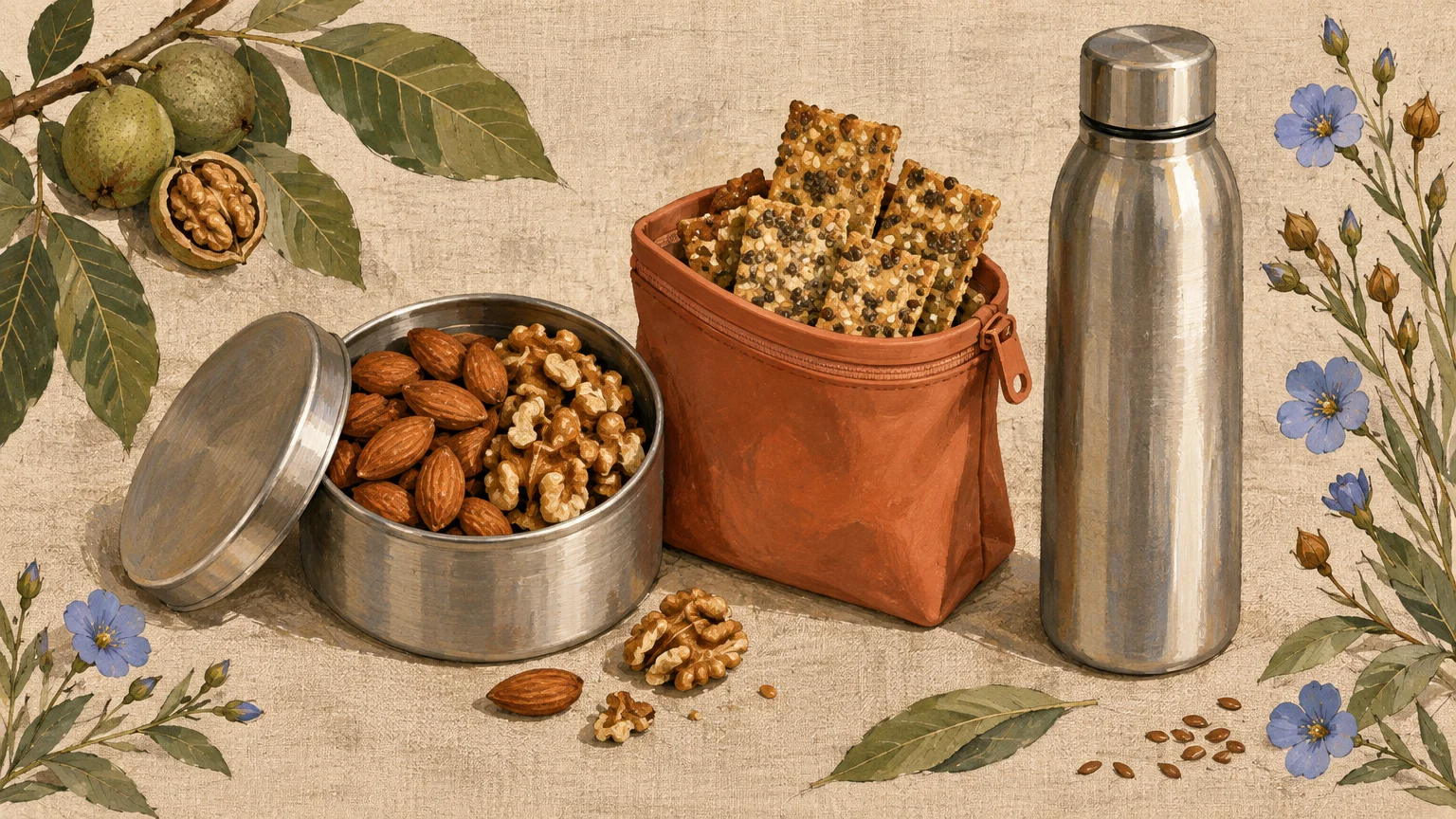
Almonds and walnuts supply high concentrations of monounsaturated fats and plant protein. These satisfying nuts curb nagging hunger pangs without elevating your resting blood pressure.
Walnuts specifically provide alpha-linolenic acid, an essential plant omega-3 fatty acid that fights cellular inflammation. Regular consumption helps protect memory function and supports clear thinking during long drives.
Their sturdy shell-free nature means they hold up exceptionally well in dry glove compartments. They will not melt in direct sunlight or freeze solid during crisp winter errands.
Store single-ounce servings in small metal tins or reusable silicone pouches. This simple habit keeps portions controlled and prevents distracted, mindless snacking while you navigate busy intersections.
2. Whole-Grain Seed Crackers
Whole-grain crackers infused with chia, flax, or sesame seeds deliver sustained complex carbohydrates. These complex carbs digest gradually; they prevent sharp spikes in your blood glucose.
The rich dietary fiber inside seed crackers also encourages smooth, regular bowel motility. That gentle digestive support proves invaluable when long travel days disrupt your normal daily bathroom routine.
Look for low-sodium brands baked without hydrogenated oils or chemical flavor enhancers. Crisp crackers provide a cheerful crunch that satisfies cravings without irritating sensitive gums.
Tuck them into airtight, snap-top plastic containers so they resist humidity and maintain their crispness. Pair a few crackers with water for an effortless, energizing mid-morning bite.
3. Unsweetened Applesauce and Fruit Puree Pouches
Squeezable fruit pouches provide instant hydration along with soothing natural sweetness. Because they require no chewing, they offer an exceptionally safe option for sensitive teeth or delicate dentures.
Applesauce contains soluble pectin fiber, which supports healthy cholesterol levels and digestive comfort. It also delivers a clean boost of vitamin C to bolster your daily immune defenses.
These shelf-stable pouches withstand vehicle temperature swings remarkably well without spoiling. Twist-off resealable caps eliminate the need for spoons, bowls, or messy cleanups in your front seat.
Keep two or three pouches in your center console for moments when dry mouth strikes. They refresh your palate instantly and keep your energy high between your main daily meals.
4. Crunchy Roasted Chickpeas
Roasted chickpeas deliver an extraordinary combination of plant-based protein and prebiotic dietary fiber. A single small handful provides several grams of protein to sustain your mental alertness.
They provide the enjoyable crunch of potato chips without dangerous trans fats or heavy salt. Savory herbs like rosemary, cumin, and garlic powder add delightful flavor without stressing your cardiovascular system.
Because producers roast them until moisture is gone, chickpeas stay fresh for months in dry consoles. They serve as reliable, non perishable snacks for road trips across every season.
Measure out quarter-cup servings into small paper bags or containers before heading out. Having fixed portions keeps your calorie intake balanced while delivering wonderful fullness.
5. Raw or Roasted Pumpkin Seeds
Pumpkin seeds, often called pepitas, represent an outstanding dietary source of bioavailable magnesium. Magnesium supports muscle relaxation, healthy heart rhythms, and steady nerve transmission throughout your body.
These flat green seeds also deliver generous zinc, which strengthens your immune system against seasonal viruses. Their tender crunch makes them remarkably easy on natural teeth and dental restorations alike.
Unlike sugary granola bars, pumpkin seeds never melt into a sticky mess in warm vehicles. They maintain their firm texture and rich nutrient profile across hot summer months.
Keep a small glass jar of roasted pepitas nestled securely inside your door pocket. Sprinkle a spoonful over other snacks or enjoy them alone for a quick mineral recharge.
6. Freeze-Dried Fruit Slices
Freeze-drying removes moisture while locking in nearly all the original vitamins, minerals, and antioxidants. Freeze-dried strawberries, apples, and blueberries deliver vibrant, sweet flavor without any added cane sugar.
Berries supply beneficial anthocyanins that defend cellular health and promote sharp cognitive function. Unlike tough dried fruits, freeze-dried slices dissolve easily in your mouth without sticking to dental work.
Because moisture spoils their delicate texture, always close the zipper seal tightly after opening. They deliver a crisp, uplifting treat that brightens monotonous stretches of highway driving.
Store unopened bags flat beneath your passenger seat away from direct sunlight. They remain delicious and nutrient-dense for many months until you need a delightful sweet burst.
7. Single-Serve Squeeze Packs of Nut Butter
Individual packets of creamy almond, peanut, or sunflower seed butter offer concentrated nutrition. They pack plenty of heart-healthy fats, vitamin E, and muscle-preserving plant protein into portable pouches.
Vitamin E serves as a potent antioxidant that shields your skin and eyes from oxidative damage. Single-serve squeeze pouches allow you to enjoy rich nut butter without packing knives or jars.
Knead the squeeze packet gently between your palms before opening to remix any naturally separated oils. Tear open the corner and enjoy it directly or squeeze it onto seed crackers.
These sealed packets resist moderate vehicle heat easily without turning rancid or separating awkwardly. Keep several pouches stored alongside crackers for an instant, balanced mini-meal whenever delays happen.
8. Instant Plain Oatmeal Cups
Single-serving oatmeal cups represent some of the most versatile travel snacks you can pack. Rolled oats contain beta-glucan, a special soluble fiber clinically proven to lower low-density lipoprotein cholesterol.
Whenever hunger strikes during a lengthy trip, simply request hot water at any rest stop or cafe. A warm bowl of oats soothes sensitive stomachs far better than cold, greasy fast food.
Select plain, unsweetened varieties to keep added sugars and artificial ingredients out of your body. You can stir in a spoonful of pumpkin seeds or berries for natural sweetness.
Store two oatmeal cups in your vehicle trunk alongside a reusable travel spoon. This simple preparation guarantees you always have access to a warm, heart-healthy meal on the go.
9. Shelf-Stable Salmon and Tuna Pouches
Foil pouches of wild salmon or light tuna provide clean, lean protein without needing a can opener. Cold-water fish provides abundant omega-3 fatty acids that nourish your cardiovascular system and joint tissues.
These modern foil packets contain no liquid to drain, making them exceptionally neat inside a car. A single three-ounce serving provides nearly twenty grams of pure protein to banish mid-afternoon fatigue.
Choose low-sodium varieties packed in spring water or extra virgin olive oil to safeguard blood pressure. The tender, flaky texture makes fish very easy to chew and swallow comfortably.
Pair a salmon pouch with whole-grain crackers while parked at a scenic roadside overlook. This satisfying combination stabilizes energy levels for hours without burdening your digestive tract.
10. Air-Popped Herb-Seasoned Popcorn
Air-popped popcorn is a nutritious whole grain that provides generous volume with very few calories. It satisfies the desire for a light crunch without overloading your stomach or your daily calorie budget.
Dusted with nutritional yeast, dried dill, or Italian herbs, popcorn delivers savory flavor without harmful salt. Nutritional yeast also supplies essential B-complex vitamins that convert food into steady cellular vitality.
Unlike commercial buttered cinema popcorn, homemade herb popcorn does not coat your fingers in greasy oils. It leaves your hands clean and your digestive system calm while you travel.
Keep popped kernels in a rigid, snap-lock container so they do not crush under grocery bags. This lighthearted snack brings nostalgic joy to routine driving while supporting digestive regularity with fiber.
Important Safety Precautions to Keep in Mind
Always bring your vehicle to a complete stop in a safe parking area before eating. Eating while steering diverts cognitive focus, slows braking reaction times, and sharply increases accidental choking hazards.
Swallowing changes occur frequently as we age—sitting upright while parked ensures smooth, safe food transit. Give your food your undivided attention so you can chew thoroughly and breathe comfortably.
High interior cabin temperatures can spoil perishable items in less than two hours during sunny weather. Never leave dairy products, opened meat pouches, or fresh cut fruit inside a warm automobile.
Discard any food packages that show swelling, odd discoloration, or uncharacteristic sour smells immediately. When in doubt, disposing of questionable items preserves your digestive health and prevents painful foodborne illness.
Examine nutritional labels diligently to verify sodium content before stocking items in your center console. High-sodium travel snacks can silently elevate blood pressure and cause uncomfortable fluid retention in lower extremities.
Choose textures that align with your specific dental health, bridge work, and chewing comfort. Extremely hard pretzels, tough jerky, and sticky dried fruits can crack teeth or dislodge expensive dental bridges.
Balance your snacking routine with regular sips of room-temperature water throughout your journey. Adequate hydration aids swallowing and assists your digestive tract in processing dietary fiber without uncomfortable bloating.
Store all vehicle snacks inside airtight plastic bins to prevent insect intrusions or rodent problems. Clean containers keep your glove compartment pristine and protect your emergency food supply from dust.

When to Speak with a Healthcare Professional
Always consult your personal physician or a registered dietitian before introducing major changes to your diet. Pre-existing medical conditions require tailored nutritional adjustments that general lifestyle guides cannot address.
If you manage type 1 or type 2 diabetes, discuss your travel snacking routine with your doctor. Your physician can help you match carbohydrate amounts to your prescribed insulin or oral medications.
Individuals living with chronic kidney disease must monitor dietary potassium and phosphorus intake vigilantly. Many healthy nuts, seeds, and whole grains carry high mineral loads that tax vulnerable renal systems.
Consult a doctor if you take blood thinners like warfarin before dramatically increasing leafy seeds or nuts. Certain plant compounds and vitamin K concentrations interact directly with anticoagulants, altering medication efficacy.
Speak with a healthcare professional if you experience frequent coughing, throat clearing, or choking while eating. Swallowing difficulties, known clinically as dysphagia, demand specialized food textures and mindful eating strategies.
Schedule an appointment promptly if you notice persistent heartburn, abdominal cramps, or sudden bowel changes after trips. Your medical team can identify underlying food intolerances and build a safe nutrition plan.
For authoritative, trustworthy health information, always consult official sources like the National Institute on Aging (NIA) and MedlinePlus from the National Library of Medicine. The CDC also provides excellent resources for older adults.
Frequently Asked Questions
How long can non perishable snacks safely stay in a warm car?
Dry goods like roasted seeds, nuts, and plain crackers remain stable for several weeks in moderate temperatures. However, sustained exposure to intense cabin heat degrades healthy fats, causing oils to turn unpleasantly rancid.
Inspect your car snack inventory monthly and rotate older packages into your home kitchen pantry. Placing your snack tote inside an insulated thermal bag offers significant defense against harsh seasonal heat.
What travel snacks work best for seniors managing type 2 diabetes?
Focus on healthy on the go snacks that combine high fiber with lean protein and minimal sugars. Roasted chickpeas, pumpkin seeds, and single-serve unsalted almonds keep blood sugar readings remarkably steady between meals.
Avoid commercial trail mixes filled with candy-coated chocolates, sweetened dried cranberries, or sugary yogurt drops. Always inspect nutrition panels to confirm that total carbohydrates fit within your individual meal plan targets.
Can I eat dried fruit in the car if I wear dentures?
Traditional chewy dried fruits like dates, raisins, and dried figs stick aggressively to dental acrylics and gums. Their gummy texture can loosen partial dentures and pull uncomfortably on sensitive bridge work.
Select freeze-dried fruit slices or smooth fruit purees instead of dense, dehydrated alternatives. Freeze-dried pieces melt gently in your saliva, delivering delicious fruit flavor without any uncomfortable pulling or sticking.
How can I avoid mindless overeating while driving?
Never eat directly from large family-sized boxes or bulk bags while traveling on the road. Large packages make tracking consumption difficult, leading to accidental overconsumption of calories and sodium.
Divide bulk foods into small single-serving tins or reusable pouches before stashing them in your vehicle. Pre-portioned snacks encourage mindful eating and ensure you consume appropriate amounts every single time.
Disclaimer: This article is for informational purposes only and does not constitute medical advice. Always seek the advice of your physician or other qualified health provider with any questions you may have regarding a medical condition.