
Feeling exhausted after a busy day differs completely from discovering your legs physically cannot push you out of an armchair. Recognizing the warning signs of muscle weakness distinct from normal tiredness allows you to protect your independence and spot potential medical issues early. While systemic fatigue affects your overall energy level, true muscle weakness involves a measurable loss of physical strength in specific muscle groups. Understanding this distinction empowers you to communicate effectively with your doctor and make informed lifestyle adjustments. Pay close attention to localized failure during daily tasks, as distinguishing fatigue from muscle weakness ensures you receive appropriate care, keep your body resilient, and maintain your quality of life.
Understanding the Basics of Distinguishing Fatigue from Muscle Weakness for Seniors
As you navigate your golden years, staying active and mobile remains essential for maintaining vibrant health and personal autonomy. However, many older adults frequently experience physical exhaustion, leading them to wonder whether their sluggish feelings stem from ordinary fatigue or something more concerning. Understanding the fundamental difference between muscle weakness vs normal tiredness represents an essential step in taking charge of your well-being. While both conditions can leave you feeling drained, they operate through completely different physiological mechanisms within your body.
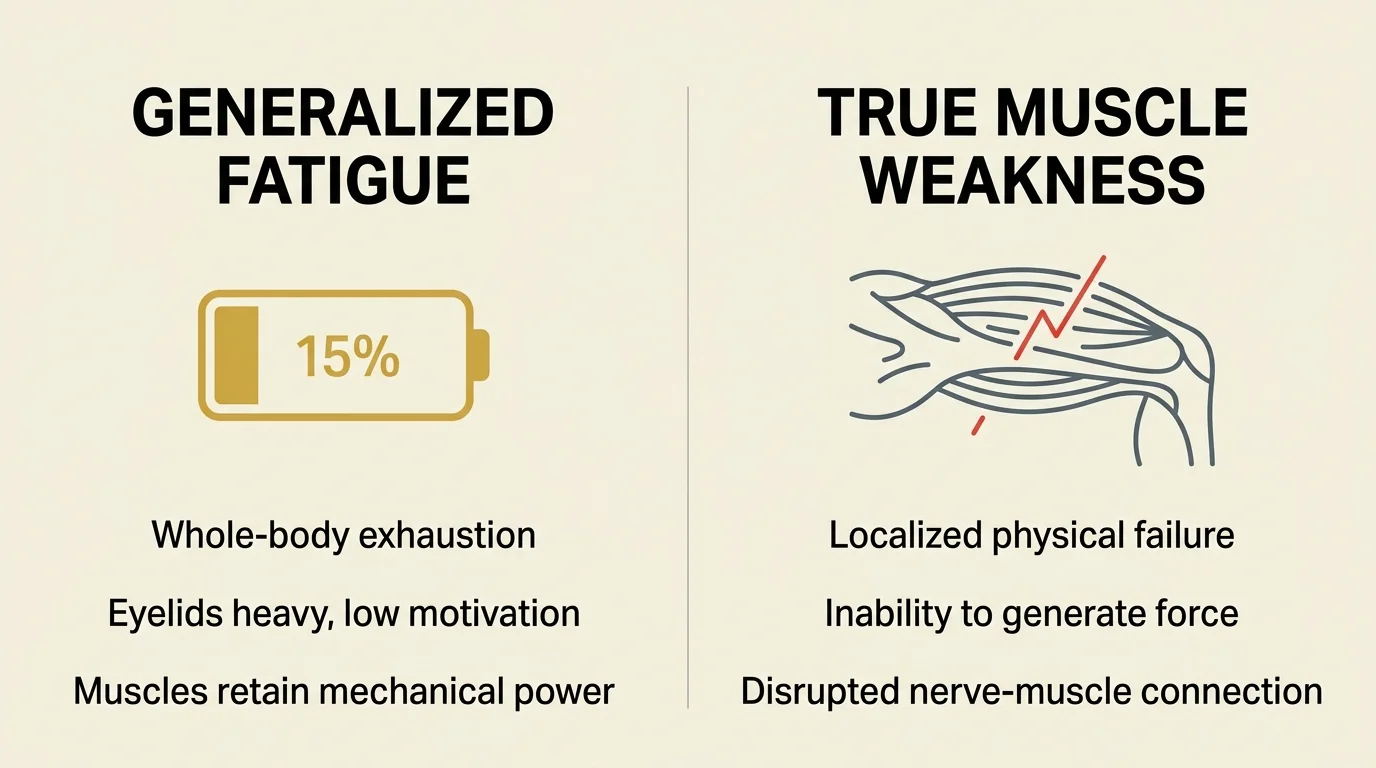
Normal tiredness—often referred to by health professionals as generalized fatigue or asthenia—creates a pervasive, whole-body sense of weariness. When you experience tiredness, your overall energy reserves run low; your eyelids feel heavy, your motivation dips, and your brain demands rest. You might feel too exhausted to work in the garden or walk around the block, yet your muscles still retain their physical power. If an emergency required you to lift a heavy object or stand up quickly, your nervous system and skeletal muscles could still generate the necessary mechanical force, even if doing so felt mentally draining.
In contrast, true muscle weakness medical symptoms involve an objective loss of physical power in individual muscles or muscle groups. When muscle weakness strikes, you exert maximum mental effort, but your muscle fibers simply cannot generate normal force. For example, you might sit in a firm chair with every intention of standing up, yet your thigh muscles fail to lift your weight—regardless of how well-rested you feel mentally. This physical inability to perform motor actions despite your best effort signals a disruption in the physiological pathway connecting your brain, spinal cord, peripheral nerves, and muscle tissue.
Distinguishing fatigue from muscle weakness becomes particularly important as you age due to natural changes in your musculoskeletal system. Research in geriatric medicine indicates that adults naturally lose approximately 3 percent to 8 percent of their muscle mass per decade after turning 30, a process known as sarcopenia that accelerates after age 60. While age-related sarcopenia causes a gradual, symmetrical reduction in physical stamina, sudden or severe localized weakness is never a normal part of aging. Recognizing when your body experiences genuine muscle failure allows you to seek timely medical guidance and address underlying health conditions before they compromise your mobility.
Physicians categorize muscle weakness based on its anatomical pattern and onset. Weakness can affect proximal muscles—those closest to the center of your body, such as your shoulders and hips—making activities like rising from a toilet or combing your hair difficult. Alternatively, distal weakness targets your hands, forearms, calves, and feet, causing you to drop household items or catch your toes on the carpet while walking. Identifying whether your physical limitations stem from global exhaustion or specific muscle failure empowers you to describe your symptoms accurately to your healthcare team.
Practical Tips for a Healthier, Happier Life
Maintaining robust muscle health and identifying subtle warning signs requires proactive daily habits. By taking small, intentional steps each day, you can protect your physical strength, support your nervous system, and clearly identify when your body needs medical attention. Here are practical, safe, and effective strategies you can incorporate into your routine immediately.
Perform Simple At-Home Functional Strength Checks
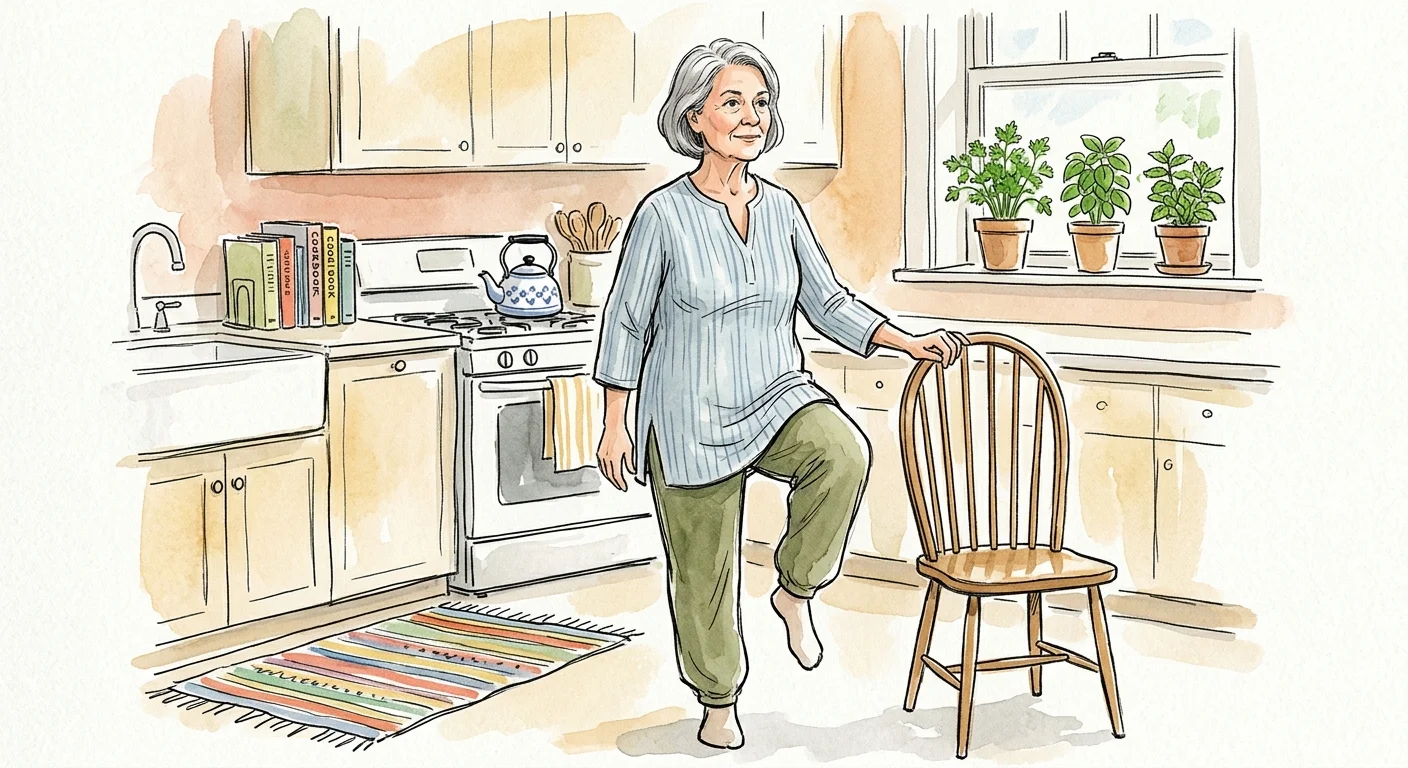
You do not need specialized clinical equipment to assess your muscular function; simple daily tasks offer valuable feedback regarding your physical capacity. Healthcare providers frequently use standardized functional assessments—such as the 30-second chair stand test—to evaluate lower-body strength in older adults. To perform a safe variation at home, place a sturdy, armless dining chair against a solid wall to prevent slipping. Sit near the middle of the seat with your feet flat on the floor, hip-width apart, and cross your arms loosely over your chest.
Attempt to stand up completely and sit back down without using your hands for support. If you can perform this motion smoothly multiple times, your quadriceps and gluteal muscles maintain functional power. However, if your legs buckle, give out, or physically refuse to lift your torso without pushing off your knees or armrests, you may be observing true muscle weakness rather than simple tiredness. Repeating similar gentle checks with your upper body—such as holding a light canned good with an outstretched arm for ten seconds—helps you monitor your shoulder and arm integrity over time.
Prioritize High-Quality Protein and Vital Nutrients
Nutrition plays a decisive role in maintaining muscle tissue and neuromuscular signaling. As your body ages, your digestive system absorbs amino acids less efficiently, making adequate protein intake paramount for preventing muscular atrophy. Geriatric nutritional guidelines recommend that active older adults consume between 1.0 and 1.2 grams of protein per kilogram of body weight each day—substantially more than younger adults require for muscle preservation.
Incorporate diverse, lean protein sources into every meal throughout your day. Excellent choices include eggs, skinless poultry, wild-caught fish, Greek yogurt, lentils, beans, and tofu. Beyond protein, ensure your diet supplies adequate Vitamin D and calcium; Vitamin D receptors located directly within skeletal muscle tissue play a vital role in muscle cell contraction and muscle fiber regeneration. Clinical studies demonstrate that correcting Vitamin D deficiencies significantly improves balance, reduces muscle sway, and decreases fall risk among seniors.
Engage in Consistent, Gentle Resistance and Balance Training
Physical activity serves as a powerful natural medicine for preserving muscle mass and enhancing neural pathways. While cardiovascular activities like walking support heart health, resistance training specifically targets muscle fibers and stimulates motor unit recruitment. You do not need to lift heavy weights to achieve remarkable benefits; light resistance bands, water exercises, or bodyweight movements yield significant improvements in physical function.
Focus on major muscle groups two to three times per week, allowing adequate rest between sessions. Perform gentle leg lifts while seated in a chair, standing calf raises while holding onto a kitchen counter, and wall push-ups to strengthen your upper body. If you experience normal tiredness, completing a mild exercise session often leaves you feeling invigorated afterward. However, if your muscles feel unusually weak or fail to respond during exercise, honor your body’s signals, stop the activity, and consult a professional.
Maintain Optimal Hydration and Electrolyte Equilibrium
Dehydration frequently masquerades as severe fatigue and can severely impair your muscular performance. As you age, your body’s natural thirst mechanism becomes less sensitive, making it easy to fall behind on daily fluid intake without realizing it. Water serves as the primary medium for cellular metabolism, transporting essential minerals and nutrients directly to your muscle tissue.
Key electrolytes—including potassium, sodium, magnesium, and calcium—conduct electrical impulses across cell membranes to trigger muscle contractions. When your body experiences fluid or electrolyte imbalances, you may suffer from localized muscle twitching, sudden cramping, or generalized weakness. Aim to drink 6 to 8 glasses of water or herbal teas throughout the day, adjusting your intake during warm weather or physical activity. Eating potassium-rich foods such as bananas, avocados, spinach, and sweet potatoes further supports healthy muscular contraction.
Keep a Daily Symptom and Mobility Journal
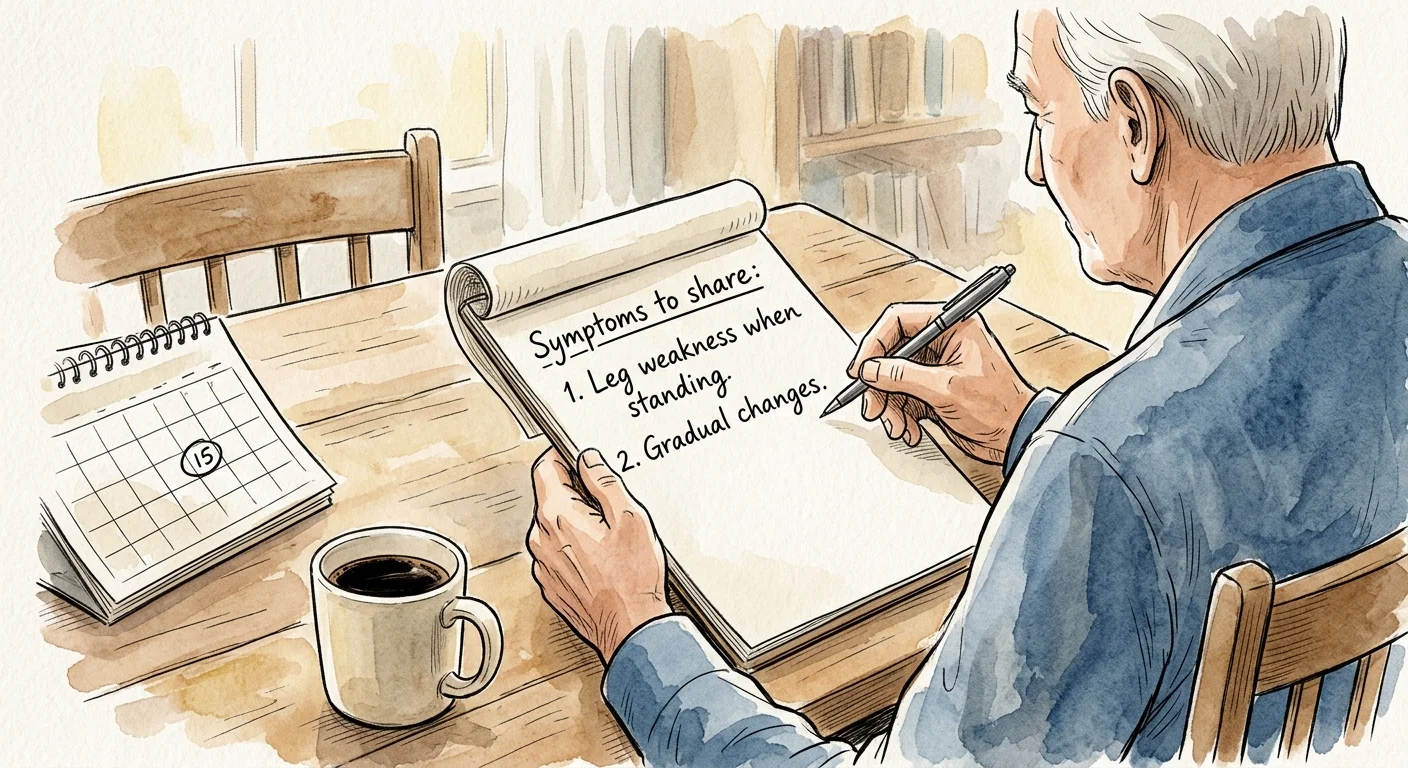
Tracking your daily physical capabilities in a simple notebook provides invaluable insights for both you and your doctor. Whenever you experience a period of physical limitation, document the precise details of what occurred. Note whether the sensation felt like global tiredness—a full-body desire to sleep or rest—or localized weakness, such as an inability to turn a doorknob, button a shirt, or step up onto a curb.
Record the exact time of day, whether rest improved the condition, and whether the weakness occurred on one side of your body or both sides equally. Patterns often emerge through journaling; for example, weakness that worsens progressively throughout the day may indicate neuromuscular conditions, whereas morning stiffness and weakness might point toward joint or metabolic factors. Bringing this detailed log to your medical appointments allows your physician to evaluate potential warning signs of muscle weakness with great precision.
Important Safety Precautions to Keep in Mind
While pursuing physical resilience remains a wonderful goal, protecting your safety must always remain your top priority. Experiencing sudden or unrecognized muscle weakness significantly increases your risk of accidental falls, bone fractures, and loss of confidence in daily mobility. Adopting proactive safety measures around your home creates a secure environment while you assess and improve your muscular strength.
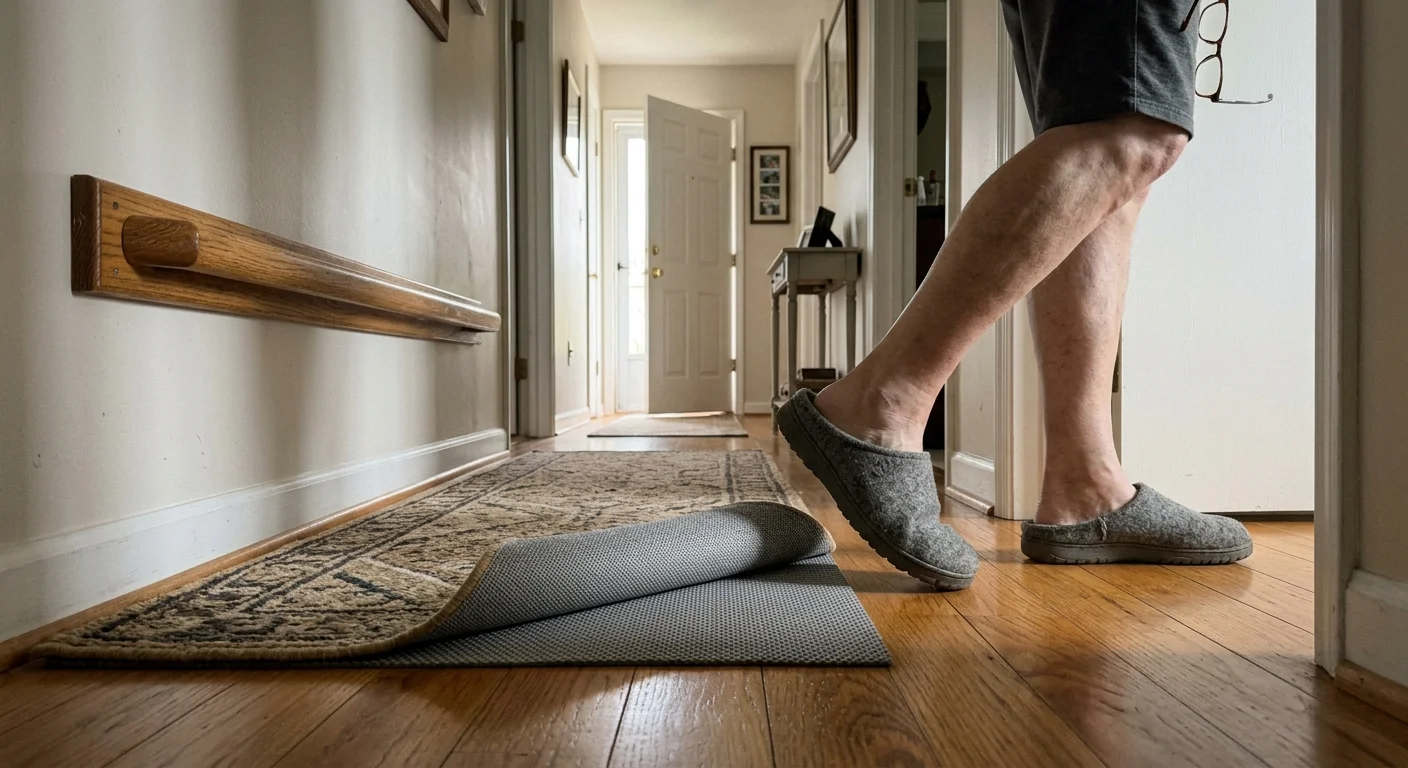
Inspect your living spaces carefully to eliminate potential fall hazards. Remove loose throw rugs, secure dangling electrical cords, and ensure all hallways, staircases, and entrances feature bright, glare-free lighting. Installing sturdy grab bars beside your toilet and inside your shower offers vital leverage when your lower limbs feel unstable. If you experience intermittent muscle weakness, consider using mobility aids—such as a lightweight cane or walker—recommended by a physical therapist to support your balance while walking.
Pay careful attention to your medication schedule and discuss all prescriptions with your pharmacist or physician. Numerous medications commonly prescribed to older adults can induce muscle pain, cramping, or true weakness as secondary effects. Statins used for cholesterol management, certain blood pressure drugs, sedatives, muscle relaxants, and long-term corticosteroids can all affect muscular function or nerve conduction. Never stop taking prescribed medications on your own, but request a comprehensive medication review if you notice new or worsening physical weakness after starting a new prescription.
Avoid pushing through severe muscle failure during daily tasks or exercise routines. While mild muscle soreness following physical activity represents a healthy response to exercise, sharp pain, joint instability, or sudden collapse indicates that your muscles have reached their safety limit. Honor your physical boundaries, sit down immediately if your legs feel unstable, and allow your nervous and muscular systems time to recover safely.
When to Speak with a Healthcare Professional
Understanding when muscle weakness is concerning enables you to seek prompt medical intervention when time-sensitive conditions arise. While gradual changes in stamina can be evaluated during routine checkups, acute or rapidly progressing muscle weakness requires immediate, emergency medical assessment. Never ignore sudden shifts in your body’s physical capabilities.
Seek emergency medical care immediately—by dialing 911 or visiting the nearest emergency department—if you experience sudden muscle weakness accompanied by any of the following warning signs:
— Sudden weakness or numbness isolated to one side of your face, arm, or leg, which represents a primary warning sign of a stroke.
— Sudden difficulty speaking, slurred speech, or confusion accompanying muscle weakness.
— Unexplained difficulty breathing, shortness of breath, or feeling like your respiratory muscles cannot expand your chest fully.
— Sudden difficulty swallowing food or liquids, choking, or severe facial drooping.
— Sudden loss of bowel or bladder control accompanying back pain or leg weakness.
Additionally, schedule a comprehensive non-emergency consultation with your primary care physician if you notice progressive weakness developing over days or weeks. Conditions such as thyroid imbalances, Vitamin B12 deficiency, peripheral neuropathy, autoimmune disorders, and metabolic conditions can manifest initially as subtle muscle weakness. Your doctor can perform targeted neurological exams, blood tests, and imaging to pinpoint the exact root cause and craft a personalized treatment plan.
For authoritative, trustworthy health information, always consult official sources like the National Institute on Aging (NIA) and MedlinePlus from the National Library of Medicine. The CDC also provides excellent resources for older adults.
Frequently Asked Questions
How can I tell if my leg weakness is just normal tiredness or a serious medical issue?
Normal tiredness creates a general feeling of low energy and heaviness across your entire body, which improves after resting or sleeping. If you sit down for an hour and drink a glass of water, tired legs usually regain their energy. True muscle weakness, however, prevents your leg muscles from generating mechanical force regardless of how rested you feel. If you attempt to stand up from a chair and your knees physically buckle or fail to elevate your body weight despite maximum mental effort, you are experiencing true muscle weakness rather than simple fatigue.
Can vitamin deficiencies cause muscle weakness in older adults?
Yes, key nutritional deficiencies directly impair muscle contraction and nerve transmission. Low levels of Vitamin D significantly decrease muscle fiber density and muscle strength, particularly in the lower body. Vitamin B12 deficiency damages the protective myelin sheath surrounding peripheral nerves, preventing brain signals from reaching your muscles effectively and causing muscle weakness, numbness, and tingling. Insufficient levels of electrolytes such as potassium and magnesium can also disrupt cellular firing, leading to muscle spasms and functional weakness.
Why do my muscles feel weak in the morning even after a full night of sleep?
Waking up with muscular weakness despite adequate sleep strongly suggests an underlying issue distinct from everyday fatigue. While morning stiffness can stem from arthritis, persistent morning weakness may indicate conditions such as sleep apnea—which deprives your tissues of oxygen overnight—electrolyte imbalances, thyroid dysfunction, or autoimmune conditions such as polymyalgia rheumatica. If rest does not restore your physical strength, schedule an evaluation with your doctor to explore prospective causes.
What medical tests will my doctor perform to diagnose muscle weakness?
Your physician will begin with a thorough clinical examination, assessing your reflexes, muscle tone, sensation, and physical strength across various muscle groups. To identify the precise cause, your doctor may order blood tests to check electrolyte levels, thyroid function, kidney function, inflammation markers, and vitamin levels. Depending on the clinical findings, additional diagnostic tests may include electromyography (EMG) to evaluate electrical activity in your muscles, nerve conduction velocity tests, or magnetic resonance imaging (MRI) of your spine or brain.
Disclaimer: This article is for informational purposes only and does not constitute medical advice. Always seek the advice of your physician or other qualified health provider with any questions you may have regarding a medical condition.