
Navigating your healthcare budget requires accurate forecasting, especially as major regulatory shifts update your medicare part d cost 2027 structure. Starting January 1, 2027, the annual out-of-pocket maximum cap for covered Part D prescription drugs adjusts to $2,400, offering absolute financial certainty after you reach that threshold. Understanding these upcoming policy shifts—including the revised $700 standard deductible and newly negotiated prices on high-cost medications—allows you to plan your household spending with total confidence. By taking advantage of new installment payment options and monitoring changes in standalone plan premiums, you can protect both your physical wellness and your long-term retirement savings without sacrificing the essential daily therapies you rely on.
Understanding the Basics of 2027 Prescription Drug Costs for Seniors
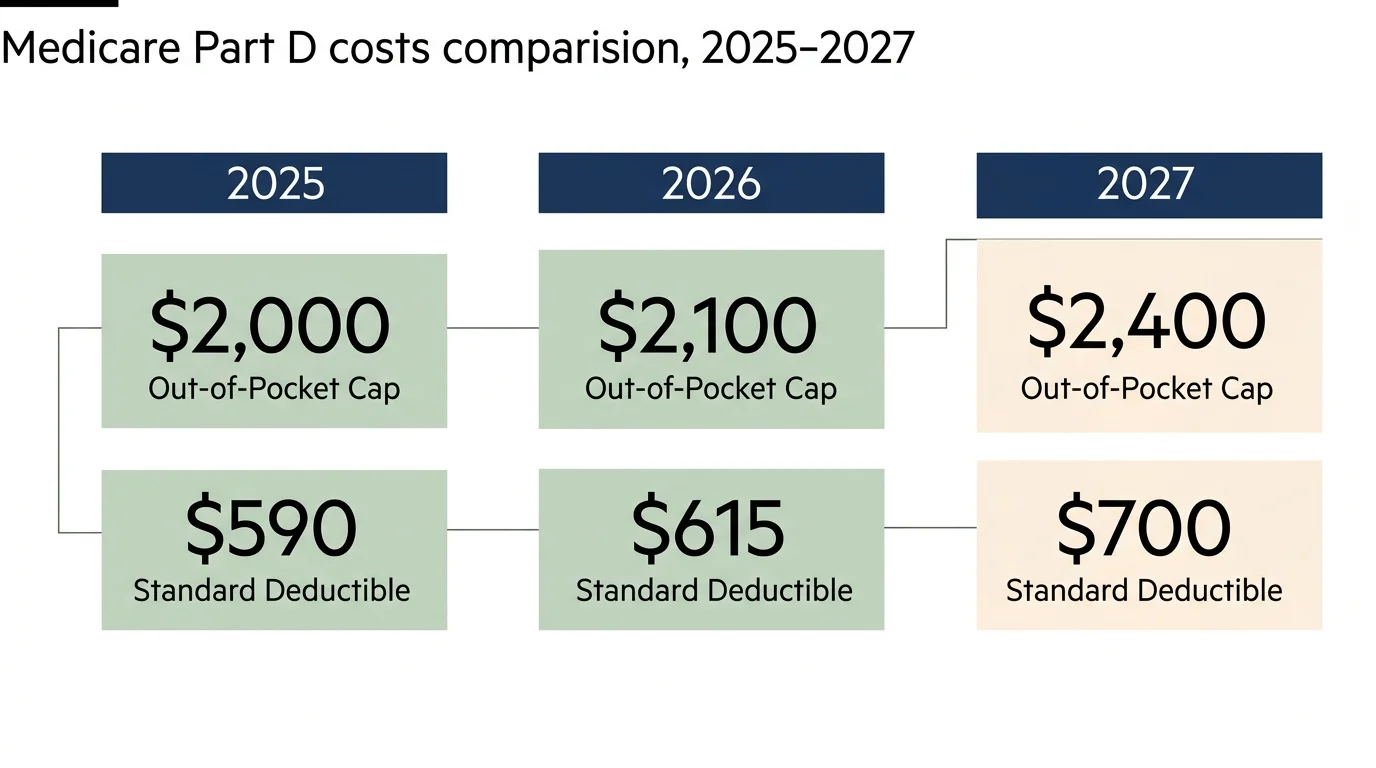
Understanding how your prescription drug coverage evolves requires a clear look at statutory updates established by the Inflation Reduction Act. Over the past few years, federal legislation systematically restructured Medicare Part D to reduce financial burdens on older adults. In 2025, Medicare established a historic $2,000 cap on out-of-pocket drug spending, which rose slightly to $2,100 in 2026. For the 2027 plan year, official projections and index calculations set the maximum out-of-pocket cap at $2,400. This spending cap is legally indexed to annual growth in national per-capita Part D drug expenditures. Once your out-of-pocket spending on covered Part D medications reaches $2,400 during the calendar year, you enter catastrophic coverage and pay $0 for all covered prescription drugs for the remainder of that year.
To understand your potential total annual outlay, you must also account for the standard Part D deductible. For 2027, the standard annual deductible increases to $700, up from $615 in 2026 and $590 in 2025. You pay this initial deductible out of pocket before your plan begins paying its share of covered drug expenses. Crucially, every dollar you spend toward meeting your $700 deductible counts directly toward your $2,400 annual out-of-pocket max medicare limit. This integrated accounting ensures that your initial medication payments actively move you closer to full, $0 copay protection later in the year.
Monthly plan premiums represent another vital element of your medicare drug plan forecast. On July 28, 2026, the Centers for Medicare & Medicaid Services (CMS) released the official national base beneficiary premium for Part D, setting it at $41.33 per month for 2027. This figure represents a 6% increase over the 2026 base premium of $38.99. Statutory safeguards under federal law cap annual growth in the national base beneficiary premium at 6% through 2029, protecting seniors from unexpected monthly premium spikes. Alongside this figure, CMS established the 2027 national average monthly bid amount (NAMBA) at $296.05. The NAMBA represents the weighted average cost estimated by plan sponsors to deliver basic Part D prescription benefits, highlighting the substantial underlying subsidies that lower your direct retail drug costs.
A major structural change taking effect on December 31, 2026, involves the conclusion of the voluntary Part D Premium Stabilization Demonstration program. Announced by CMS, the end of this demonstration project means standalone Part D prescription drug plans (PDPs) will return to traditional competitive market pricing for the 2027 plan year. While the national base beneficiary premium remains capped at 6% growth, individual insurance carriers will adjust their standalone plan pricing based on market competition and plan tiering. Consequently, evaluating individual monthly plan premiums during Open Enrollment becomes far more critical than in previous years.
Direct drug cost relief expands significantly on January 1, 2027, through the implementation of Round 2 of the Medicare Drug Price Negotiation Program. Under this federal initiative, negotiated Maximum Fair Prices go into effect for 15 high-cost, widely prescribed Part D medications. These long-term therapies include diabetes and cardiovascular treatments like Ozempic, Wegovy, and Janumet, as well as respiratory and gastrointestinal drugs like Breo Ellipta and Linzess. Federal forecasts project that these negotiated lower prices will save Medicare roughly $12 billion in net drug costs while delivering an estimated $685 million in direct out-of-pocket savings to beneficiaries in 2027 alone.
Furthermore, core financial protections established in earlier years remain fully active throughout 2027. Covered insulin products maintain a strict spending cap of no more than $35 for a 30-day supply, regardless of whether you receive your insulin through Medicare Part D or Part B equipment coverage. In addition, all adult vaccines recommended by the Advisory Committee on Immunization Practices (ACIP)—including shingles, pneumonia, and RSV vaccines—remain available under Part D with $0 copays and zero deductible application.
Practical Tips for Managing Your Prescription Drug Costs
Managing your prescription drug costs 2027 effectively involves proactive planning and strategic use of newly available Medicare tools. Taking deliberate steps before and during the plan year allows you to maintain continuous access to essential treatments while optimizing your household finances.
1. Enroll in the Medicare Prescription Payment Plan to Smooth Expenses
Even with the $2,400 out-of-pocket cap, paying hundreds of dollars for specialty medications during the first few months of the year can strain a fixed income. The Medicare Prescription Payment Plan allows you to opt in and cap your monthly pharmacy counter charges by spreading your out-of-pocket costs into predictable monthly installments throughout the plan year. If you face high brand-name medication costs in January, enrolling in this installment program ensures you pay balanced, manageable monthly bills rather than an overwhelming upfront sum at the pharmacy counter.
2. Conduct a Comprehensive Plan Review During Open Enrollment
Because the Part D Premium Stabilization Demonstration ends on December 31, 2026, standalone prescription drug plans will adjust their pricing structures and drug list classifications for 2027. Never assume your current plan remains the most cost-effective option. During the Fall Open Enrollment period, log into Medicare.gov to compare standalone PDPs and Medicare Advantage plans. Review drug formularies carefully to confirm that your specific medications remain on preferred tiers with reasonable copayments.
3. Verify Coverage Tiers for the 15 Newly Negotiated Drugs
If your doctor prescribes treatments like Ozempic, Wegovy, Janumet, Breo Ellipta, or Linzess, check how your plan incorporates their new Maximum Fair Prices starting January 1, 2027. While federal negotiation lowers the underlying drug cost, individual plans structure tier placements differently. Confirming that your carrier assigns these negotiated therapies to lower cost-sharing tiers helps you maximize your direct out-of-pocket savings.
4. Explore Generic and Bioequivalent Alternatives with Your Doctor
Generic drugs contain the exact active ingredients as brand-name prescriptions but cost up to 85% less. Ask your prescribing physician or pharmacist if bioequivalent generic alternatives exist for your daily medications. Switching from a high-tier brand-name drug to a Tier 1 or Tier 2 generic drug dramatically reduces your out-of-pocket spending, helping you stay well below the $700 standard deductible threshold.
5. Apply for Extra Help and Financial Support Programs
Seniors with limited income and resources should explore the Low-Income Subsidy (Extra Help) program administered by Social Security. Extra Help pays for Part D premiums, deductibles, and co-payments, limiting out-of-pocket drug costs to nominal amounts. Additionally, check whether your state offers State Pharmaceutical Assistance Programs (SPAPs) or manufacturer copay assistance programs that help cover remaining out-of-pocket costs.

Important Safety Precautions to Keep in Mind
While lowering your medicare prescription costs represents an important financial priority, maintaining physical safety must always remain your top concern. Attempting to cut drug costs through unauthorized methods can lead to severe health complications and avoidable emergency medical visits.
Avoid Pill Splitting or Skipping Doses Without Medical Guidance
Never attempt to stretch your prescription supply by cutting pills in half, skipping daily doses, or taking medications every other day unless your physician explicitly instructs you to do so. Altering your dosage schedules can cause immediate medical harm. For example, skipping blood pressure or heart medications can trigger dangerous hypertension spikes, while improperly splitting extended-release tablets can cause rapid, toxic drug absorption. If medication costs create financial hardship, discuss safe clinical alternatives with your physician immediately.
Beware of Unverified and Fraudulent Online Pharmacies
High drug costs lead some consumers to seek discount medications from untrustworthy international websites. Ordering prescriptions from unverified online sources exposes you to counterfeit medications, improper chemical dosages, and contaminated substances. Always ensure that any online pharmacy you use holds proper accreditation through the National Association of Boards of Pharmacy (NABP) Digital Pharmacy Accreditation program and operates fully licensed within the United States.
Monitor Drug Interactions When Changing Plan Formularies
If coverage changes force you to switch from a long-term brand-name drug to a lower-cost alternative, monitor your body closely for unexpected reactions or therapeutic changes. Keep a detailed personal health journal noting any new side effects, and inform your primary care provider immediately if you experience unusual symptoms following a prescription substitution.

When to Speak with a Healthcare Professional
Managing your health requires open, ongoing communication with your medical care team. The information provided in this guide serves educational purposes and should never replace personal diagnostic evaluations or professional medical consultations.
Schedule an appointment with your doctor or speak with your pharmacist under the following specific circumstances:
You Experience Adverse Effects or Changes in Efficacy
If you notice unexpected side effects, allergic reactions, or reduced therapeutic results after starting a new prescription or switching to a generic alternative, contact your healthcare provider right away. Your doctor can evaluate your symptoms, adjust dosage levels, or transition you safely to a different therapeutic class.
Prescription Costs Force You to Contemplate Stopping Treatment
If rising daily medication expenses make it difficult to afford your prescribed regimen, inform your physician before missing a single dose. Doctors frequently possess access to sample medications, patient assistance foundation grants, or lower-tier therapeutic substitutes that provide identical health benefits at significantly reduced prices.
You Decide to Add Over-the-Counter Supplements or Vitamins
Before adding non-prescription dietary supplements, herbal remedies, or over-the-counter vitamins to your routine, consult your doctor or pharmacist. Over-the-counter products can interact unexpectedly with prescription therapies covered under Medicare Part D, potentially diminishing their effectiveness or causing unwanted drug interactions.
Frequently Asked Questions
How does the $2,400 out-of-pocket maximum cap protect my medicare prescription costs in 2027?
The $2,400 out-of-pocket maximum cap establishes a firm financial limit on what you pay for covered Part D drugs during the 2027 calendar year. Once your direct spending on covered prescriptions—including payments made toward your $700 standard deductible and plan copayments—reaches $2,400, your out-of-pocket copay drops to $0 for the rest of that year. This structure eliminates catastrophic drug costs for seniors taking expensive specialty medications.
Why is comparing standalone prescription drug plans during Open Enrollment so vital for 2027?
The voluntary Part D Premium Stabilization Demonstration program concludes on December 31, 2026. Starting in 2027, standalone Part D drug plans return to traditional competitive market pricing. While the national base beneficiary premium increases by a capped 6% to $41.33, individual plan premiums, tier structures, and drug formularies will vary across insurance carriers. Comparing plans during Open Enrollment ensures you select an option tailored to your specific medication needs.
Will my monthly cost for covered insulin products stay capped at $35 in 2027?
Yes. Statutory protections under the Inflation Reduction Act permanently cap cost-sharing for covered insulin products at $35 per 30-day supply. This $35 monthly cap applies across all Medicare Part D prescription drug plans and Medicare Part B durable medical equipment coverage, protecting you from deductible requirements or inflated copays on insulin.
How does the Medicare Prescription Payment Plan help me manage my medicare drug plan forecast?
The Medicare Prescription Payment Plan gives you the option to spread your out-of-pocket drug costs into manageable monthly payment installments throughout the calendar year. Instead of paying a large deductible or high copay all at once at the pharmacy counter in January, your plan calculates a capped monthly bill, allowing you to smooth your prescription expenses across twelve balanced monthly payments.
For authoritative, trustworthy health information, always consult official sources like the National Institute on Aging (NIA) and MedlinePlus from the National Library of Medicine. The CDC also provides excellent resources for older adults.
Disclaimer: This article is for informational purposes only and does not constitute medical advice. Always seek the advice of your physician or other qualified health provider with any questions you may have regarding a medical condition.