
Timing your daily vitamins correctly dictates whether your body absorbs their full benefits or simply flushes them away. Because your digestion and metabolism naturally shift as you enter your later years, separating your supplements into morning and evening routines ensures you get precise support exactly when you need it. Morning doses jumpstart your energy levels and prepare your immune system for the day ahead; meanwhile, evening doses promote restorative sleep and overnight cellular repair. By understanding how water-soluble and fat-soluble nutrients interact with your meals and your internal clock, you can effortlessly maximize their value. Let us explore how you can build a simple, effective schedule to support your long-term vitality and overall well-being.
Understanding the Basics of The Vitamins You Should Take in the Morning vs. the Evening
As you embrace your golden years, your body undergoes natural, subtle shifts in how it processes the foods you eat and the supplements you take. Your stomach acid levels naturally decrease, and your digestive transit time slows down. Consequently, swallowing a large handful of daily vitamins all at once can overwhelm your digestive tract; your body simply cannot process that much nutritional information simultaneously. Strategic vitamin timing solves this common issue by aligning your supplement intake with your natural circadian rhythms and digestive peaks, promoting healthy aging without unnecessary stomach upset.
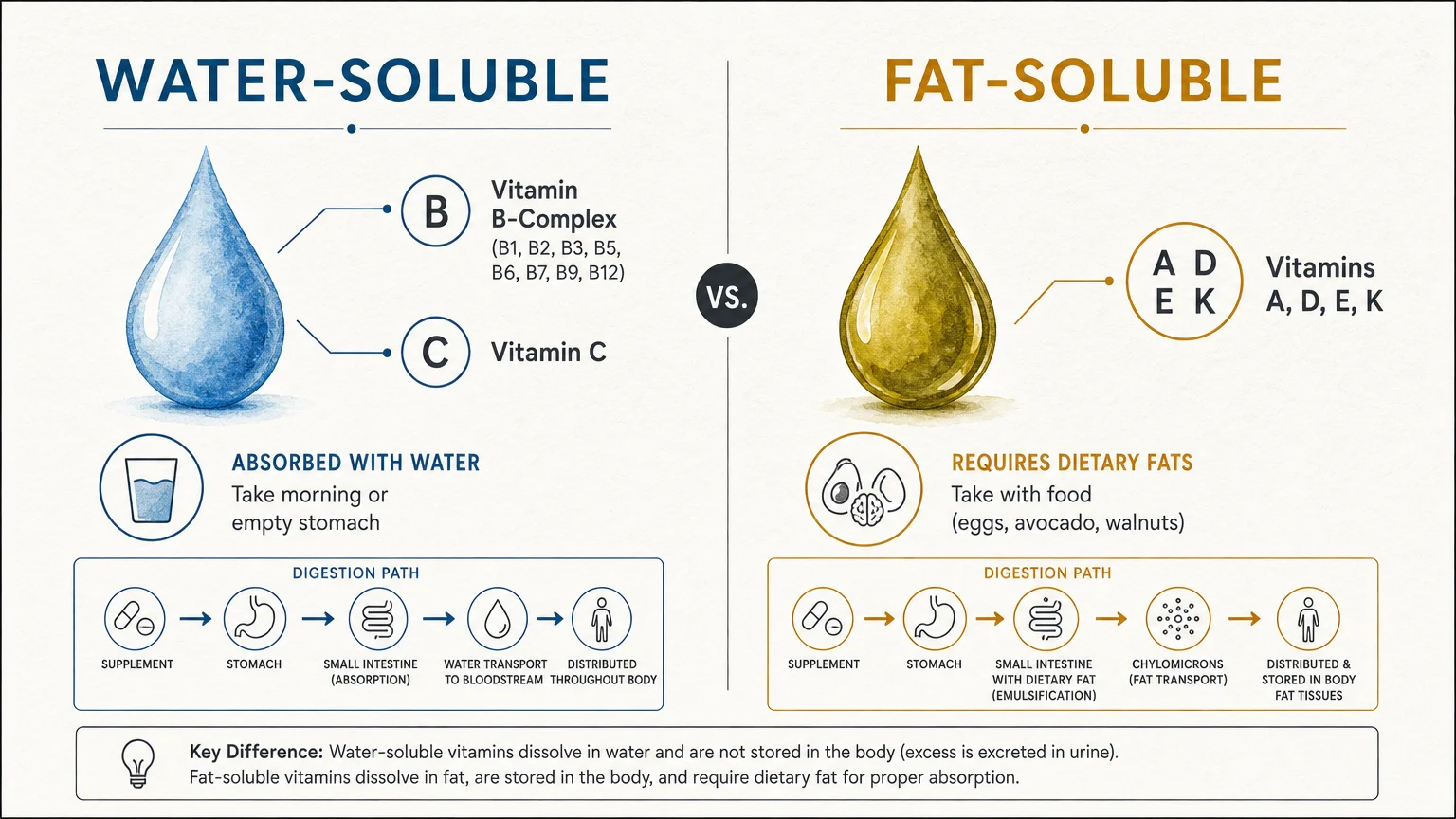
To master your nutrition tips, you first need to understand the fundamental difference between water-soluble and fat-soluble nutrients. Water-soluble vitamins—which include vitamin C and the entire B-complex family—dissolve quickly in water and rapidly enter your bloodstream. Your body uses what it needs for immediate energy and metabolic support, then efficiently excretes the excess through your urine. Because they do not require dietary fats to break down, you can generally take water-soluble vitamins on an empty stomach. However, consuming them with a light meal often prevents the mild nausea that some seniors experience when taking pills first thing in the morning.
Conversely, fat-soluble vitamins—specifically vitamins A, D, E, and K—require a completely different digestive approach. These specific nutrients must bind to dietary fats to cross your intestinal walls and enter your liver, where your body stores them for future use. If you take a fat-soluble vitamin alongside a plain piece of dry toast and black coffee, you miss out on a significant portion of its structural benefits. You must take these vitamins with a meal that contains healthy fats, such as a breakfast featuring avocado, eggs, or a handful of walnuts.
Furthermore, timing matters because certain vitamins and minerals actively compete for the same absorption pathways in your gut. When you take calcium and iron at the identical time, they clash; the calcium essentially blocks the iron from entering your bloodstream. By separating these competing elements into distinct morning and evening routines, you guarantee that each nutrient receives the undivided attention of your digestive system. Understanding these basic mechanical truths empowers you to treat your daily supplements not as a chore, but as a carefully timed strategy for lifelong wellness.

Practical Tips for a Healthier, Happier Life
Creating a structured schedule for your daily vitamins does not need to feel complicated. By dedicating specific supplements to your morning coffee routine and others to your winding-down hours, you can create a seamless habit that actively enhances your quality of life. Consider the following actionable insights when organizing your daily pillbox.
Fuel Your Morning with B-Complex Vitamins
You should prioritize taking your B-complex vitamins shortly after you wake up. These essential nutrients—particularly vitamin B12 and B6—play a starring role in cellular energy production and neurological health. As you age, absorbing B12 directly from food becomes increasingly difficult due to lowered stomach acid; therefore, a high-quality morning supplement provides a necessary boost. Because B vitamins naturally stimulate your metabolism and enhance neurological alertness, taking them too late in the afternoon can inadvertently trigger insomnia or restless sleep. Aim to take your B-complex with your morning meal to enjoy sustained, jitter-free energy throughout your day.
Optimize Your Morning Vitamin D Intake
Vitamin D remains one of the most critical daily vitamins for seniors, offering profound benefits for bone density, immune function, and mood regulation. Research suggests that taking vitamin D later in the evening can suppress your natural melatonin production, making it harder for you to fall asleep. Therefore, you should schedule your vitamin D supplement for the morning or early afternoon. Remember its fat-soluble nature; to ensure your body actually absorbs the nutrient, take your capsule alongside a breakfast or lunch that contains healthy fats, such as a bowl of oatmeal topped with chia seeds or a serving of full-fat yogurt.
Reserve Magnesium for Evening Relaxation
Magnesium serves as the ultimate evening mineral. It plays a pivotal role in over 300 biochemical reactions in your body, but seniors primarily prize it for its ability to relax muscles and calm the central nervous system. If you struggle with nocturnal leg cramps or find it difficult to transition into a restful sleep, taking magnesium roughly an hour before bed can provide gentle relief. Opt for highly absorbable forms like magnesium glycinate or magnesium citrate, as they are gentler on older digestive tracts and less likely to cause sudden, unwanted bowel movements during the night.
Split Your Calcium Doses for Maximum Benefit
Maintaining strong bones requires adequate calcium, but your body features a strict biological limit on how much it can process at once. Scientific data reveals that the human gut can only absorb about 500 milligrams of calcium during a single digestive window. If your doctor recommends 1,000 milligrams daily, you should actively split the dose. Take the first 500 milligrams in the morning and the remaining 500 milligrams in the evening. Additionally, always check whether your supplement contains calcium carbonate—which requires stomach acid from a meal to digest properly—or calcium citrate, which you can take comfortably on an empty stomach.
Manage Your Vitamin C Intelligently
Vitamin C offers exceptional antioxidant protection and helps your body naturally produce collagen, which keeps your joints lubricated and your skin resilient. Because it is water-soluble, it leaves your system relatively quickly. Many health experts recommend taking vitamin C in the morning to supply your immune system with immediate resources. If you also take an iron supplement, you should take them together; vitamin C creates an acidic environment in the gut that significantly enhances iron absorption. However, if you have a sensitive stomach, choose a buffered form of vitamin C to prevent morning heartburn.
Time Your Omega-3 Fatty Acids with Your Largest Meal
Fish oil and plant-based omega-3 supplements protect your cardiovascular health and reduce systemic joint inflammation. Unfortunately, many seniors complain of uncomfortable “fish burps” or indigestion after taking these capsules. To completely bypass this issue, you should take your omega-3 supplements immediately before your heaviest meal of the day—which, for many older adults, is dinner. The abundance of food and digestive enzymes present during a large meal helps break down the oils efficiently, improving absorption while keeping your stomach entirely comfortable.
Navigate Iron Supplements Carefully
Iron supplementation requires careful attention to timing and food pairings. While iron absorbs most efficiently on a completely empty stomach, doing so often causes severe nausea or cramping in older adults. If you experience stomach upset, taking your iron with a light snack is perfectly acceptable. However, you must avoid taking iron alongside your morning coffee or tea; the tannins and polyphenols in these beverages severely block iron absorption. You also need to keep iron completely separate from your calcium supplements, spacing them at least two to three hours apart to prevent them from neutralizing one another.

Important Safety Precautions to Keep in Mind
While organizing your supplements by morning and evening provides tremendous benefits, you must approach your regimen with an abundance of caution and respect for your body’s limits. Healthy aging relies heavily on balance; aggressively consuming high doses of certain vitamins can cause more harm than good, particularly for older adults whose livers and kidneys work harder to filter out excess compounds.
You must exercise extreme caution regarding upper limits of fat-soluble vitamins. Unlike water-soluble nutrients that your body eliminates through urine, vitamins A, D, E, and K accumulate in your liver and fatty tissues. Taking excessive doses of vitamin A, for example, can eventually lead to liver toxicity and unexpected bone loss. Similarly, high doses of vitamin E can act as a mild blood thinner; if you already take anticoagulant medications or daily aspirin, adding large amounts of vitamin E can dangerously increase your risk of bruising and bleeding.
Prescription medication interactions represent another critical safety precaution. Seniors often manage multiple prescriptions, and common daily vitamins can severely disrupt how these medications function. If you take levothyroxine for a sluggish thyroid, you must take it strictly on an empty stomach first thing in the morning; you then need to wait a full four hours before consuming any calcium or iron supplements, as these minerals will bind to the thyroid medication and render it useless. Likewise, if you take warfarin or similar blood thinners, you must maintain a highly consistent daily intake of vitamin K, as sudden fluctuations can destabilize your blood clotting factors.
Finally, always listen to your digestive system. If a specific vitamin routine consistently causes bloating, diarrhea, or constipation, your body is signaling that something needs adjustment. You may need to switch from capsules to liquid formats, lower your dosage, or simply shift the timing of the supplement. Never force yourself to endure severe gastrointestinal discomfort simply to adhere to a rigid supplement schedule.

When to Speak with a Healthcare Professional
Navigating the complex world of nutritional supplements requires expert guidance, especially as you navigate the physiological changes associated with aging. Taking a proactive approach to your health means knowing exactly when to step back and seek individualized medical counsel. Never start, stop, or drastically alter your daily vitamin routine without first consulting the professionals who intimately understand your medical history.
You should immediately schedule an appointment with your physician or a registered dietitian if you experience sudden, unexplained symptoms after adjusting your morning or evening vitamins. Specific red flags include chronic nausea, unexpected dizziness, tingling or numbness in your extremities—which can occasionally result from excessive vitamin B6—or sudden changes in your regular bowel habits. These physical signs often indicate that your body is struggling to process a particular dosage or that an unseen drug interaction is occurring.
Furthermore, if you practice polypharmacy—meaning you take five or more prescription medications daily—you must rely on a pharmacist or doctor to review your supplement list. A healthcare professional can run your medications and vitamins through interaction-checking software to ensure your safety. They can also order targeted blood tests to measure your exact nutrient levels, ensuring you only spend your money on the daily vitamins your body genuinely lacks. Let your medical team act as your partners in building a safe, effective, and truly personalized wellness strategy.
Frequently Asked Questions
Can I take all my daily vitamins at once if I keep forgetting to separate them?
While taking all your supplements at once is certainly better than forgetting them entirely, it is not the optimal approach for your body. When you swallow a handful of pills simultaneously, certain minerals like calcium, zinc, and iron will actively compete for absorption in your digestive tract, meaning you lose out on their full benefits. Furthermore, a large bolus of vitamins can irritate the stomach lining of an older adult. If memory is an issue, consider purchasing a segmented pill organizer that visually separates your morning and evening doses; this simple tool makes timing your vitamins practically effortless.
Should I stop taking my evening vitamins if I begin experiencing insomnia?
If you suddenly find yourself tossing and turning at night, you should absolutely review the labels on your evening supplements. Certain nutrients are inherently stimulating. If your evening regimen includes a B-complex vitamin, vitamin D, or a multivitamin containing green tea extract or ginseng, you have likely found the culprit behind your sleeplessness. Simply shift these specific supplements to your morning routine. Continue taking calming minerals, like magnesium, in the evening.
Does drinking coffee affect how my morning vitamins are absorbed?
Yes, your beloved morning cup of coffee significantly impacts your nutritional absorption. Coffee contains tannins, caffeine, and various polyphenols that aggressively bind to certain minerals—most notably iron and calcium—and flush them from your system before they can enter your bloodstream. Coffee also acts as a mild diuretic, potentially accelerating the loss of water-soluble B and C vitamins. To protect your investment in your health, you should wait at least 30 to 60 minutes after finishing your coffee before taking your morning supplements.
Do gummy vitamins absorb differently than standard capsules for older adults?
Gummy vitamins absorb quite similarly to traditional capsules, and they offer a wonderful alternative if you suffer from dysphagia, which is difficulty swallowing pills. However, you must read gummy labels carefully. They frequently contain added sugars or corn syrup, which you may need to monitor if you are managing diabetes or blood sugar fluctuations. Additionally, gummy multivitamins almost never contain iron due to toxicity risks to children in the home and flavor issues. If your doctor has specifically recommended an iron supplement, you will likely need to acquire it in a separate pill or liquid form.
For authoritative, trustworthy health information, always consult official sources like the National Institute on Aging (NIA) and MedlinePlus from the National Library of Medicine. The CDC also provides excellent resources for older adults.
Disclaimer: This article is for informational purposes only and does not constitute medical advice. Always seek the advice of your physician or other qualified health provider with any questions you may have regarding a medical condition.