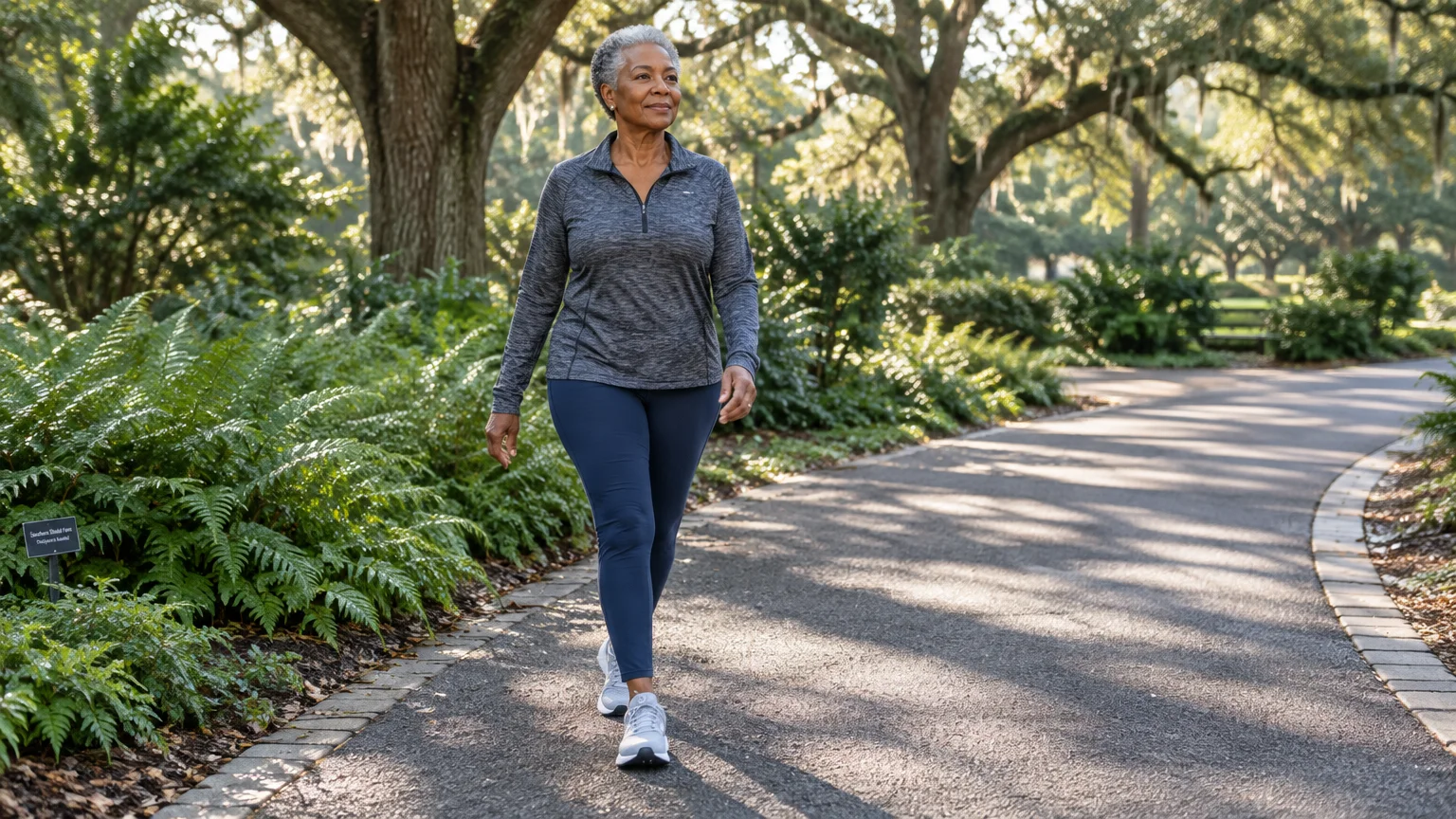
Proper walking technique protects your joints and turns daily movement into an effortless source of energy. By making small adjustments to your gait, you can immediately reduce knee, hip, and lower back strain.
Many people unknowingly adopt walking habits that increase stress on aging cartilage and bones. Correcting these subtle missteps helps you stay active, comfortable, and independent for years to come.
Learning how to align your posture and pace ensures every daily walk supports your long-term mobility. Simple tweaks can transform your routine and bring lasting comfort to your body.
Understanding the Basics of Walking Form for Seniors
Walking serves as one of the best activities for preserving joint mobility and overall vitality. However, your walking mechanics naturally shift over time due to subtle muscle changes or stiffening joints.
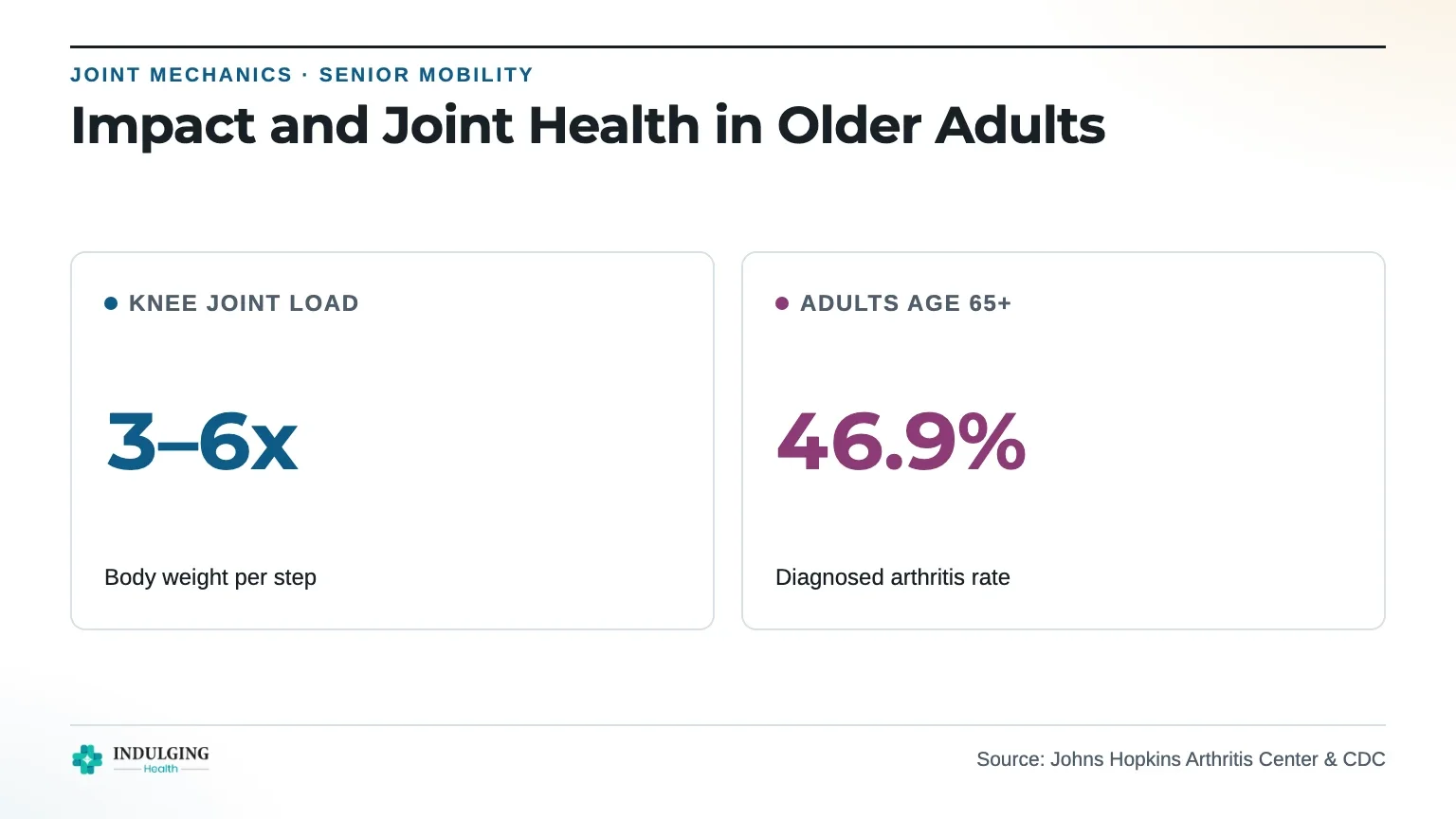
According to the Johns Hopkins Arthritis Center, walking places 3 to 6 times your body weight across your knee joint with every step. Extra impact can quickly accumulate and irritate sensitive cartilage.
Data from the CDC shows that 46.9% of adults age 65 and older manage diagnosed arthritis. When your alignment slips, that daily pressure falls unevenly on vulnerable knees, hips, and spinal discs.
Maintaining proper posture and gait distributes force evenly through your muscles rather than your joints. Practicing balanced technique preserves your joint health and keeps your strides comfortable.
Practical Tips for a Healthier, Happier Life
1. Shorten Your Stride to Cushion Your Knees
Reaching your lead foot too far forward creates an unnatural braking force. This common error, known as overstriding, directs sharp shockwaves straight into your knee joints and lower back.
A 2023 study in the Journal of Biomechanics found that slightly shortening your stride reduces knee adduction moment, a key measure of joint load. Landing with your foot closer to your center of gravity shields your cartilage.
Focus on taking slightly shorter, quicker steps rather than long, reaching lunges. Harvard Health recommends keeping your forward foot under your body to soften every landing.
2. Look Forward Instead of Staring at Your Feet
Tilting your chin downward to stare at your shoes places tremendous strain on your neck and upper back. It also pulls your spine out of alignment and rounds your shoulders forward.
Keep your head lifted and cast your gaze about 10 to 20 feet ahead. This technique allows you to spot walking hazards while maintaining upright posture and steady balance.
Think of your neck and spine as a straight, gentle column supporting your head. Keeping your chin parallel to the ground relieves tension throughout your spine.
3. Swing Your Arms Naturally from Your Shoulders
Holding your arms stiffly or locking hands inside pockets limits your natural rhythm. A restricted arm swing forces your pelvis and lower back to work much harder to keep you upright.
A 2026 study found that active arm swing significantly improves gait performance and walking speed in older adults. Letting your arms move freely balances your torso with every step.
Bend your elbows slightly and allow your arms to swing forward and back from your shoulders. Avoid crossing your hands across your chest, which twists your lower back.
4. Engage Your Core to Stand Tall
Hunching forward from your waist compresses your lumbar vertebrae and tightens your hip flexors. Over time, walking with a hunched torso increases hip pain and reduces breathing capacity.
Gently draw your belly button toward your spine as if bracing for a light touch. This gentle contraction supports your pelvis and takes pressure off your lower back.
Mayo Clinic experts recommend keeping your shoulders relaxed and pulled gently down and away from your ears. Proper posture helps you breathe deeply and walk with ease.
5. Roll Smoothly from Heel to Toe
Slapping your feet flat onto the ground eliminates the shock absorption your arches naturally provide. This flat-footed impact sends vibrations through your ankles, shins, and knees.
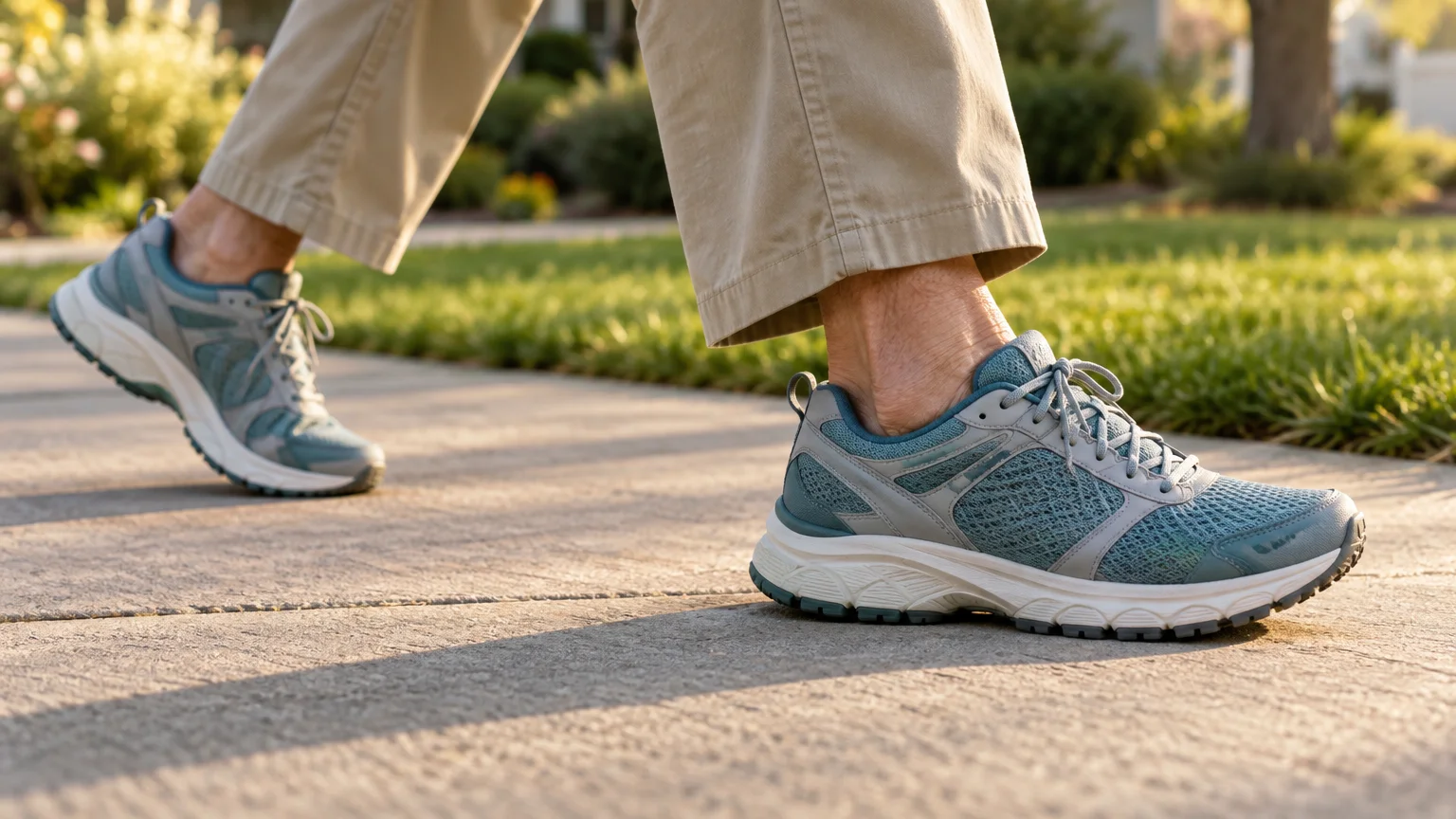
Practice striking the ground gently with your heel first, rolling through the midfoot, and pushing off smoothly through your toes. This heel-to-toe roll spreads pressure evenly across your entire foot.
Supportive walking shoes with flexible soles and cushioned insoles make this rolling motion much easier. Good footwear acts as a first line of defense for your joint health.
6. Aim for Sustainable Daily Step Goals
Walking after 60 does not require marathon sessions or aggressive daily step targets. Consistency and joint comfort matter far more than pushing through physical exhaustion.
Research in The Lancet Public Health reveals that longevity benefits for older adults peak between 6,000 and 8,000 daily steps. A 2025 meta-analysis linked 7,000 daily steps to a 28% lower risk of falls.
Divide your walking routine into two or three pleasant 15-minute walks throughout the day. Breaking up your sessions prevents joint fatigue and keeps your energy high.
Important Safety Precautions to Keep in Mind
Falls represent a serious concern for aging adults. CDC data indicates that more than 1 in 4 adults age 65 and older fall each year, leading to over 14 million fall incidents annually.
In 2024 alone, falls resulted in over 43,000 deaths among older adults. Maintaining proper walking form and scanning your path provides a vital line of defense against dangerous trips.
Federal health guidelines recommend at least 150 minutes of moderate aerobic exercise each week, alongside balance training and strength work twice weekly. Yet, CDC reports show only 13.9% of older adults meet both targets.
Incorporate gentle calf raises and chair stands into your weekly routine to build leg strength. Strong supporting muscles stabilize your knees and ankles while you walk.
Always choose well-lit, level walking paths and wear shoes with non-slip traction. If you feel unsteady, using walking poles or a cane provides reliable stability without shame.
When to Speak with a Healthcare Professional
While refining your gait supports joint comfort, self-care strategies cannot replace professional medical care. You should always discuss new exercise routines with your primary physician.
Schedule an evaluation if you experience persistent joint swelling, sudden sharp pain, or warmth around your knees and hips. These signs often point to joint inflammation or tissue injury requiring clinical treatment.
Seek immediate medical guidance if you experience unexpected dizziness, chest pressure, or frequent stumbles during your walks. Your physician can evaluate your balance and recommend physical therapy or custom orthotics.
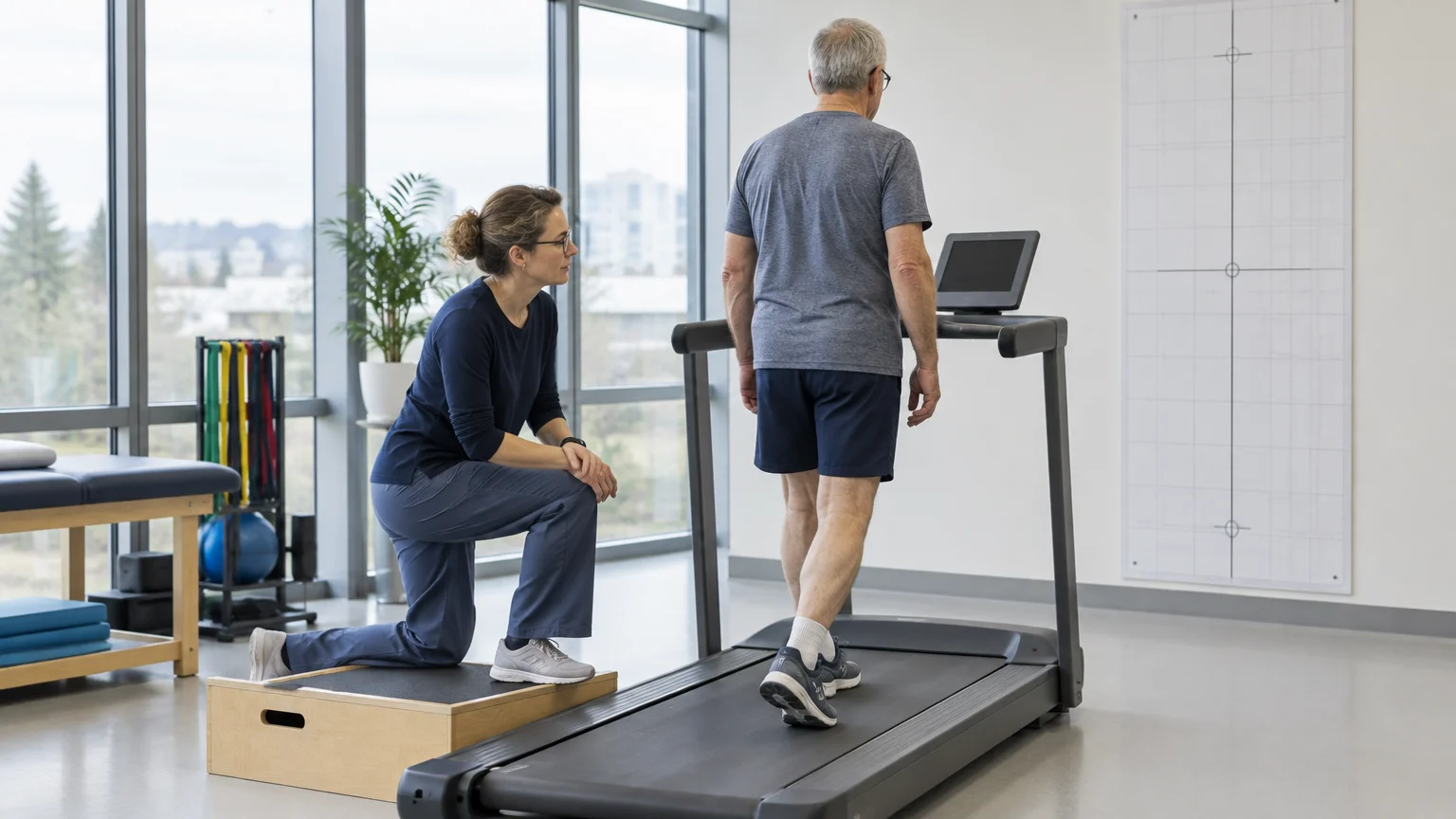
A physical therapist can also analyze your gait on a treadmill to spot subtle imbalances. Targeted professional adjustments ensure your senior walking tips fit your unique body.
Frequently Asked Questions
How fast should I walk after 60 to protect my joints?
Walk at a comfortable, moderate pace where you can talk without gasping for breath. Moving too quickly often causes overstriding, which increases joint impact on your knees and hips.
Can walking poles help reduce strain on aging joints?
Yes, trekking poles distribute body weight across your upper arms and shoulders, significantly lowering stress on your knees. They also improve your posture and boost stability on uneven ground.
What is the best surface for walking with arthritis?
Smooth, level surfaces like rubberized running tracks or paved paths are best for joint health. While grass seems soft, hidden divots or uneven patches can increase your risk of tripping.
How do I know if my walking shoes are causing knee pain?
Worn out outsoles or overly stiff footwear can force your feet to strike awkwardly, transmitting shock to your knees. Replace your walking shoes every 300 to 500 miles to preserve cushioning.
For authoritative, trustworthy health information, always consult official sources like the National Institute on Aging (NIA) and MedlinePlus from the National Library of Medicine. The CDC also provides excellent resources for older adults.
Disclaimer: This article is for informational purposes only and does not constitute medical advice. Always seek the advice of your physician or other qualified health provider with any questions you may have regarding a medical condition.